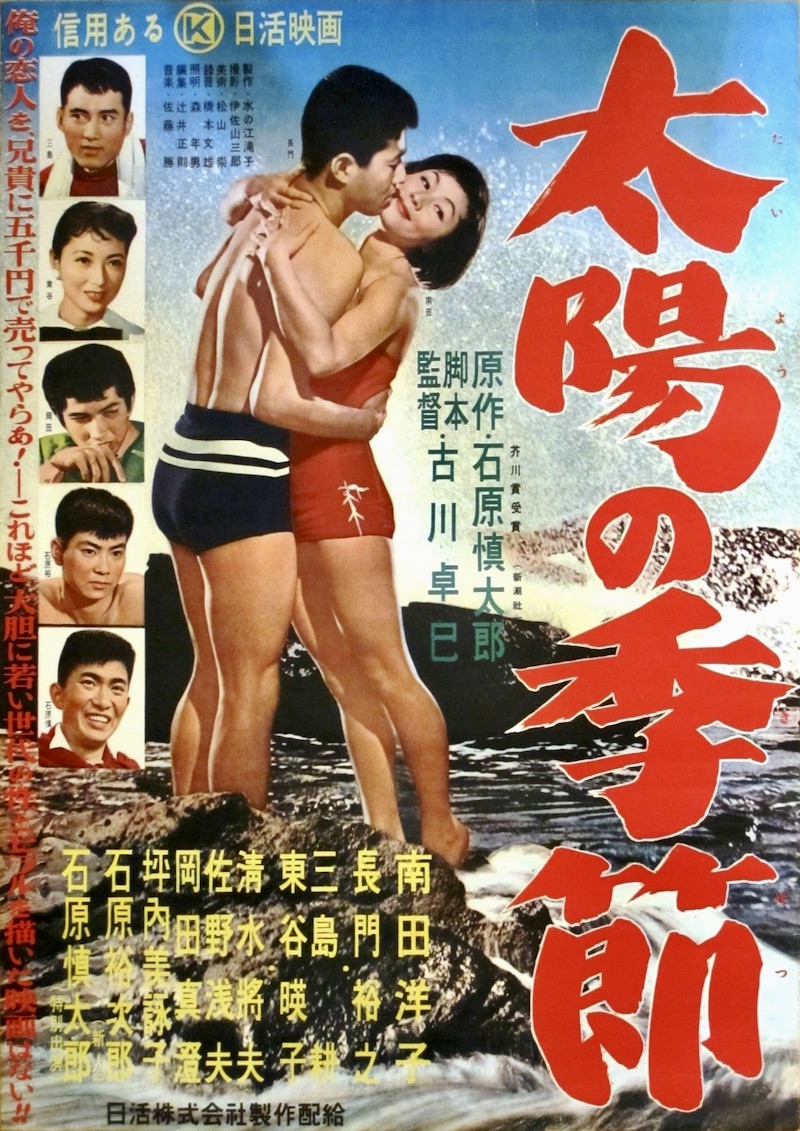
Sun Tribe Redux

The Japanese film poster for SEASON IN THE SUN (1956) aka Taiyo no Kisetsu.

When Ishihara Shintaro died on February 1, 2022 at age 89, most obituaries focused on his career as a politician in Japan. He first served as a member of the House of Councillors (1968 to 1972) and then as a member of the House of Representatives (1972-1995) before becoming the Governor of Tokyo from 1999 to 2012. A controversial figure in his own country, Shintaro was famous for his ultra-nationalist stance on Japan and extreme right-wing views such as discriminating against Japanese-Koreans, the disabled, women, LGBT and other social minorities. He is now considered an early proponent of “hate speech” and often denied historical accounts of atrocities committed by the Japanese against the Chinese in the infamous Nanjing Massacre of 1937, which in Japan is the same as being a Holocaust denier. What is most surprising about Shintaro, however, is his earlier career as an author and highly successful screenwriter for movie studios like Nikkatsu, Daiei and Shochiku. His critically acclaimed first novella, Taiyo no Kisetsu (English title: Season of the Sun), was published in 1955 and he adapted it into a film for director Takumi Furukawa. It became a box office sensation and inspired several successors in a film movement that became known as the “Sun Tribe” (aka Taiyozoku) movies.

Continue reading
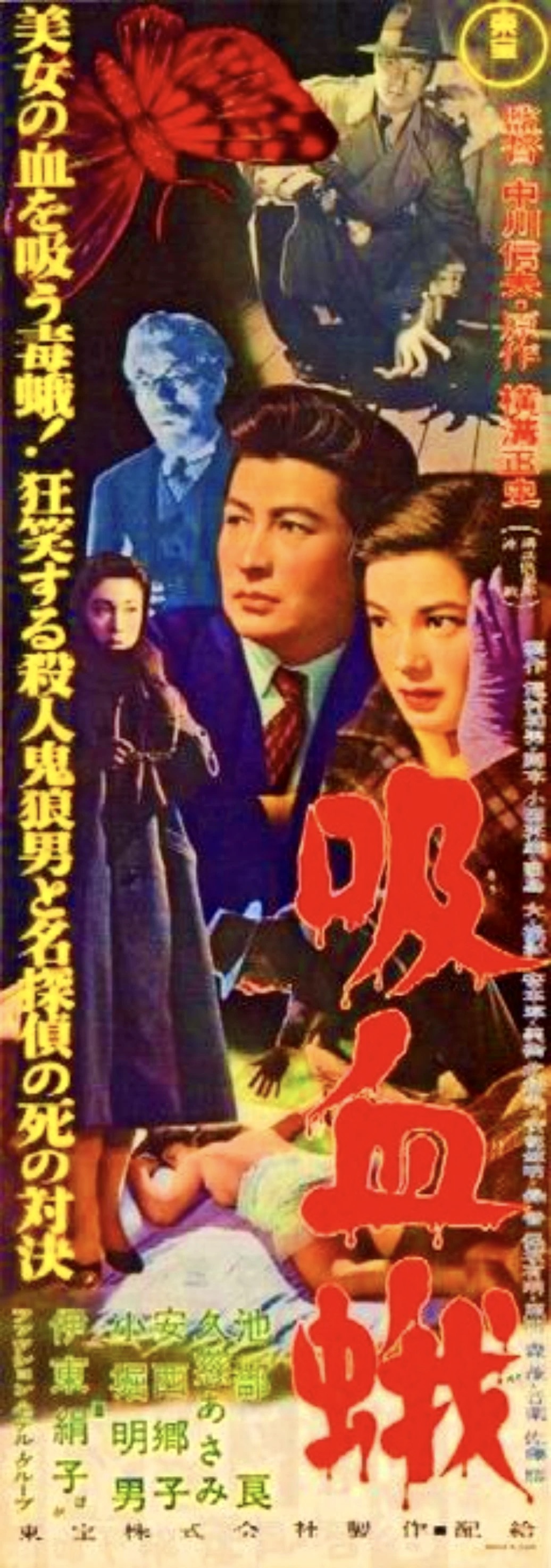
The Vampire Moth

The Japanese film poster for Kyuketsu-ga (English title: THE VAMPIRE MOTH, 1956).

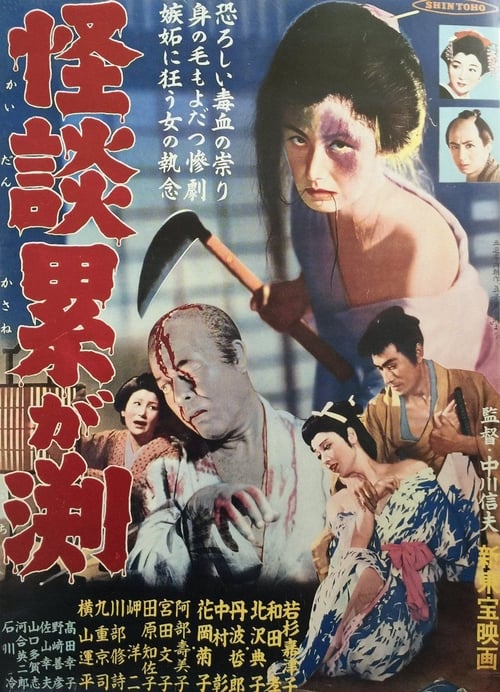
There are a number of classic Japanese horror/fantasy films from the fifties and sixties that genre fans in the U.S. have read about but never seen due to their unavailability on DVD or Blu-ray. In recent years a few of these have appeared in domestic release versions such as Nobuo Nakagawa’s 1960 allegorical masterpiece Jigoku (released by The Criterion Collection), in which a hit-and-run driver literally goes to hell, and the director’s 1968 supernatural tale Snake Woman’s Curse (released by Synapse Films). Many of the most famous examples of Japanese fantasy/horror from this period, however, still remain elusive for American viewers unless you own an all-region DVD/Blu-ray player and are willing to purchase import discs from Japan, often with no English subtitles. It is also true that many of these classic genre efforts were directed by Nakagawa who is famous for supernatural chillers as The Ghosts of Kasane Swamp (1957), Black Cat Mansion (1958), and The Ghost of Yotsuya (1959). But I have to admit that one of the director’s creepiest and least seen films is Kyuketsu-ga (English title: The Vampire Moth, 1956), which combines mystery thriller tropes with grotesque horror elements to achieve a delightfully macabre brew.

The Japanese poster for Kaidan Kasane-ga-fuchi (English title: THE GHOSTS OF KASANE SWAMP aka THE DEPTHS, 1957).
Continue reading

Attack of the Molecular Men

The Japanese film poster for THE H-MAN (1958).

The atom bomb and its devastating after effects have served as the basis for some of the science fiction genre’s most popular and successful films and it’s no surprise that many of them hail from Japan where Gojira (1954, U.S. title: Godzilla) became the first in a long line of radioactive monsters bent on stomping Tokyo. Whether intended as metaphorical retribution for the A-bomb destruction of Hiroshima and Nagasaki in 1945 or cautionary tales about the dangers of nuclear power, these sci-fi fantasies became Toho’s studios’ most profitable exports during the late fifties and early sixties and eventually spawned subgenres of their own, one of which was the “mutant” series. The masterminds behind Gojira and most of the Toho sci-fi releases were director Ishiro Honda and special effects technician Eiji Tsuburaya and their first effort in the “mutant” series – Bijo to Ekitainingen (1958) – still stands as one of their most unusual and distinctive films.

Continue reading

The Age of Assassins (1967)

A paranoid conspiracy thriller delivered in a droll tongue-in-cheek style with generous helpings of black comedy and anti-establishment satire doesn’t really fit neatly into any genre and Kihachi Okamoto’s The Age of Assassins (1967 aka Epoch of Murder Madness; Japanese title: Satsujin Kyojidai) was generally dismissed by critics and avoided by audiences when it was first released in the late sixties. Like many of Okamoto’s films, it didn’t receive theatrical distribution outside of its own country and that’s a shame because the film has the essential goods to become a bona fide cult classic on the order of Seijun Suzuki’s Branded to Kill (1967) or Kinji Fukasaku’s Black Lizard (1968). The Age of Assassins arrived at the tail end of the secret agent craze but it is not really a James Bond parody. Think of it instead as a crazy quilt journey through an off-kilter, pop culture universe where no one is who they appear to be.   Continue reading