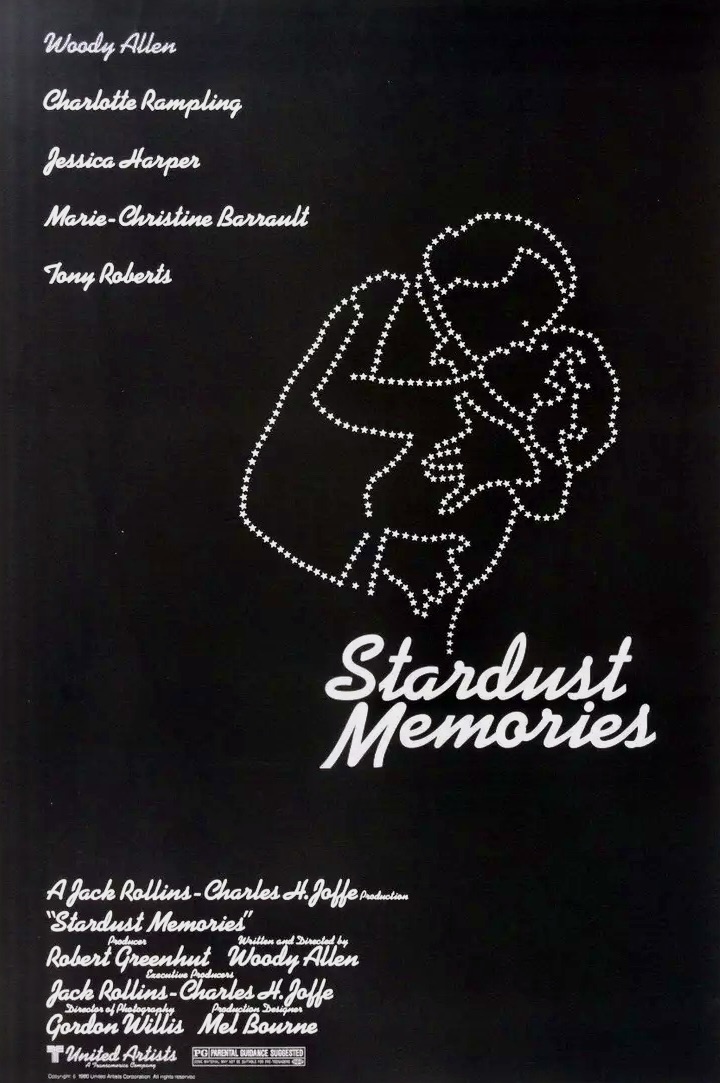
After directing more than fifty feature films including the three-part New York Stories (1989) with contributions from Francis Ford Coppola and Martin Scorsese and the re-edited/re-dubbed version of a Japanese spy thriller retitled, What’s Up, Tiger Lily? (1966), Woody Allen has one of the most impressive filmographies of any living director in Hollywood. Regardless of what you think about him as a person due to the controversy that surrounded his marriage to adopted stepdaughter Soon-Yi Previn, one can’t deny all of the critical acclaim he has amassed over the years, which includes 24 Oscar nominations, three of which won the Academy Award for Best Screenplay (Annie Hall, Hannah and Her Sisters and Midnight in Paris). Not all of his films have been box office hits and some have been minor efforts or polarizing like September (1987) or Deconstructing Harry (1997), but the true acid test for any fan or critic who loves Woody Allen movies is Stardust Memories (1980), his most misunderstood and generally maligned tenth feature about the downside of being famous.
Continue readingTag Archives: Louis Armstrong
The Birthplace of Jazz
How’s this for a dynamite screen team – Billie Holiday and Louis Armstrong? They appear together and separately in New Orleans (1947), a fictitious love story set during the end of the Golden Age of jazz circa 1917 – the year Storyville ceased to be the Crescent City’s hot spot.
Continue readingAbattoir Blues
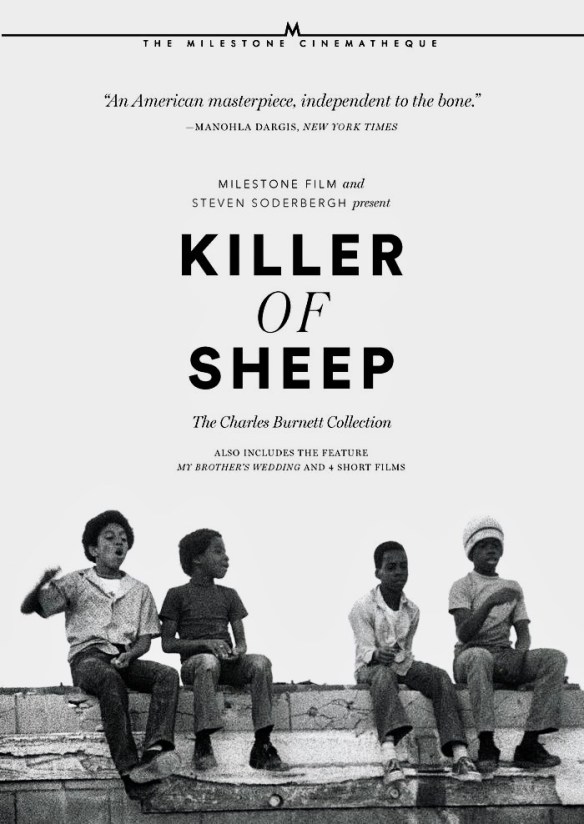
“I wanted to do something that reflected the way people in the community would see themselves. Coming from another place, you can see a much larger picture. But when you’re in a well, you can only see the narrow light above. If you’ve been living like that for a long time, it can have an unproductive effect on you in many ways. So it wasn’t my personal conflicts. It was the conflict of the community.” – Director Charles Burnett in an interview with Filmmaker Magazine about his film Killer of Sheep.
After more than 42 years, Charles Burnett’s Killer of Sheep (1977) is now recognized as a seminal film in the indie film movement of the ‘70s even though it didn’t receive a wide release until 2007 via Milestone Films. In fact, Burnett never really intended for the film to have a theatrical release; he made it as his thesis film at UCLA. But retrospective screenings of the film and the resulting critical acclaim culminated in Killer of Sheep winning the Forum of New Cinema prize at the 1981 Berlin International Film Festival. Other accolades followed such as being selected by the National Film Registry in 1990 for film preservation and winning a special award from the New York Film Critics Circle in 2007. Not bad for a movie shot on 16mm and made for a rock bottom budget of $10,000 from film grants. Continue reading