The Double Life of Tokiko

By day Tokiko (Kinuyo Tanaka) works as a typist in a business firm but after dark she frequents the favorite haunts of gangsters with her yakuza boyfriend in DRAGNET GIRL (1933), directed by Yasujiro Ozu.

Tokiko works as a typist in a business office where Okazki, the owner’s son, is the office manager. He is smitten with his employee and often flirts with her behind closed doors in his private office. Tokiko manages to keep him at bay even though he showers her with gifts and offers her an engagement ring. What Okazki doesn’t know is that Tokiko leads a completely different life after work when she sheds her office worker identity and transforms into a chic underworld player with a gangster boyfriend, Joji. Tokiko not only supports Joji with her day job but also serves as his partner in crime in various money-making schemes. From this brief description you probably wouldn’t suspect that the Japanese crime drama, Hijosen no Onna (English title: Dragnet Girl, 1933), was directed by the celebrated Yasujiro Ozu, but it is an early and surprising entry in his filmography before he became famous for his portraits of Japanese family life in such post-WW2 movies as Late Spring (1949), Early Summer (1951) and his 1953 masterpiece, Tokyo Story.

Continue reading

Jeanne Moreau is Mata Hari

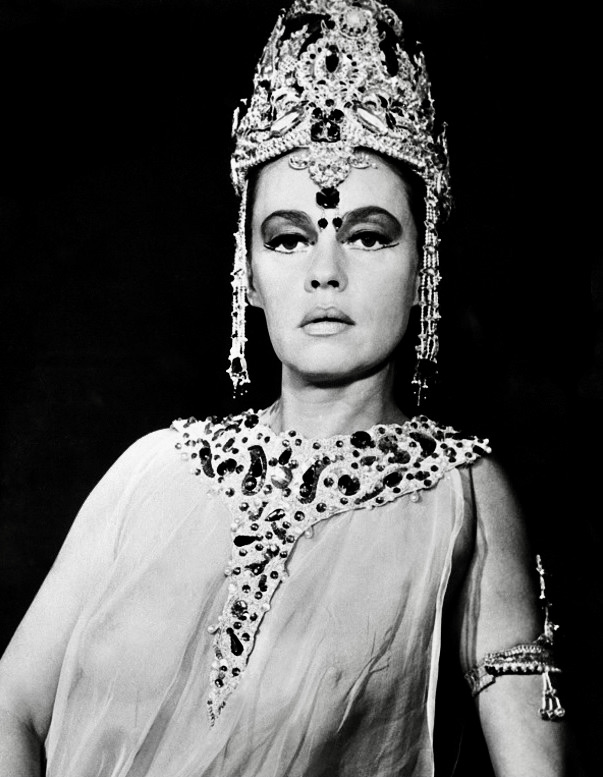
Jeanne Moreau as the famous WWI era spy Mata Hari in Jean-Louis Richard’s 1964 film biography, MATA HARI, AGENT H21.

The road to international fame was a long and arduous journey for Jeanne Moreau but it all began in 1948 when she became a stage actress at age 18. She started appearing in films a year later though it wasn’t until 1958 that she emerged as an important French actress, thanks to two Louis Malle features, the noir thriller Elevator to the Gallows and the scandalous romantic drama, The Lovers. More famous career-defining roles followed such as Michelangelo Antonioni’s La Notte (1961), Francois Truffaut’s Jules and Jim (1962), Jacques Demy’s Bay of Angels (1963) and Luis Bunuel’s Diary of a Chambermaid (1964). Yet, in terms of global recognition, she probably reached her peak in the mid-sixties when she appeared in big-budget Hollywood productions like The Victors (1963), The Train (1964) and The Yellow Rolls-Royce (1964). It was during this period that she appeared in Mata Hari, Agent H21 aka Secret Agent FX18 (1964), one of her least known and rarely seen movies.

Continue reading

The Naked Muse

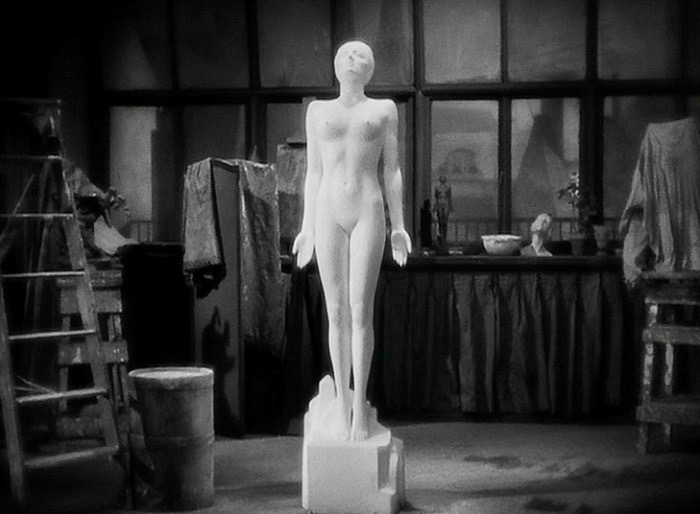
Sculptor Richard Waldow (Brian Aherne) creates a work of art inspired by his model Lily Czepanek (Marlene Dietrich) in The Song of Songs (1933), a Pre-Code drama.

Here’s a rarely seen Pre-Code curiosity made during the early period of Marlene Dietrich’s career at Paramount, The Song of Songs (1933). It is usually overlooked amid the Josef von Sternberg collaborations that made her famous such as The Blue Angel (1930), Morocco (1930) and Shanghai Express (1932), yet, it provides a fascinating look at Dietrich under a different director (Rouben Mamoulian) as well as a departure from her usual persona as a vamp or prostitute (at least in the beginning). The film is also generously seasoned with romance, decadence, melodrama, earthy humor, some musical numbers and a disaster – there is a fire in the final act.

Continue reading

The Crime Astrologer

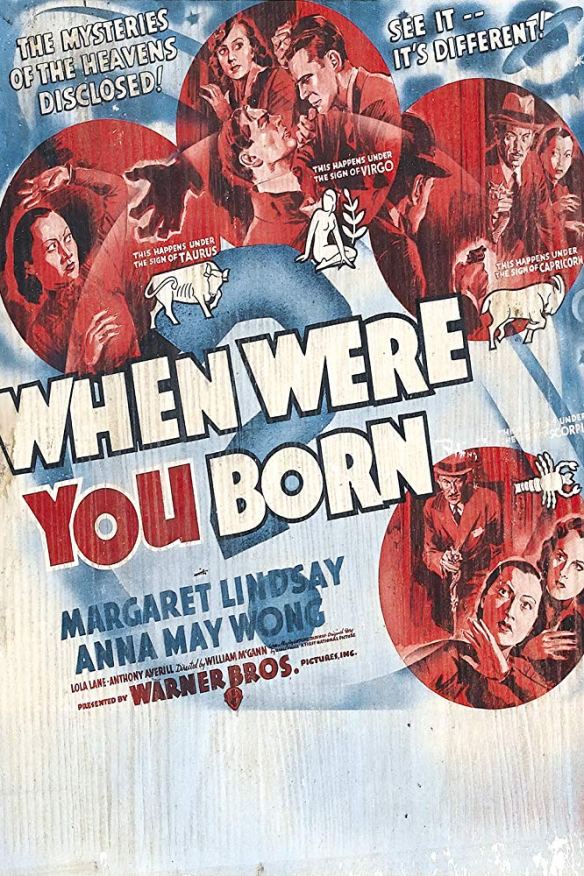
Every amateur detective has his own approach to crime solving but Mary Lee Ling consults the stars and birth dates to narrow down the list of suspects. When Were You Born? (1938) has a terrific premise for a detective thriller and was quite unusual in its day. Its offbeat approach to the genre is further enhanced by the casting of Anna May Wong in the central role of an astrologist whose connection to a murder victim implicates her in the police investigation.      Continue reading

Dietrich and von Sternberg’s Last Tango

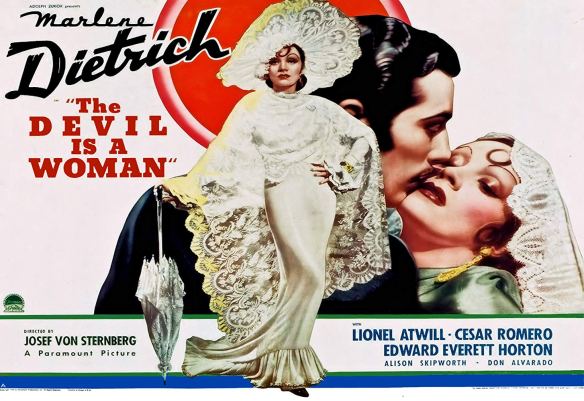
When The Scarlet Empress (1934), Josef von Sternberg’s lavish historical epic starring Marlene Dietrich as Catherine the Great, proved to be a critical and commercial disaster for Paramount, the director realized his days were numbered at the studio. So why not go for broke in one last picture? The result was The Devil is a Woman (1935). Continue reading