Max Ophuls’ Caught

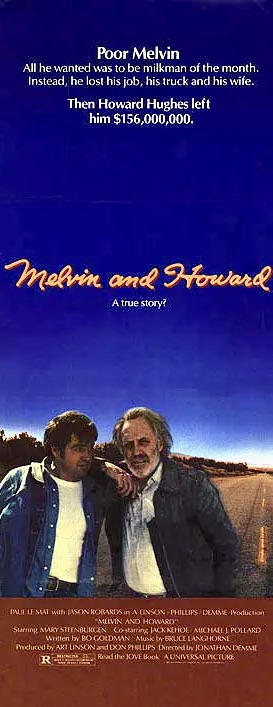
Over the years there have been numerous biographies written about aviation legend/studio mogul/eccentric billionaire Howard Hughes; everything from fake ones like Clifford Irving’s Autobiography of Howard Hughes to definitive accounts such as Howard Hughes: His Life and Madness by Donald L. Bartlett and James B. Steele. In contrast, there have been very few motion pictures about him. Martin Scorsese’s The Aviator (2004), based on the Bartlett & Steele biography, is the only feature film about his life to date. There was also a TV movie, The Amazing Howard Hughes (1977), with Tommy Lee Jones in the title role, and Jonathan Demme’s Melvin and Howard (1980), a quirky docudrama/comedy about Melvin E. Drummar (Paul Le Mat), a Utah man who claimed Hughes (Jason Robards Jr.) named him in his will after rescuing him in the Nevada desert.
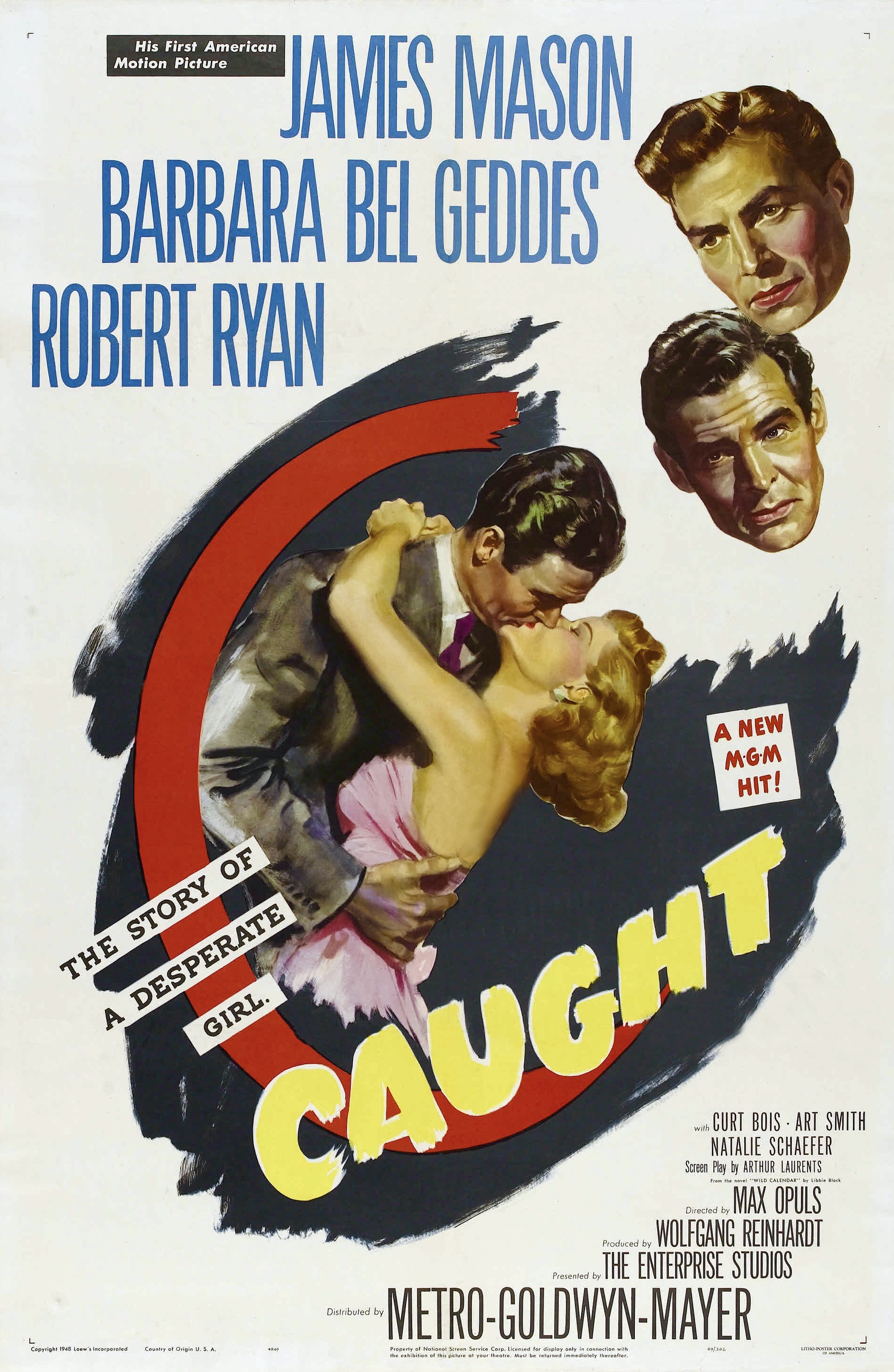
Strangely enough, my favorite film about Howard Hughes isn’t a biopic at all but a noir-like melodrama featuring a character who was clearly inspired by the megalomaniac tycoon – Caught (1949), by German director Max Ophuls. Smith Ohlrig, the business tycoon modeled on Hughes, may not resemble him in terms of a biographical profile but on a psychological level he is the epitome of Hughes in the way he interacted with women, his employees and industry rivals.

Continue reading

The Family Mole

If you are a post-WW2 baby boomer, you are probably familiar with the term ‘the Red Scare,’ which refers to a time in the late forties-early fifties when anti-communist sentiment in the U.S. was at its height (The “red” refers to the color of the Soviet flag). This Cold War era paranoia was not just reflected in American politics and daily news stories but he popular culture as well, especially movies. Some of the more famous examples are the Howard Hughes’ produced noir I Married a Communist (1949 aka The Woman on Pier 13), the 1951 tabloid-style expose I Was a Communist for the F.B.I. and John Wayne as an undercover commie hunter in Big Jim McLain (1952). Yet, of all the cinematic depictions of Communist infiltration in America, few are as blatant or as infamous as My Son John (1952), which was released when the House Committee on Un-American Activities (HUAC) was at the height of its power and Senator Joseph McCarthy was still fanning the flames of a political witch hunt that had already taken its toll on the entertainment industry.

Continue reading

Down the Noir Highway

What could make a reputable insurance instigator go bad? A beautiful woman? Lots of loot? A sense of empowerment? For Joe Peters (Charles McGraw), it’s all of these things but it’s definitely a femme fatale named Diane (Joan Dixon) who first ignites the copper’s lust and then his greed. Roadblock (1951) is a cleverly plotted, terse little film noir that has more twists and hairpin turns than a winding mountain road. What makes it stand out from other low-budget noirs produced at RKO is Charles McGraw’s compelling performance as an easily seduced sucker unlike his usual tough guy roles and Joan Dixon’s sultry presence.  Continue reading

Commies at the Greasy Spoon Diner

The Psychotronic Video Guide calls it “One of the oddest movies of the fifties,” Leonard Maltin’s Movie Guide deems it a “trash classic,” and any movie buff who has ever seen it will probably concur that Shack Out on 101 (1955) is easily the nuttiest B-movie to emerge in the Cold War era when paranoia over communist infiltration provided Hollywood with a new type of villain.   Continue reading

Oswald’s Last Picture Show

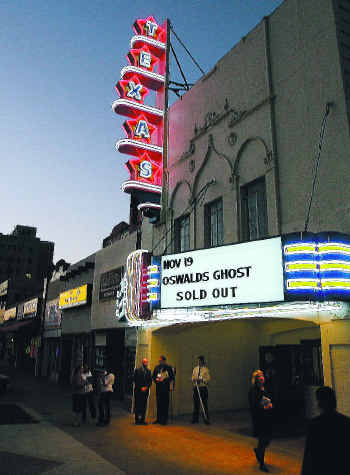
The premiere of the documentary OSWALD'S GHOST at the Texas Theatre in 2007

The premiere of the documentary OSWALD’S GHOST at the Texas Theatre in 2007

50 years ago today (11/22/2013) Lee Harvey Oswald ran into the Texas Theatre in Dallas to hide after shooting police officer J.D. Tippit.  The Texas Theatre was showing a double feature that day – WAR IS HELL (1963), a low-budget, Korean War drama directed by Burt Topper and narrated by Audie Murphy, and CRY OF BATTLE (1963), Irving Lerner’s small scale WWII/Pacific Campaign actioner with James MacArthur, Van Heflin and Rita Moreno.     Continue reading