
Gas, Food, Lodging…and Murder

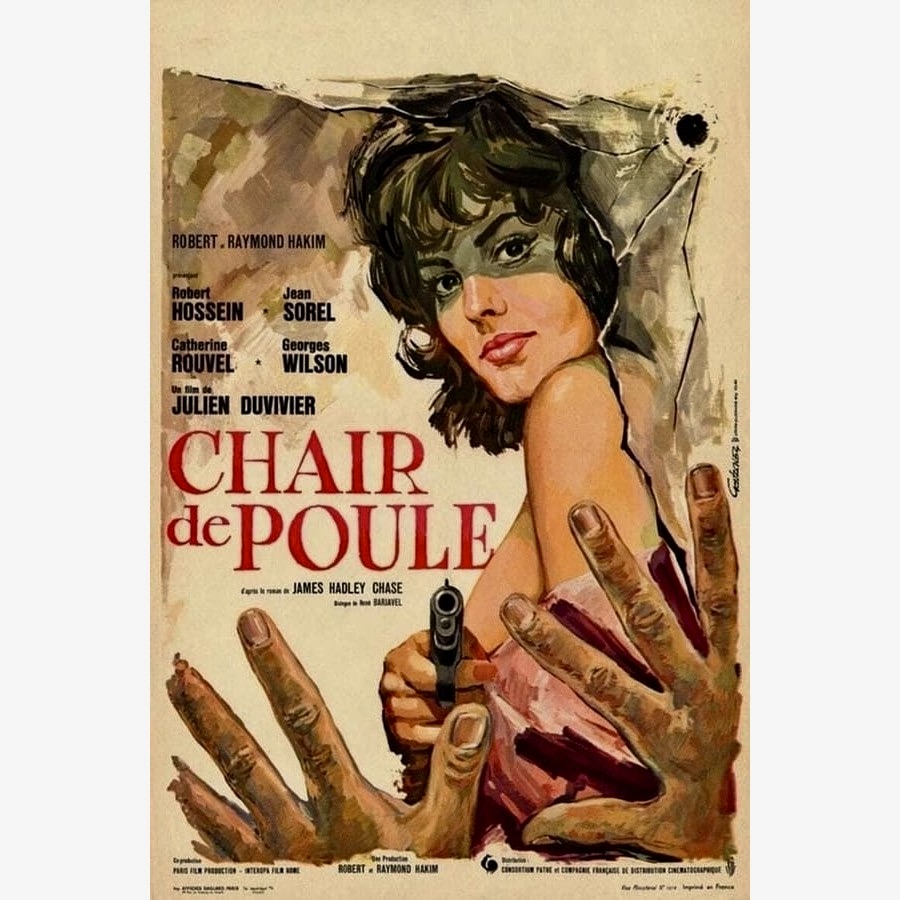
The French film poster for HIGHWAY PICK-UP (1963), a French crime drama directed by Julien Duvivier.

Daniel and Paul are professional locksmiths and good friends who work for the same company. When they mastermind the robbery of a client by breaking into a safe Daniel had previously repaired, the theft goes awry, with the client dying from a blow to the head. Paul escapes but Daniel is shot and injured by the police in the ensuing chase and sentenced to 20 years in prison. After a year in the stir, Daniel escapes by picking the jail cell lock (of course) and tries to elude the authorities in a desert-like region of Alpes-Maritimes in southeastern France. Under an assumed name, he manages to get hired on as an attendant at an isolated gas station run by Thomas and his sexy young wife Maria but Daniel soon realizes he has created a new prison for himself.
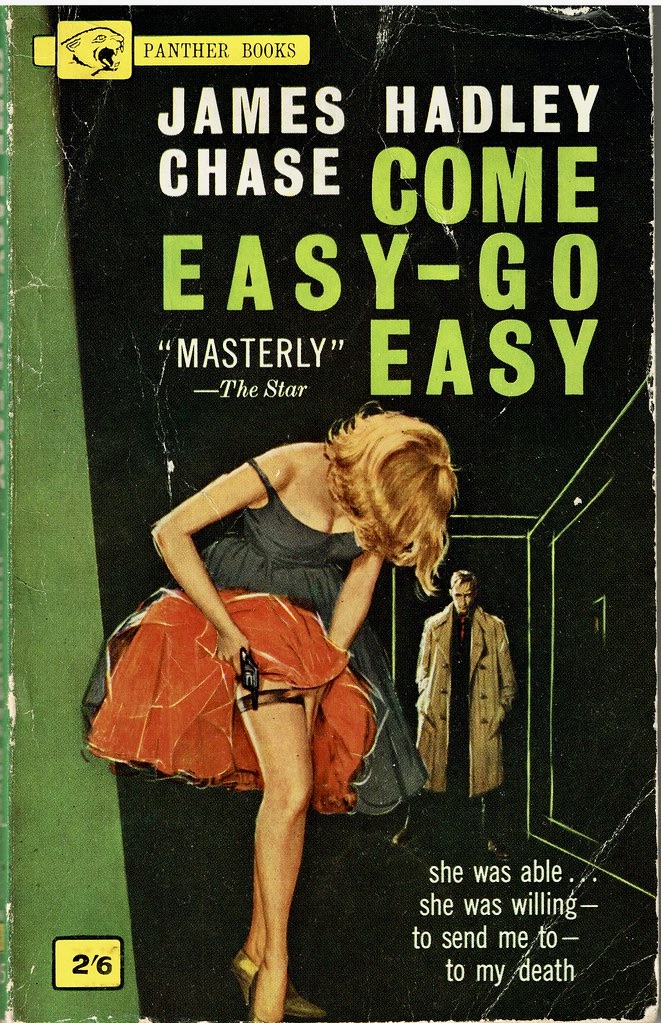
Based on the 1960 crime noir Easy Come, Easy Go by British author James Hadley Chase, Chair de Poule (English title: Highway Pick-Up, 1963) is the penultimate film of the legendary French director Julien Duvivier. If the basic premise sounds like it was inspired by The Postman Always Rings Twice, you wouldn’t be completely wrong. Chase (1906-1985), who used many pseudonyms during his career such as Raymond Marshall and Ambrose Grant, was actually motivated to become a writer after reading James M. Cain’s 1934 novel. Chase’s first novel, No Orchids for Miss Blandish (1939), was an overnight best seller and was adapted into a stage play and two film versions, one in 1948 and one in 1971, under the title The Grissom Gang, which was directed by Robert Aldrich.

Continue reading
Milanese Malaise

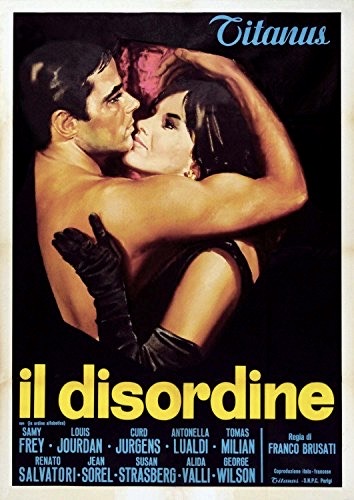
The Italian film poster for DISORDER (1962).

Any art house patron in the early sixties must have thought modern society was headed toward a complete collapse as witnessed by the emptiness of life and the bored, amoral behavior of characters in films like Federico Fellini’s La Dolce Vita (1960). That film was mostly a portrait of wealthy, jaded Romans and ambitious social climbers that was probably the most famous in a wave of films that viewed Italian society as a lost and alienated culture. Michelangelo Antonioni’s L’Avventura (1960), La Notte (1961) and L’Eclisse (1962) offered similar views of a world where modern progress and technology had a dehumanizing effect on relationships while Antonio Pietrangeli’s I Knew Her Well (Italian title, Lo la conoscevo bene, 1965) focused on a naïve working class woman who seeks an acting career in Rome but finds herself exploited and eventually discarded by the people that profession attracts. Less well known, Franco Brusati’s Il Disordine (Disorder, 1962) differs from the above films in that it depicts both upper class and economically strapped folks in Milan who share the same sense of disillusionment and despair over their lot in life. Also, it is almost epic in scale and more tragic and heartfelt than the aforementioned titles. 

Continue reading

The Prince and the Peasant

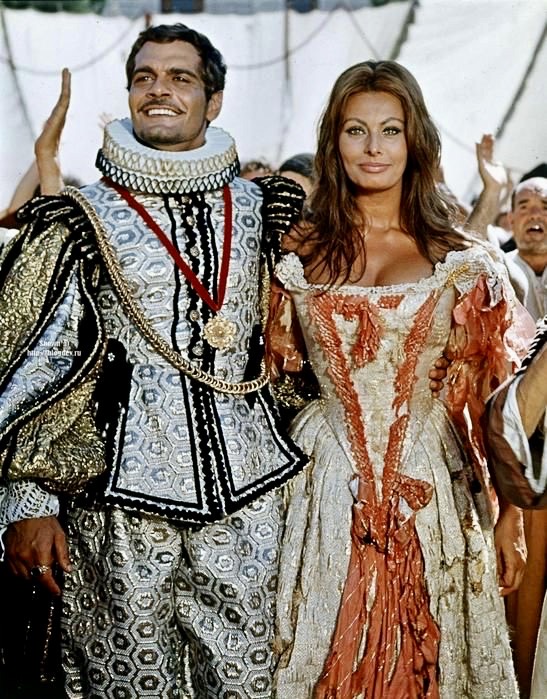
Will there be a happy ending for Prince Rodrigo (Omar Sharif) and Isabella Candeloro (Sophia Loren) in More Than a Miracle (1967), directed by Francesco Rosi.

Imagine, if you can, a rustic Neapolitan fairy tale directed by Francesco Rosi in the docudrama style of his post-neorealism films of the early sixties like The Moment of Truth (1965), shoot it in Technicolor and Techniscope, add a lush musical score by Piero Piccioni and you get More Than a Miracle (1967), a zesty Southern Italian fantasy-romance that was more appropriately titled Cinderella, Italian Style in Europe.   Continue reading