Rave On!

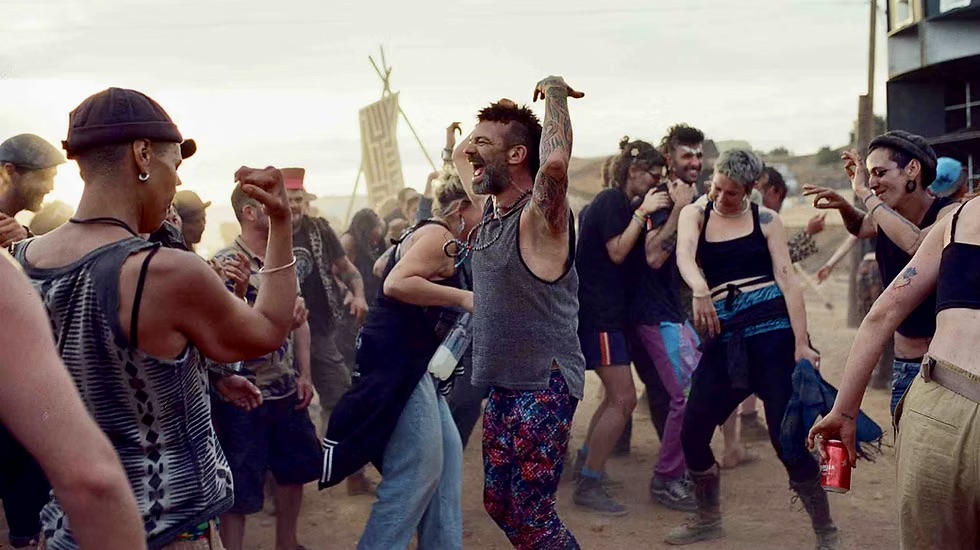
SIRAT (2025), from Spanish director Oliver Laxe, opens with an illegal rave in the desert of Morocco before it transitions into a mysterious and shocking road trip.

We see the hands of roadies placing gigantic audio speakers on top of and beside each other on the arid plains of the Sahara Desert in Morocco. When they are finished, their work is revealed as a literal wall of sound, designed to super-amplify the techno beats of an incognito rave. As the propulsive rhythm floods the desolate location framed by towering red canyon walls, ravers let themselves go in an uninhibited dance frenzy, most of them lost in drug induced or spiritual ecstasy. Yet, among this throbbing mass of humanity, two people have not come to dance. Luis (Sergi Lopez) and his young son Esteban (Bruno Nunez Arjona) have come to distribute flyers for Esteban’s missing sister, who is a fan of raves and could possibly be here. So begins Oliver Laxe’s Sirat (2025), a cinematic journey that is both corporeal and metaphysical as a search for a missing person evolves into a life or death encounter with the unknown.

Continue reading

Wolves, Pigs and Men

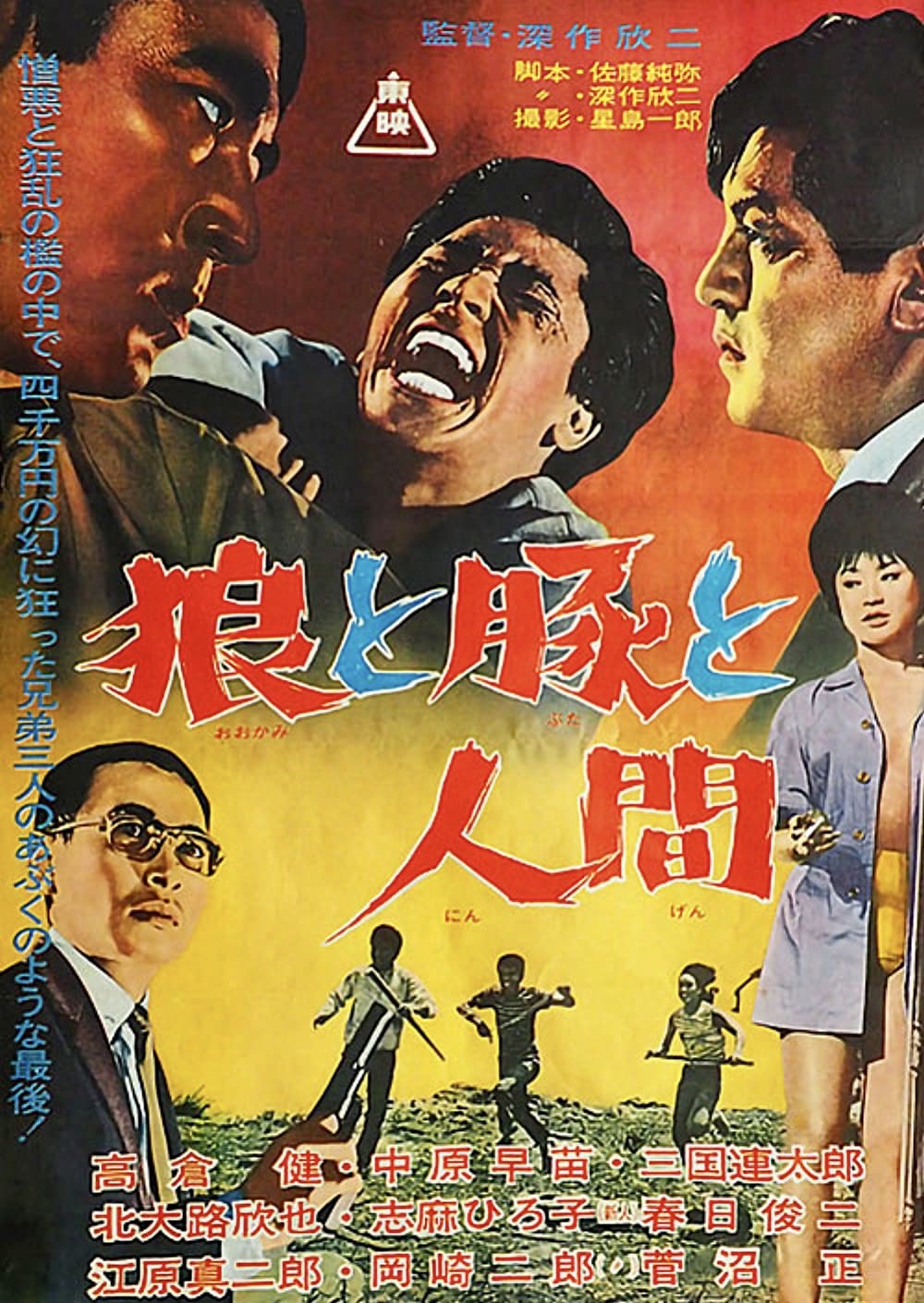
The Japanese film poster for WOLVES, PIGS AND MEN (1964).

Among the many post-WW2 Japanese filmmakers who emerged in the 1960s and hit their stride in the seventies, Kinji Fukasaku was one of the most prominent and critically acclaimed directors in his own country but didn’t start to acquire a growing fan base in the U.S. until after 2000 when some of his masterworks began to appear on DVD such as the yakuza epic Battles Without Honor and Humanity aka The Yakuza Papers (1973), which launched a five-film franchise, and Battle Royale (2000), a controversial futuristic fable about institutionalized violence against problem teenagers. Over the years, Fukasaku has dabbled in numerous film genres from historical drama (Under the Flag of the Rising Sun, 1972) to sci-fi (Message from Space, 1978) and comedy (Fall Guy, 1982), but he is best known from his crime dramas, especially those which popularized the jitsuroku eiga genre. His documentary-like dramatizations based on real crimes often depicted yakuza figures as ruthless men operating without “honor and humanity” (in the title words of his breakthrough film). Even prior to his trend-setting crime thrillers of the mid-seventies, Fukasaku was turning out edgy, innovative work and Okami to Buta to Ningen (English title: Wolves, Pigs and Men) from 1964 is an explosive, nihilistic tale which qualifies as a rough-hewn, early masterpiece.

Continue reading

The Kidnapped Heiress

The French film poster for SEXUS (1965).

When it comes to crime films, what’s your pleasure? The genre breaks down into so many sub-categories that it helps if you have a particular theme in mind. Bank Heists? Home Invasions? Police procedurals? Gang wars? How about kidnapped heiresses? James Hadley Chase’s 1939 pulp fiction novel No Roses for Miss Blandish is a classic example of this edgy situation and has been adapted for films at least twice – the 1948 British noir of the same title starring Jack La Rue and The Grissom Gang (1971), Robert Aldrich’s violent remake with Kim Darby as the unfortunate victim. Even real-life cases involving kidnapped heiresses have inspired numerous crime dramas such as the 1974 kidnapping of Patty Hearst which spawned Abducted (1975), a sleazy exploitation rip-off from director Joseph Zito, The Ordeal of Patty Hearst, a 1979 made-for-TV dramatization, Patty Hearst (1988), Paul Schrader’s take on the events with Natasha Richardson in the title role, and probably the best of the lot, Robert Stone’s 2004 documentary, Guerrilla: The Taking of Patty Hearst. But, if you want to see an arty, minimalistic treatment of the kidnapped heiress theme with erotic interludes and a cool jazz score by trumpeter Chet Baker, look no further than L’enfer dans la peau (1965), a French softcore crime drama from director/writer/producer Jose Benazeraf, and released in the U.S. in an edited form entitled Sexus.

Continue reading

There is No Joy in Tarrville

The Hungarian film poster for DAMNATION (1988), directed by Bela Tarr.

What would it be like to live under a totalitarian regime in a godforsaken rural area where society has collapsed under economically depressed circumstances? In a place where there is no work or even a social structure, people turn to alcohol, violence, suicide, madness or a combination of the four. Capturing the psychological state of mind and physical reality of such an existence is a specialty of Hungarian director Bela Tarr, who became a filmmaker in Soviet controlled Hungary in 1978. He has since become a world-renowned artist who is best known for Satantango (1994), his seven hour and 19 minute epic about the disintegration of a collective farming community. Many Tarr aficionados believe a more accessible starting point for a beginner is Werckmeister Harmonies (2000), a weird, dreamlike fable about a village that descends into chaos after the arrival of a mysterious carnival attraction. I consider both of those masterworks but a better entry point to his brand of cinema might be Karhozat (English title: Damnation) from 1988. It is shorter (a mere two hours) than his two better known works but also the film that launched his international career and a visually fascinating example of his slow cinema aesthetic which favors long, uninterrupted camera shots that can often last from six to eleven minutes in length. It is also occasionally lumped into that genre known as cinema miserablism by some critics but feels more like a deep dive into a dense but atmospheric novel.

Continue reading

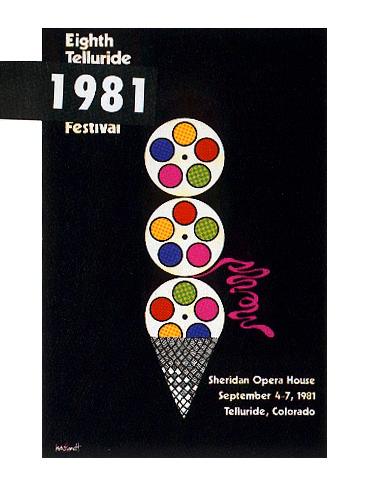
Roger Ebert, Sam Fuller, Woody Strode, Les Blank and Others at the 1981 Telluride Film Festival

telluride_1981 posterLabor Day weekend for most people means a farewell to summer and a final official holiday before the Fall season but for me Labor Day usually means “The Show” – the annual Telluride Film Festival in Colorado. I have been lucky enough to attend several of the festivals over the year but since I won’t be able to attend the 41st annual event (Aug.29-Sept.1), I wanted to pay tribute to it with a blog about my first visit there – The 8th Telluride Film Festival in 1981Continue reading