
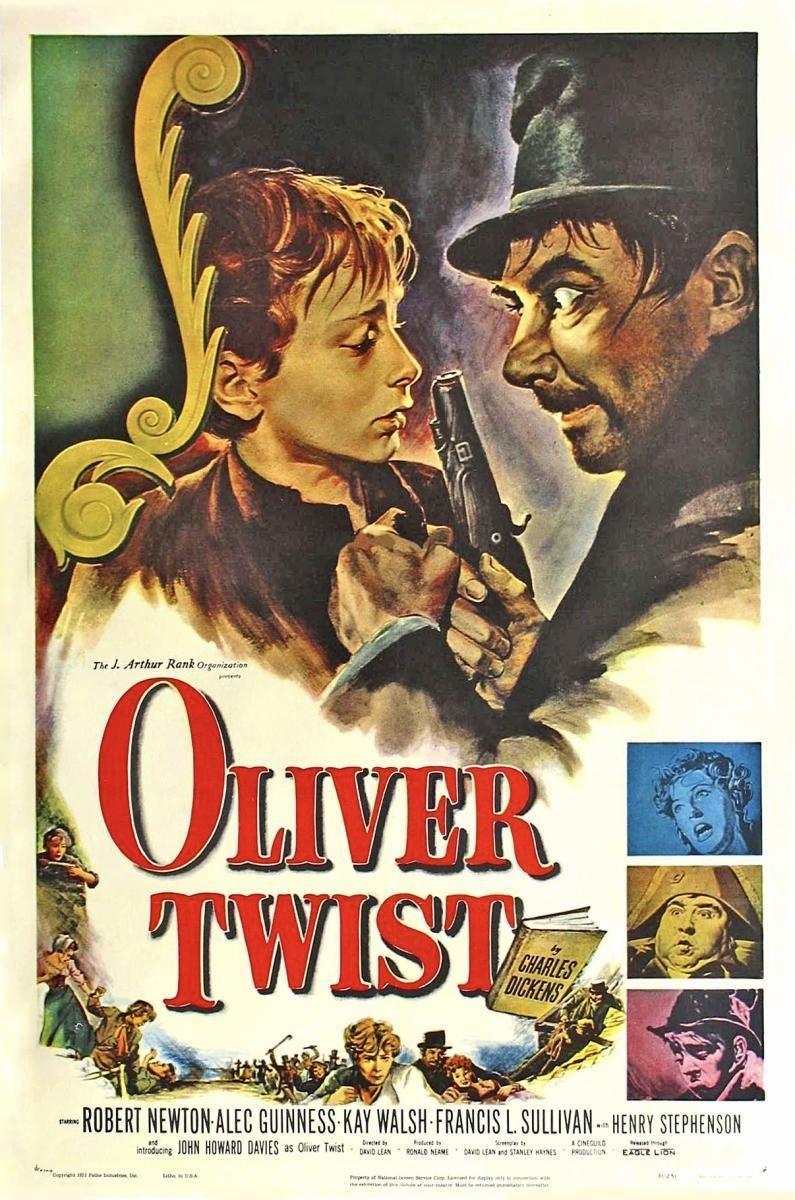
With the release of Brief Encounter in 1945, David Lean became the preeminent British director of his generation. But the critical and popular success of that bittersweet postwar romance (it won the Grand Prize at the Cannes Film Festival and garnered three Oscar nominations) was overshadowed by an even greater achievement, his film adaptation of Charles Dickens’s Great Expectations (1946). The latter secured his reputation on an international scale and received five Oscar nominations, winning statuettes for Best Art Direction and Best Cinematography. What to do for an encore? Instead of moving in a new direction, Lean surprised everyone by agreeing to do another Charles Dickens adaptation – a film version of Oliver Twist (1948).
Continue reading

 Cinema Sojourns