Robot Riot

The Russian film poster for Gibel Sensatsii (English title: LOSS OF FEELING aka LOSS OF SENSATION, 1935).

When I hear the word robot, I immediately think of Robby, the delightful and super intelligent creation of Dr. Morbius in Forbidden Planet (1956), one of the landmark sci-fi movies of the fifties. His barrel-shaped torso and high-tech design were so popular that he inspired countless toy collectibles for kids but he was a benign example of the form. For the most part, robots in science fiction films are generally viewed as a threat (see 1954’s Target Earth, 1957’s Kronos or 1958’s The Colossus of New York for examples). That was certainly the case in one of the first and most famous depictions of a robot – Fritz Lang’s silent sci-fi masterpiece, Metropolis (1927). Designed as a doppelganger for Maria, a revered female leader of factory workers, the false Maria preaches revolution to the working class, resulting in the sort of chaos that threatens to topple civilization (The False Maria’s robotic metal frame is disguised beneath her human façade).
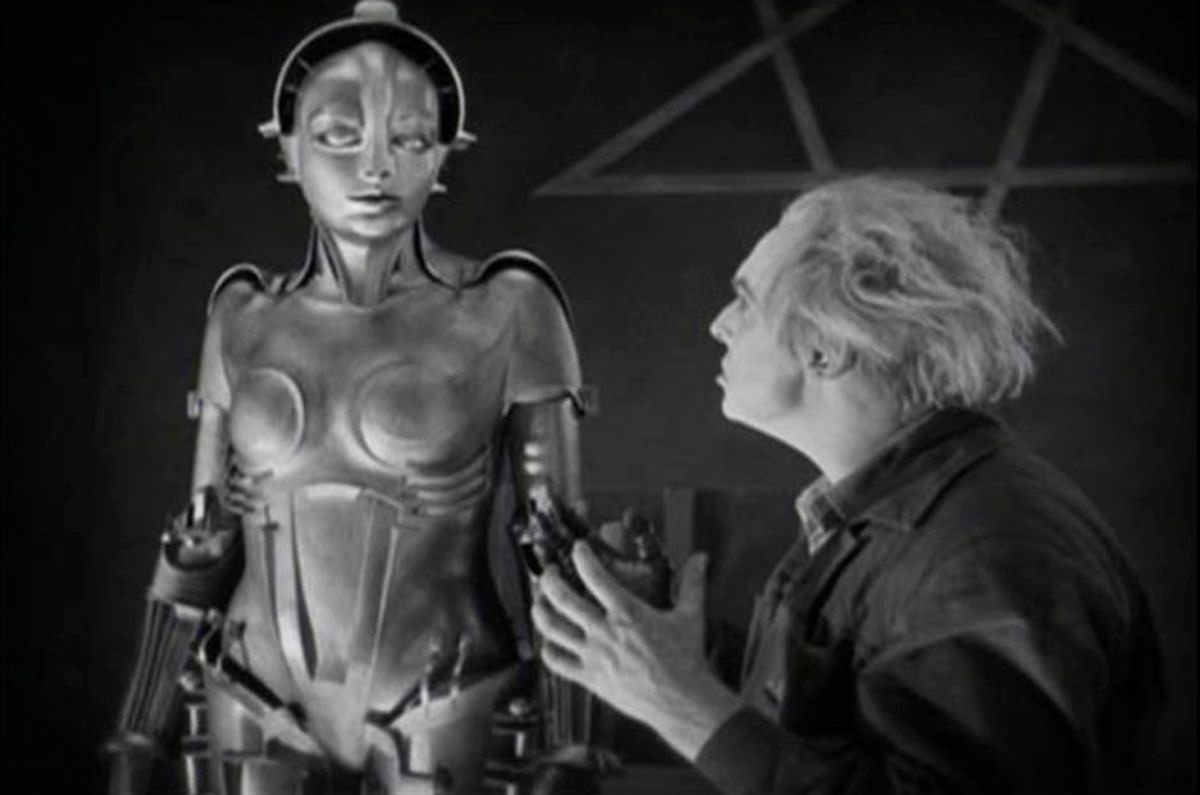
The mad scientist Rotwing (Rudolf Klein-Rogge) and his robotic creation Maria before he gives her a human form in Fritz Lang’s METROPOLIS (1927).

Eight years later, robots were again viewed as a danger to the human race in the Russian film, Gibel Sensatsii (English title: Loss of Feeling aka Loss of Sensation aka Robots of Ripl, 1935) although these looked more like early prototypes of the walking oil can-shaped automatons seen in later serials like The Phantom Empire (1936) and The Mysterious Doctor Satan (1940).

Continue reading
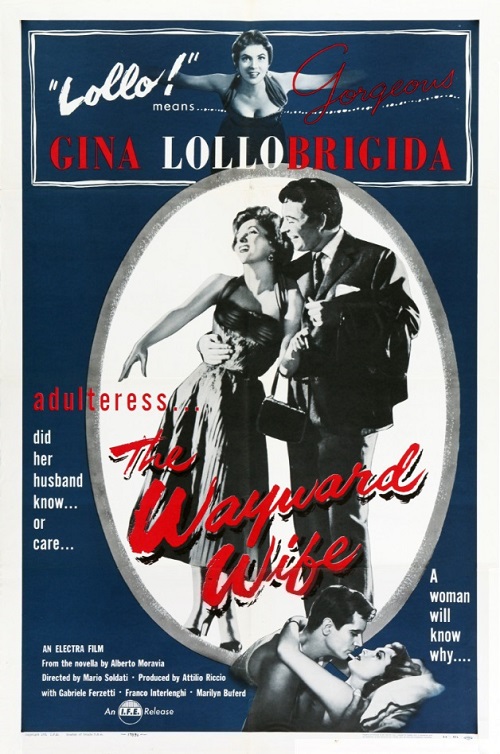
Anatomy of a Marriage

There is little doubt that Gina Lollobrigida’s rise to fame in the post-WW2 years was attributed to her beauty and sex appeal but there was another reason she achieved international recognition – she was a gifted actress who was magnetic and believable in any film genre. In fact, some of her best work is evident in a few key films of the early 1950s but is often overshadowed by the glossy Hollywood productions she made during her peak years such as Solomon and Sheba (1959), Never So Few (1959) and Come September (1961). Rene Clair’s romantic fantasy Beauties of the Night (1952) is generally credited as Lollobrigida’s breakthrough film and Luigi Comencini’s Bread, Love and Dreams (1953) brought her international acclaim as an actress (She was nominated for Best Foreign Actress by BAFTA and won Best Actress from the Italian National Syndicate of Film Journalists). But she had already proven herself as someone who could convincingly move from war drama (Achtung! Banditi!, 1951) to costume swashbuckler (Fanfare La Tulip, 1952) to sex farce (Wife for a Night, 1952) and La Provinciale (English title: The Wayward Wife, 1953), directed by Mario Soldati, is an impressive early dramatic showcase for Lollobrigida that is almost forgotten today.

Continue reading

Love Potions and Ancestral Curses

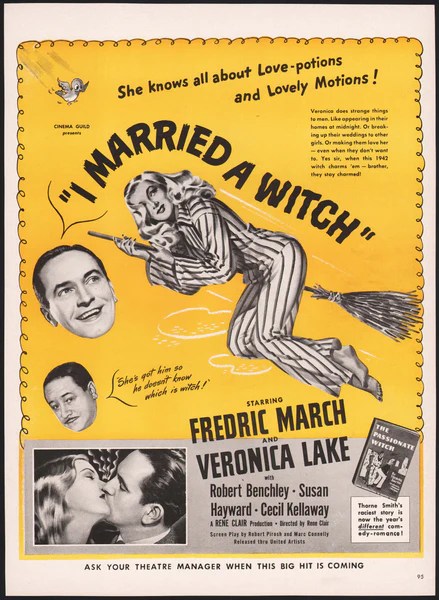
Want to know what great acting is? It’s when two actors who loathe each other in real life have to perform a convincing love scene on film. And watching I Married a Witch (1942) starring Veronica Lake and Fredric March, you’d never guess that this romantic duo feuded constantly during the making of the film. On the surface, I Married a Witch is a tale of the supernatural, played for laughs, and uses its premise to poke fun at American politics, the institution of marriage, and New England’s puritan ancestors.

Continue reading

Roll with the Punches

The Japanese poster for THE BOXER (1977) aka Bokusa.

Movies about boxers often seem to break down into four categories; the most popular are the ones where the underdog fighter overcomes all odds to become a champion (Rocky [1976], Million Dollar Baby [2004], Cinderella Man [2005]). Then there are true-life biopics like Somebody Up There Likes Me (1956), Raging Bull (1980) and Ali (2001), downbeat character portraits of boxers past their prime (Requiem for a Heavyweight [1962], Fat City [1972]) and noir dramas that highlight the corrupt aspects of the profession like The Set-Up (1949) or The Harder They Fall (1956). Bokusa (English title: The Boxer (1977), a Japanese film directed by Shuji Terayama, has elements of some of the above but it is decidedly different from any American film in the boxing genre.

Continue reading

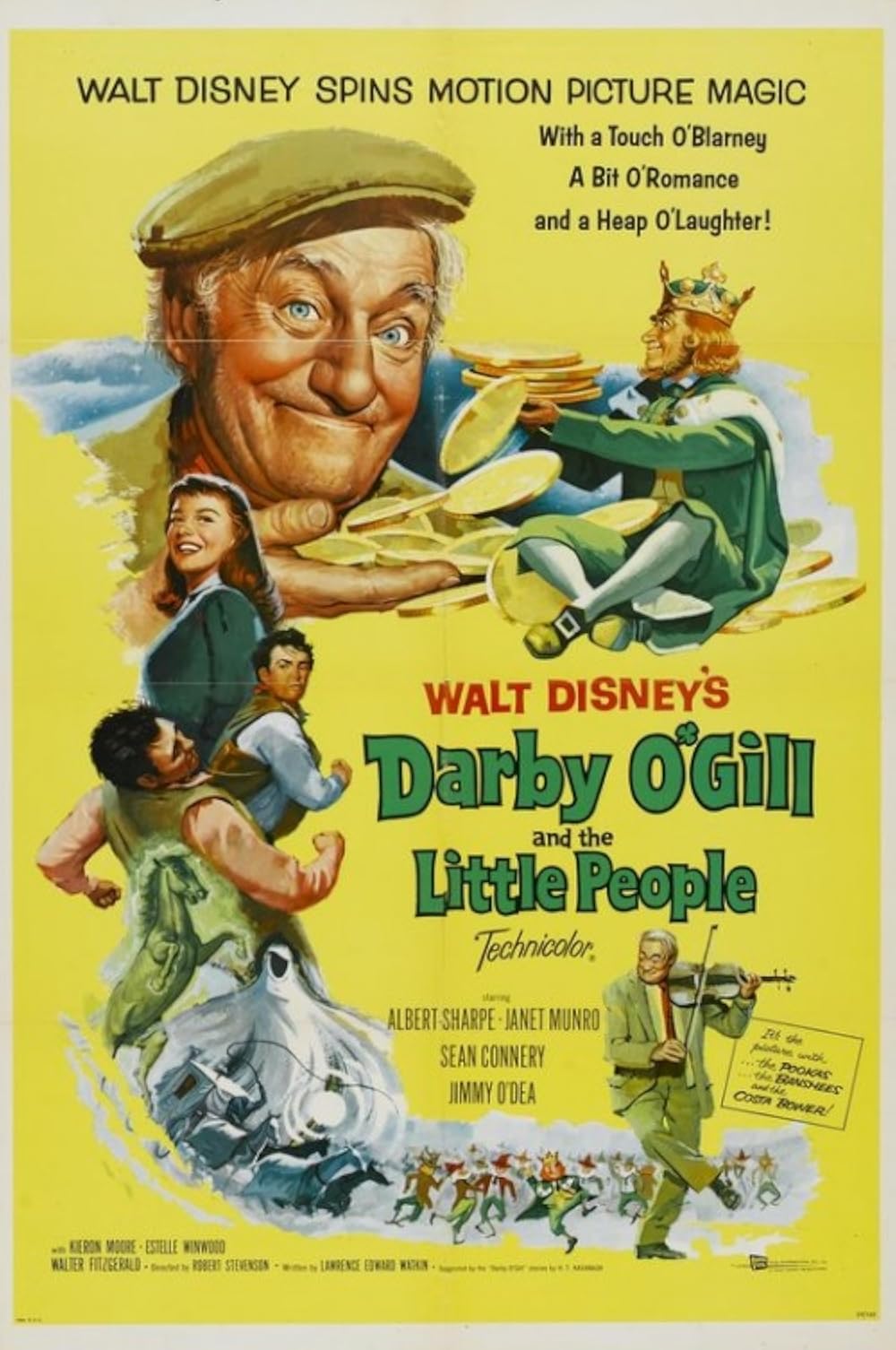
Leprechauns, Pookas and Banshees

When you think of the many accomplishments of animation pioneer and studio mogul Walt Disney, producing horror films is not one of them. At the same time, several Walt Disney films have featured horrific moments that made strong impressions and scared children such as the boys-into-donkeys transformation scene in Pinocchio (1940) or the fire-breathing dragon at the climax of Sleeping Beauty (1959). A few Disney productions even flirted with the supernatural and creepy folk tales such as The Legend of Sleepy Hollow (1949) and Dr. Syn (1964) with its title character disguised as a demonic-looking scarecrow who haunts the marshes at night. Nothing, however, can top Darby O’Gill and the Little People (1959) when it comes to merging the ordinary with the fantastic. The film plunges the viewer into a fairytale Ireland where magical and terrifying things occur and some scenes could actually give the kiddies nightmares, making this my favorite Disney live-action film.

Continue reading

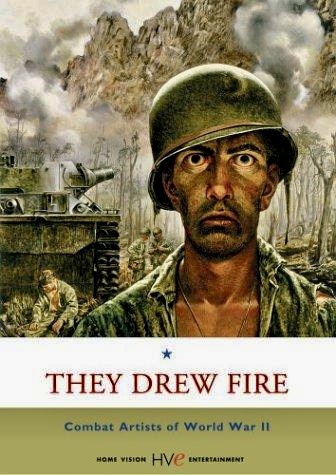
Artists on the Battlefield

Originally produced for Oregon Public Television in 1999 and released on home video in 2000, They Drew Fire: Combat Artists of World War II is a fascinating and informative documentary on a little-known aspect of World War II; namely, the role artists and illustrators played in America’s war effort. Often assigned to the front lines where they frequently found themselves in life-threatening combat situations, these young men stood apart from their fellow soldiers in one regard; they came equipped with sketch pads, paints, canvases, brushes and other art supplies. Armed with these tools of the trade, this specialized group transformed their experiences into powerful works of art which revealed the true horrors of the battlefield, many of which were showcased in such widely-read publications as Life magazine.

Continue reading