The Spider and the Fly

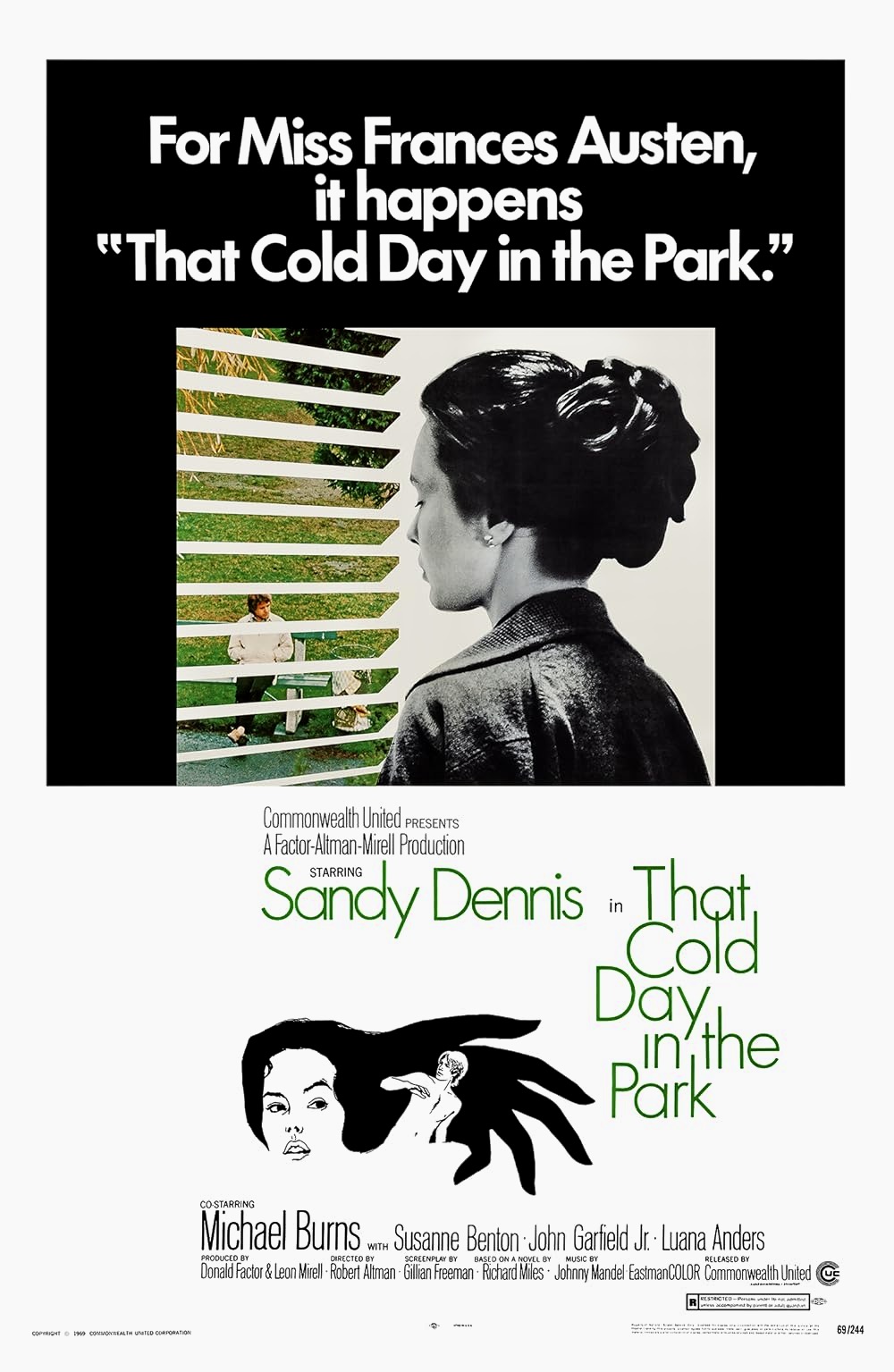
Most film critics and movie lovers point to Nashville (1975) as Robert Altman’s masterpiece, although I’ve always been partial to his unique spin on the Western, McCabe and Mrs. Miller (1971). I also admire an earlier film that he directed that was conspicuously absent or missing from his filmography in most of the obituaries on the director after he died. That Cold Day in the Park was made between Countdown (1967) and M*A*S*H* (1970) in 1969 and was based on a novel by Richard Miles. The screenplay was by British screenwriter Gillian Freeman, who had written the novel and film adaptation of The Leather Boys (1964), Sidney J. Furie’s drama about a troubled working class marriage and the husband’s friendship with a closeted gay biker.
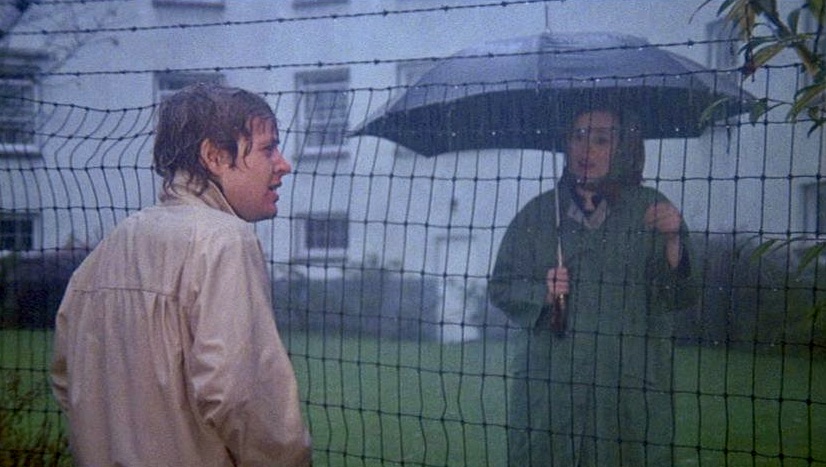
Frances (Sandy Dennis) invites a seemingly homeless man (Michael Burns) to her apartment to dry off from the rain in THAT COLD DAY IN THE PARK (1969), directed by Robert Altman.

A gender twist on John Fowles’s The Collector, That Cold Day in the Park stars Sandy Dennis as Frances Austen, a lonely spinster whose apartment overlooks a park in Vancouver. One wet, wintry day she spots a young man on a park bench who appears to be homeless. She invites him into her home to get warm but ends up encouraging him to stay. The fact that the stranger (Michael Burns) pretends to be mute only adds to the ensuing strangeness. His little joke backfires, however, when he arouses Dennis’s long-suppressed sexual feelings and becomes a prisoner in her apartment.

Continue reading
A Warrior’s Path to Redemption

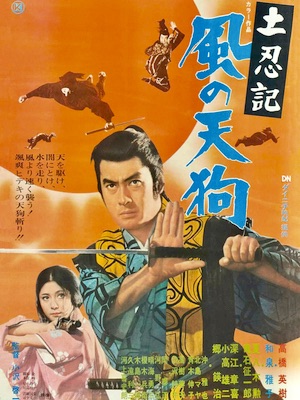
The Japanese film poster for HAUNTED SAMURAI (1970)

The samurai film in Japanese cinema was often classified as a chanbara, a sub-category of the jidai-geki (period drama) which was more action oriented. The chanbara was at the peak of its popularity in Japan from the early 50s to the early 70s with occasional revivals of the form up through the present and some of the most famous examples of the genre are Teinosuke Kinugasa’s Gate of Hell (1954), Hiroshi Inagaki’s Samurai Trilogy (1954-1956), and Akira Kurosawa’s Seven Samurai (1954) and Yojimbo (1961). One aspect of the samurai film that always struck me was that it seemed like a period variation on the American western and the fact that Kurosawa was a huge fan of director John Ford seems obvious when you look at Seven Samurai and Yojimbo, whose main protagonists are samurai-for-hire, not unlike professional gunfighters or bounty hunters in the wild west. Both of Kurosawa’s films went on to inspire two popular westerns respectively – John Sturges’s The Magnificent Seven (1960) and Sergio Leone’s A Fistful of Dollars (1964). Reminiscent of Kurosawa’s chanbara efforts is Haunted Samurai (Japan title: Kaze no Tengu, 1970), an often overlooked samurai action-adventure from director Keiichi Ozawa that came toward the tail end of the genre’s peak period but also seems custom made for an American western remake.

Continue reading

Cinema Interruptus

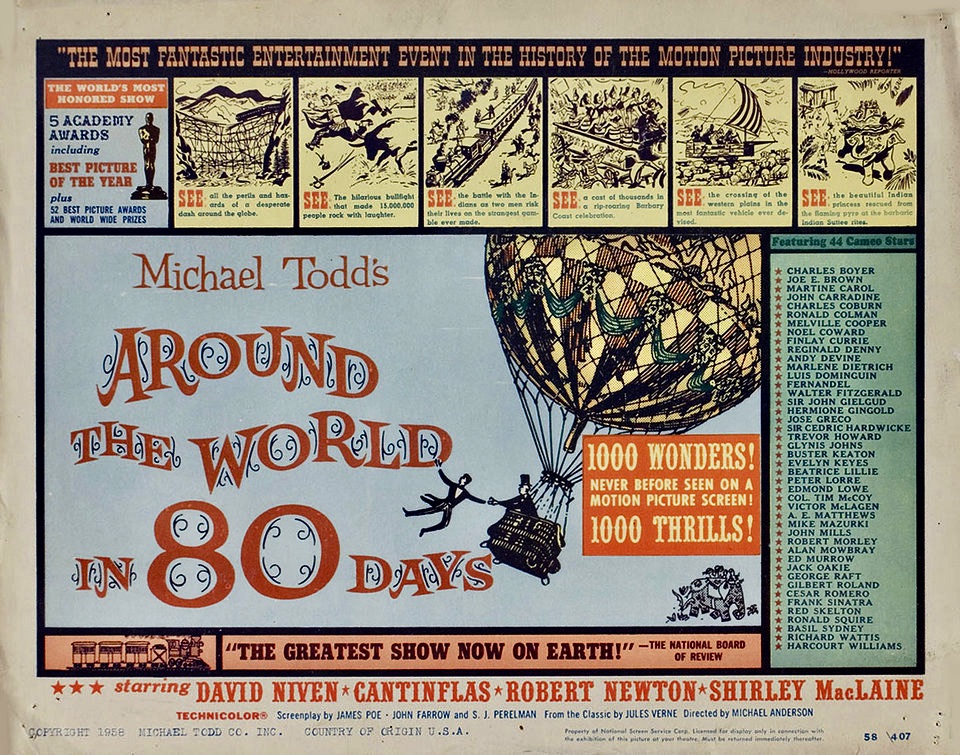
All of us have probably walked out on a movie at the theatre at some point in our lives but how often have you been forced to leave a film due to circumstances beyond your control? The few times this has happened to me are ingrained in my memory probably because it was such a rare occurrence…and because the interrupted scene and the movie itself never received the proper closure. In other words, a simple case of cinema interruptus (the Latin word for interrupted). The films in question are Around the World in 80 Days (1956), Cat on a Hot Tin Roof (1958), Don’t Give Up the Ship (1959) and Cat Ballou (1965).

Continue reading

Building the Ultimate Superhero

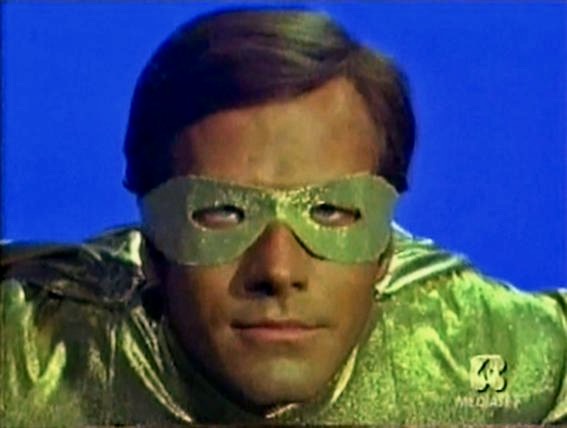
Richard Harrison plays a banker who gets transformed into a superhero against his will in the 1968 fantasy adventure FANTABULOUS INC.

Richard Harrison is not a name most moviegoers in the U.S. are probably familiar with but film buffs around the world know him as one of the American actors who relocated to Italy in the early sixties and enjoyed a long and prolific career there in B-movie fare and low-budget genre films. In a career of more than 100 feature films, there may not be a bona fide classic among them but there are several cult gems and entertaining oddities to enjoy and one of my favorites is La Donna, il Sesso e il Superuomo (English title: Fantabulous Inc., 1968), directed by Sergio Spina. Although it is usually classified as a Eurospy flick released in the wake of the James Bond craze, it is actually a fantasy/adventure/satire that sends up the whole concept of the superhero in comic books and films. It also works as a subversive cautionary tale about the dangers of fascism delivered in the form of a comic cartoon.

Continue reading

Law of the Yukon

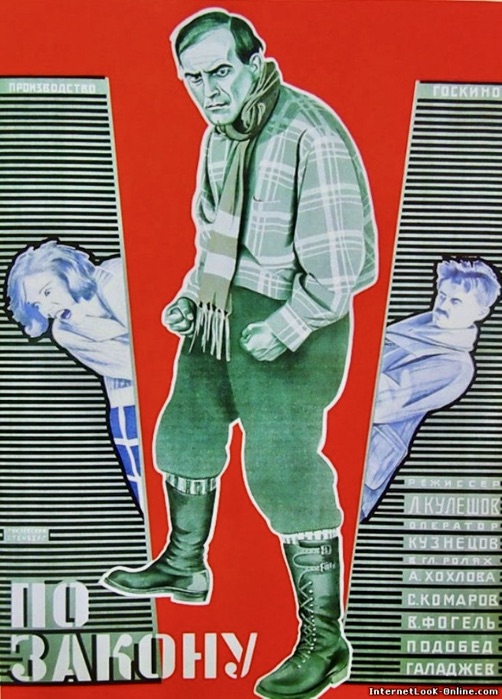
The Russian film poster for BY THE LAW (1926)

It is not a surprise that novelist/journalist Jack London was the most popular writer of the early 20th century and he enjoyed an international readership, especially in Japan, Eastern Europe and Russia. In fact, one of the landmark films of early Soviet cinema is By the Law (Russian title: Po Zakonu, 1926), based on London’s short story The Unexpected, and directed by Lev Kuleshov, a former painter turned set designer who eventually became a film theorist and director who launched the montage movement of the 1920s (Sergei Eisenstein [The Battleship Potemkin, 1925] was one of his students).

Continue reading