Henri-Georges Clouzot’s Le Corbeau

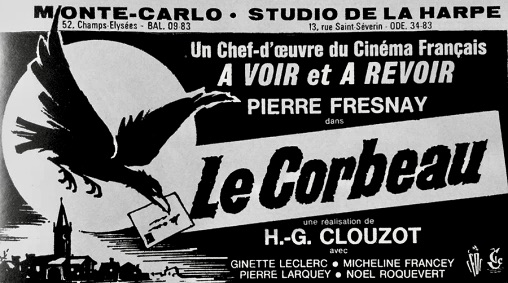
In a small village in rural France, an anonymous writer sends a series of poison-pen letters to selected residents. Signed with the mysterious name of “Le Corbeau”, the letters accuse the new physician in town, Dr. Remy Germain (Pierre Fresnay), of adultery and performing abortions. While the townspeople are scandalized by this information, it soon becomes apparent that Dr. Germain is not the only target of this vicious character assassination and that other respected members of the community will soon be victimized, their most shameful secrets exposed to all by “The Raven.” Soon, the villagers begin turning on each other, creating an atmosphere of increasing paranoia and mistrust that culminates in murder, suicide and an angry mob scene. There might not be a more misanthropic view of humanity than Le Corbeau (aka The Raven, 1943), directed by Henri-Georges Clouzot (The Wages of Fear, 1953), but the movie is not only a dark, brilliantly conceived melodrama which unfolds like a suspense thriller but a cautionary character study of how fear of others brings out the worst in everyone.

Continue reading
Seize the Day

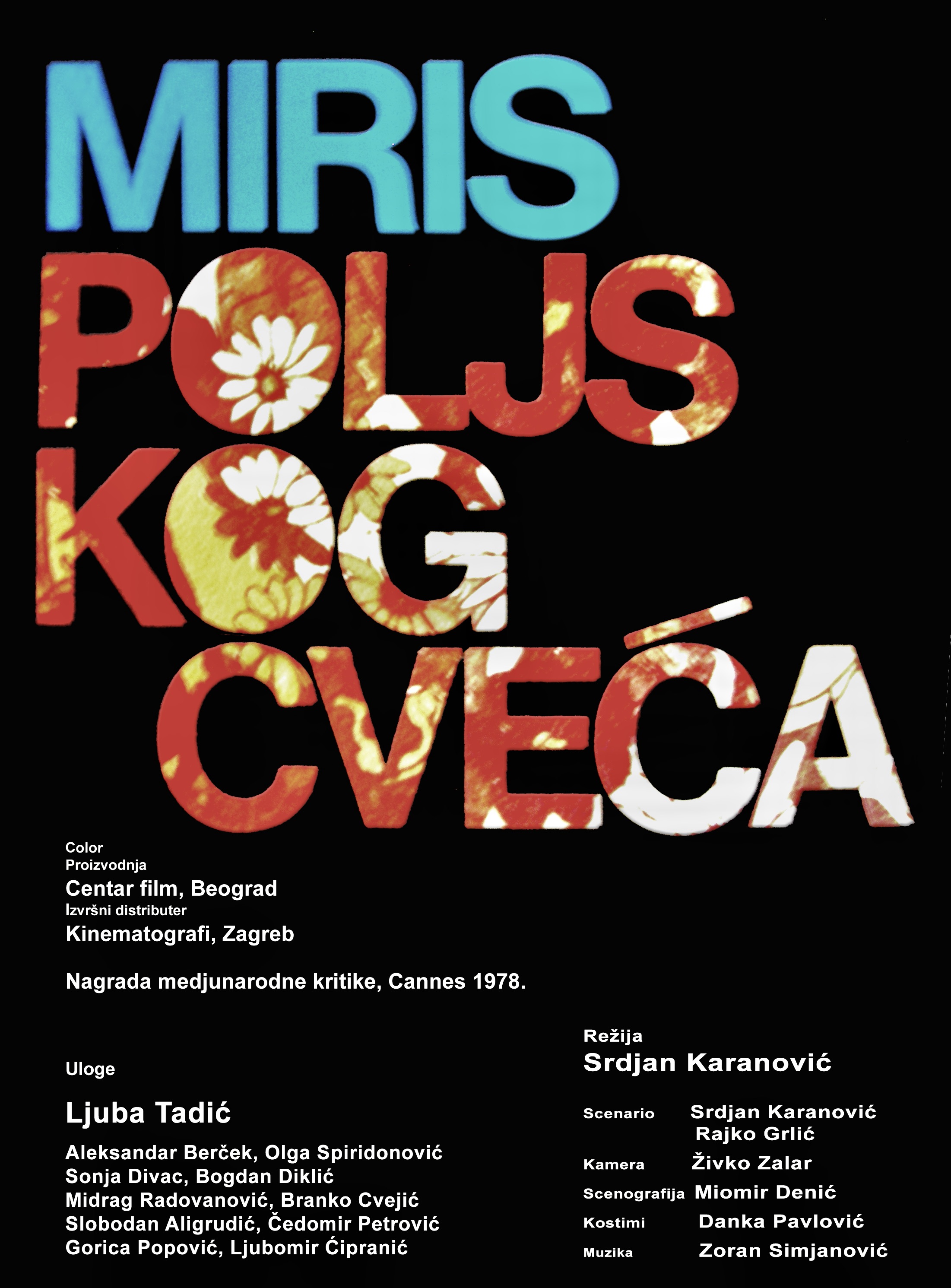
The film poster of the Yugoslavian film THE FRAGRANCE OF WILD FLOWERS (1977).

Have you ever felt like you were not leading the life you imagined for yourself or worse – you had achieved success in your field but felt as if everything had become a boring, mechanical routine and you were trapped? This is the existential dilemma that is facing Ivan Vasiljevic (Ljuba Tadic), a famous theater actor, who is currently preparing for a production of Oscar Wilde’s An Ideal Husband. The day before the play’s premiere, Ivan walks out during the rehearsal, refusing to return, and decides to abandon everything, including his wife. He joins his friend Jeca Smrda (Nemanja Zivic) aboard a rundown barge and settles into a life of leisure with no responsibilities as they drift along the shore of the Danube. While Ivan’s nonconformist rebellion seems to mirror the behavior of free-spirited characters in American films like Murray (Jason Robards Jr.) in A Thousand Clowns (1965) or the poet Samson (Sean Connery) in A Fine Madness (1966), his journey, as depicted in Miris Poljskog Cveca (English title: The Fragrance of Wild Flowers, 1977), becomes a wry satire and meditation on one man’s life in Yugoslavia under a Socialist regime. But the film is not a political critique and opts instead for an offbeat character study.

Continue reading

Detective Kindaichi vs. Ghostman Sagawa

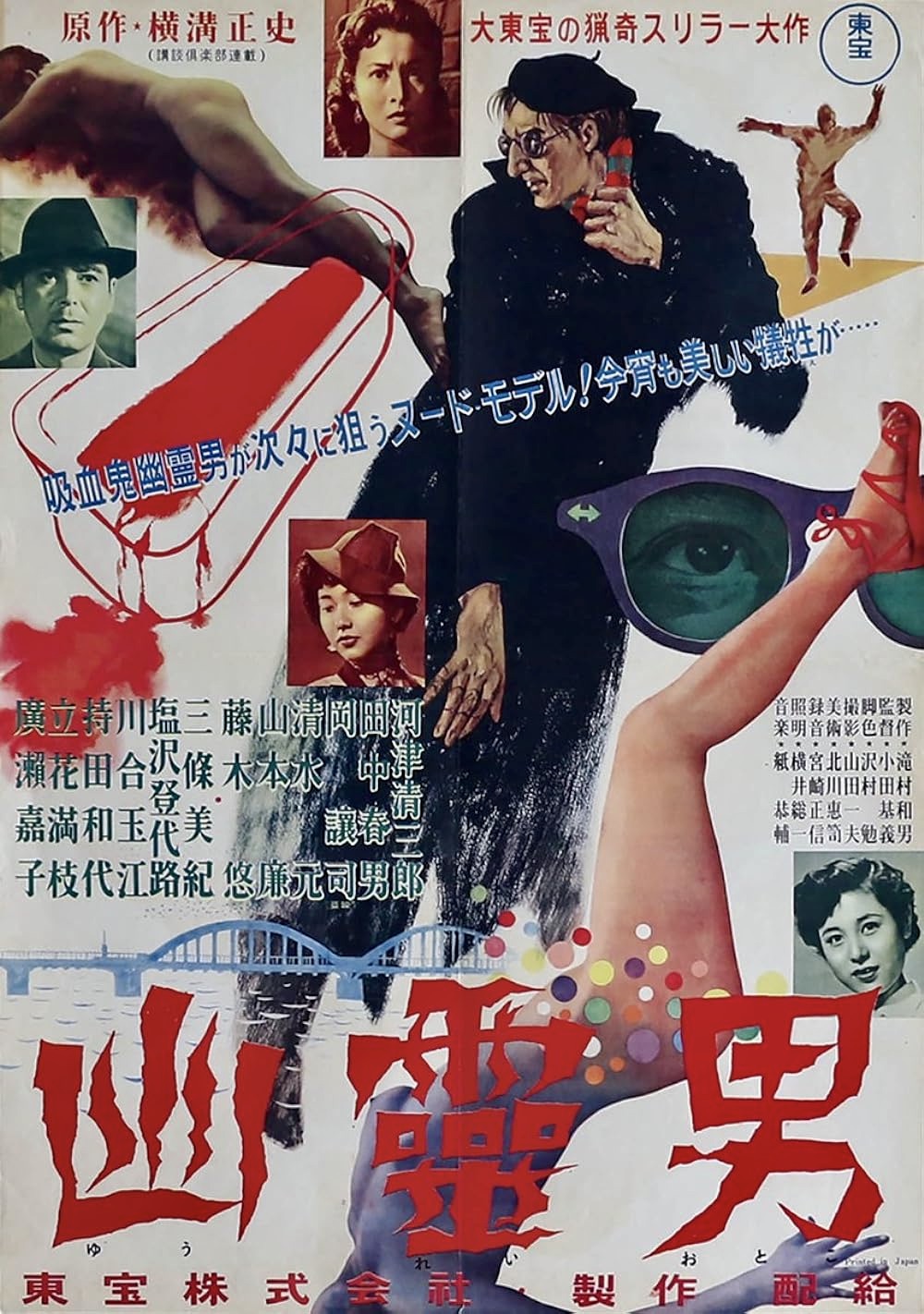
The 1954 Japanese film poster for GHOST MAN.

Novelists who specialize in murder mysteries and thrillers with detective heroes are not exclusively British and American but practitioners of a worldwide literary tradition, especially in Japan where Edogawa Ranpo, Soji Shimada and Seishi Yokomizo are considered masters of the form. Yokomizo, for example, was so popular and prolific that he was often called the “Japanese John Dickson Carr,” a writer of American detective fiction who created such famous sleuths as Dr. Gideon Fell and Sir Henry Merrivale in his novels. Yokomizo became popular in the post-WW2 years with a series of “locked room” mystery thrillers that began with The Honjin Murders in 1946 featuring the detective hero Kosuke Kindaichi. Yet it wasn’t until 1954 when the character of Kindaichi was first portrayed on the screen by actor Seizaburo Kawazu in the murder mystery Yurei Otoko (English title: Ghost Man). It was the first of several Kosuke Kindaichi film adaptations but, for its era, it was also extremely racy for its female nudity as well as its disturbing narrative which follows the crimes of a cunning serial killer who preys on models.

Continue reading

The Price of Fame

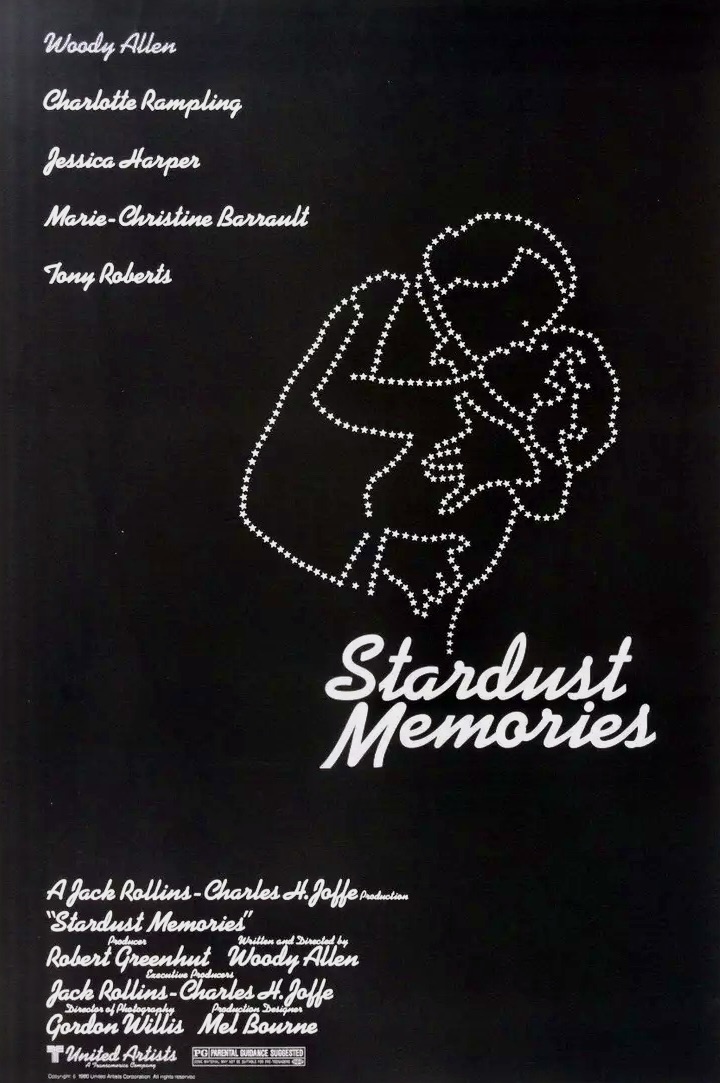
After directing more than fifty feature films including the three-part New York Stories (1989) with contributions from Francis Ford Coppola and Martin Scorsese and the re-edited/re-dubbed version of a Japanese spy thriller retitled, What’s Up, Tiger Lily? (1966), Woody Allen has one of the most impressive filmographies of any living director in Hollywood. Regardless of what you think about him as a person due to the controversy that surrounded his marriage to adopted stepdaughter Soon-Yi Previn, one can’t deny all of the critical acclaim he has amassed over the years, which includes 24 Oscar nominations, three of which won the Academy Award for Best Screenplay (Annie Hall, Hannah and Her Sisters and Midnight in Paris). Not all of his films have been box office hits and some have been minor efforts or polarizing like September (1987) or Deconstructing Harry (1997), but the true acid test for any fan or critic who loves Woody Allen movies is Stardust Memories (1980), his most misunderstood and generally maligned tenth feature about the downside of being famous.

Continue reading

A Prison of His Own Design

The Indian film poster for RAT-TRAP (1982).

The 1982 Indian film Elippathayam (English title: Rat-Trap) is one of those rare movies where the title has a double meaning – one is literal, the other metaphorical – which the director, Adoor Gopalakrishnan, succeeds in illuminating through a slow, methodical and almost hypnotic visual style that is neither pretentious nor didactic.

Continue reading

Revenge in Four Acts

The Italian film poster for DEATH SENTENCE (1968)

Film historians estimate that probably more than 550 spaghetti westerns were made in Europe (mostly Italy and Spain) during the height of that cinematic craze between 1961 to 1977. More than fifty per cent of those offerings were mostly forgettable programmers or mediocre genre fare or outright junk. And probably less than twenty-five per cent of the movies were high water marks or masterworks such as the Sergio Leone ‘Dollars’ trilogy and Once Upon a Time in the West (1968), Sergio Corbucci’s Django (1966) and The Great Silence (1968) and Sergio Sollima’s The Big Gundown (1967). Yet, there were still more than a handful of spaghetti westerns that were stylish examples of the form or offbeat and imaginative enough to warrant special attention and one of those is Sentenza di Morte (English title: Death Sentence, 1968), directed by Mario Lanfranchi.

Continue reading