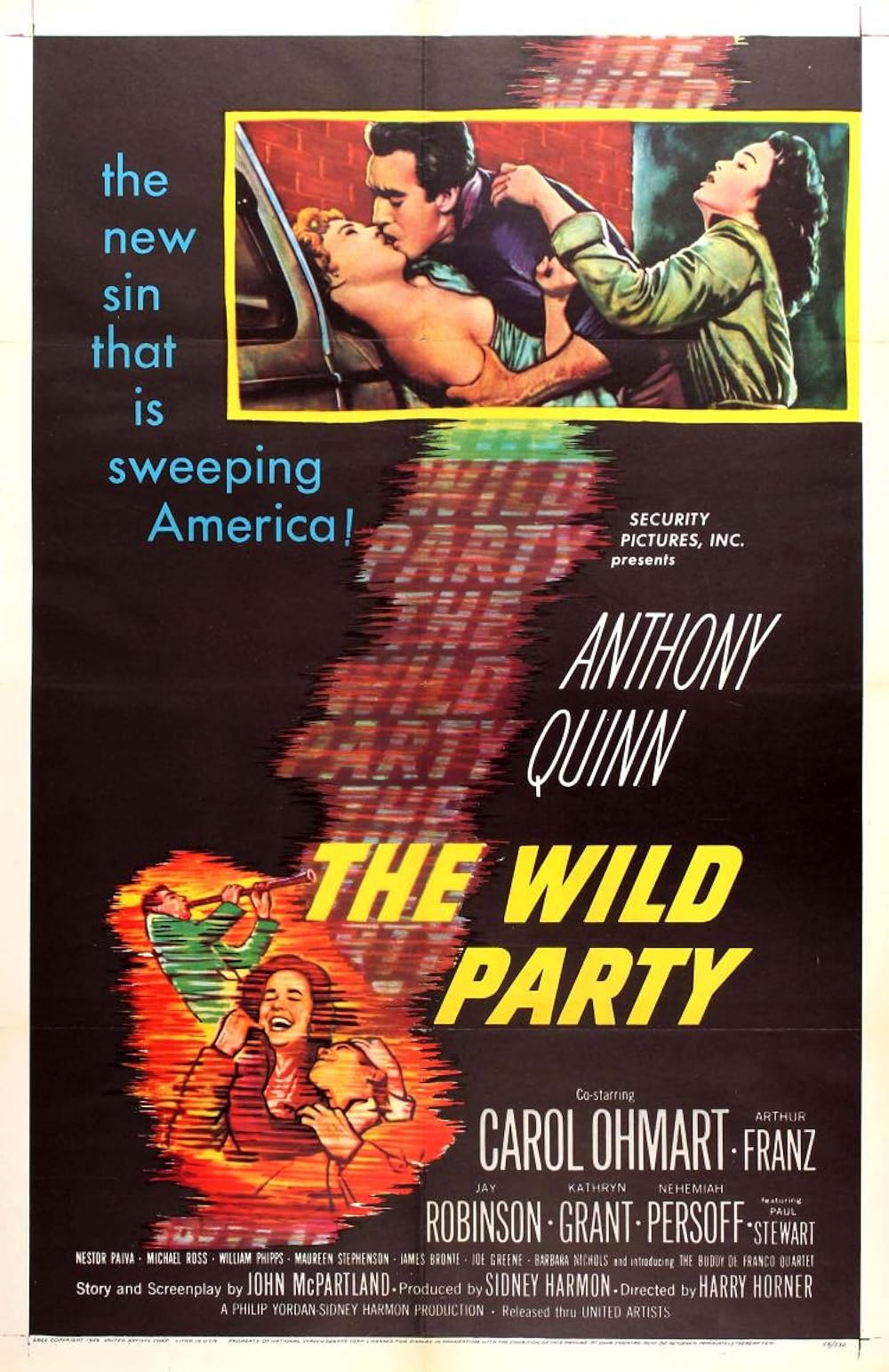
Among the numerous Hollywood films that attempted to explore the subculture of the emerging beatnik and bohemian scene of the late fifties, none is odder or more blatantly miscast than The Wild Party (1956) which casts Anthony Quinn as Tom Kupfen, a former star football player turned full time deadbeat, hanging out at basement jazz clubs and dive bars, looking for action. He’s joined by a motley crew of hipster accomplices that includes Kicks (Nehemiah Persoff), a jazz pianist of some talent, Honey (Kathryn Grant), a spaced-out former girlfriend, and Gage (Jay Robinson), a switchblade-toting psychopath.
Maryutkh (Izolda Izvitskaya), a Red Army sharpshooter, prepares to greet some approaching White Army members in the Russian Revolution war drama THE FORTY-FIRST (1956).
After the death of Soviet premier Joseph Stalin in 1953, Russia began to experience a less repressive period in the arts, especially the cinema, which had previously been used for mostly propaganda purposes. During this brief period, which flourished between 1953 and 1967, Russian filmmakers were allowed to explore the artistic possibilities of the medium, resulting in a number of cinematic masterpieces which enjoyed international distribution, even in the U.S. Among the more famous of examples from the “Cinema of the Thaw” (as it came to be called) are Sorok Pervyy (The Forty-First, 1956), Letyat Zhuravli (The Cranes are Flying, 1956), the historical epic, Tikhiy Don (And Quiet Flows the Don (1957), Don Kikhot (Don Quixote, 1957), The Idiot (1958), based on the novel by Fyodor Dostoevsky, and Ballada o Soldate (Ballad of a Soldier, 1959). The latter film, in particular, which won a special award for director Grigori Chukhrai at the Cannes Film Festival, is still considered a high water mark for Soviet cinema in the 50s but it is Chukhrai’s debut film, The Forty-First, which launched the director’s career and is in danger of being forgotten.


 Cinema Sojourns