By the time Wim Wenders won the Palme d’Or at Cannes for Paris, Texas in 1984, he was well established as an internationally renowned director. He made his first big splash on the world stage in the early 1970s along with other New German Cinema directors (Werner Herzog, R.W. Fassbinder, etc.) with films such as The Goalie’s Anxiety at the Penalty Kick (1972) and Alice in the Cities (1974). Wenders had also dabbled with non-fiction-like formats in early experimental shorts, music videos and the Cannes-focused TV documentary of various film directors in Chambre 666 (1982). Yet, it was Tokyo-Ga 1985), the feature length portrait he made directly after Paris, Texas, that really triggered Wenders’s interest in not just non-fiction filmmaking but in Japan cinema and culture, especially the works of Yasujiro Ozu.
Continue readingTag Archives: Tokyo Story
The Double Life of Tokiko

Tokiko works as a typist in a business office where Okazki, the owner’s son, is the office manager. He is smitten with his employee and often flirts with her behind closed doors in his private office. Tokiko manages to keep him at bay even though he showers her with gifts and offers her an engagement ring. What Okazki doesn’t know is that Tokiko leads a completely different life after work when she sheds her office worker identity and transforms into a chic underworld player with a gangster boyfriend, Joji. Tokiko not only supports Joji with her day job but also serves as his partner in crime in various money-making schemes. From this brief description you probably wouldn’t suspect that the Japanese crime drama, Hijosen no Onna (English title: Dragnet Girl, 1933), was directed by the celebrated Yasujiro Ozu, but it is an early and surprising entry in his filmography before he became famous for his portraits of Japanese family life in such post-WW2 movies as Late Spring (1949), Early Summer (1951) and his 1953 masterpiece, Tokyo Story.
Continue readingHomeward Bound
Films about aging and the elderly are not that prevalent in Hollywood’s yearly production schedule of new films for obvious reasons. It is not a subject that most moviegoers seeking escapism, especially younger viewers, want to contemplate. It is also a risky commercial proposition unless the film is a heartwarming drama with broad appeal (Driving Miss Daisy, 1989) or a feel-good comedy like Harold and Maude (1970), which was a box office flop on its initial release before it went on to become a profitable cult hit. Of course, some of the undisputed masterpieces of 20th century cinema have focused on senior citizens like Vittorio De Sica’s Umberto D (1952), Yasujiro Ozu’s Tokyo Story (1953), and Ingmar Bergman’s Wild Strawberries (1957) but these are not mass appeal attractions but the favorites of a niche art house audience. Fridrik Thor Fridriksson’s Children of Paradise aka Born Natturunnar (1991) is certainly a film that belongs in this latter grouping but is distinctly different in tone, combining social realism with deadpan humor and a touch of magical realism.
Continue readingHome Alone
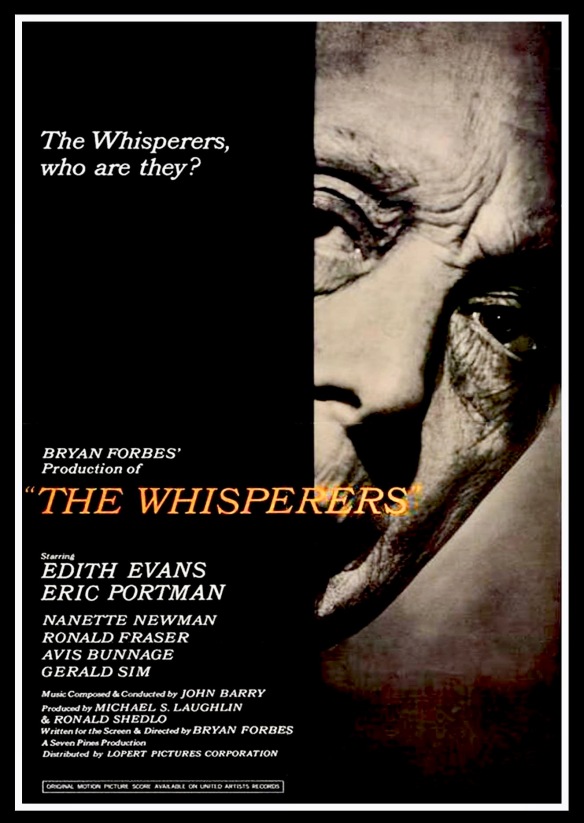
No one wants to think about growing old, becoming infirm and having to rely on others for assistance, particularly after a life of relative independence. While some are lucky enough to have family and friends to help out, many elderly people have no one for support and are left to fend for themselves among strangers. The situation becomes even more desperate without savings or financial assistance. Certainly this isn’t a topic that the commercial cinema has often explored for obvious reasons and great films on this subject are rare indeed but occasionally a masterpiece has emerged. Vittorio De Sica’s Umberto D. [1952], Akira Kurosawa’s Ikiru [1952], and Yasujiro Ozu’s Tokyo Story [1953] are prime examples while a handful of other films remain memorable for the performances alone – Victor Moore and Beulah Bondi in Make Way for Tomorrow [1937], Art Carney in Harry and Tonto [1974] and Edith Evans in The Whisperers [1967], Bryan Forbes’s often overlooked and forgotten adaptation of Robert Nicolson’s novel, Mrs. Ross. Continue reading