Rave On!

SIRAT (2025), from Spanish director Oliver Laxe, opens with an illegal rave in the desert of Morocco before it transitions into a mysterious and shocking road trip.

We see the hands of roadies placing gigantic audio speakers on top of and beside each other on the arid plains of the Sahara Desert in Morocco. When they are finished, their work is revealed as a literal wall of sound, designed to super-amplify the techno beats of an incognito rave. As the propulsive rhythm floods the desolate location framed by towering red canyon walls, ravers let themselves go in an uninhibited dance frenzy, most of them lost in drug induced or spiritual ecstasy. Yet, among this throbbing mass of humanity, two people have not come to dance. Luis (Sergi Lopez) and his young son Esteban (Bruno Nunez Arjona) have come to distribute flyers for Esteban’s missing sister, who is a fan of raves and could possibly be here. So begins Oliver Laxe’s Sirat (2025), a cinematic journey that is both corporeal and metaphysical as a search for a missing person evolves into a life or death encounter with the unknown.

Continue reading
Henri-Georges Clouzot’s Le Corbeau

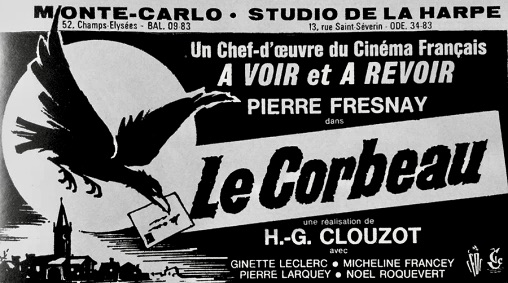
In a small village in rural France, an anonymous writer sends a series of poison-pen letters to selected residents. Signed with the mysterious name of “Le Corbeau”, the letters accuse the new physician in town, Dr. Remy Germain (Pierre Fresnay), of adultery and performing abortions. While the townspeople are scandalized by this information, it soon becomes apparent that Dr. Germain is not the only target of this vicious character assassination and that other respected members of the community will soon be victimized, their most shameful secrets exposed to all by “The Raven.” Soon, the villagers begin turning on each other, creating an atmosphere of increasing paranoia and mistrust that culminates in murder, suicide and an angry mob scene. There might not be a more misanthropic view of humanity than Le Corbeau (aka The Raven, 1943), directed by Henri-Georges Clouzot (The Wages of Fear, 1953), but the movie is not only a dark, brilliantly conceived melodrama which unfolds like a suspense thriller but a cautionary character study of how fear of others brings out the worst in everyone.

Continue reading

The Worm Turns

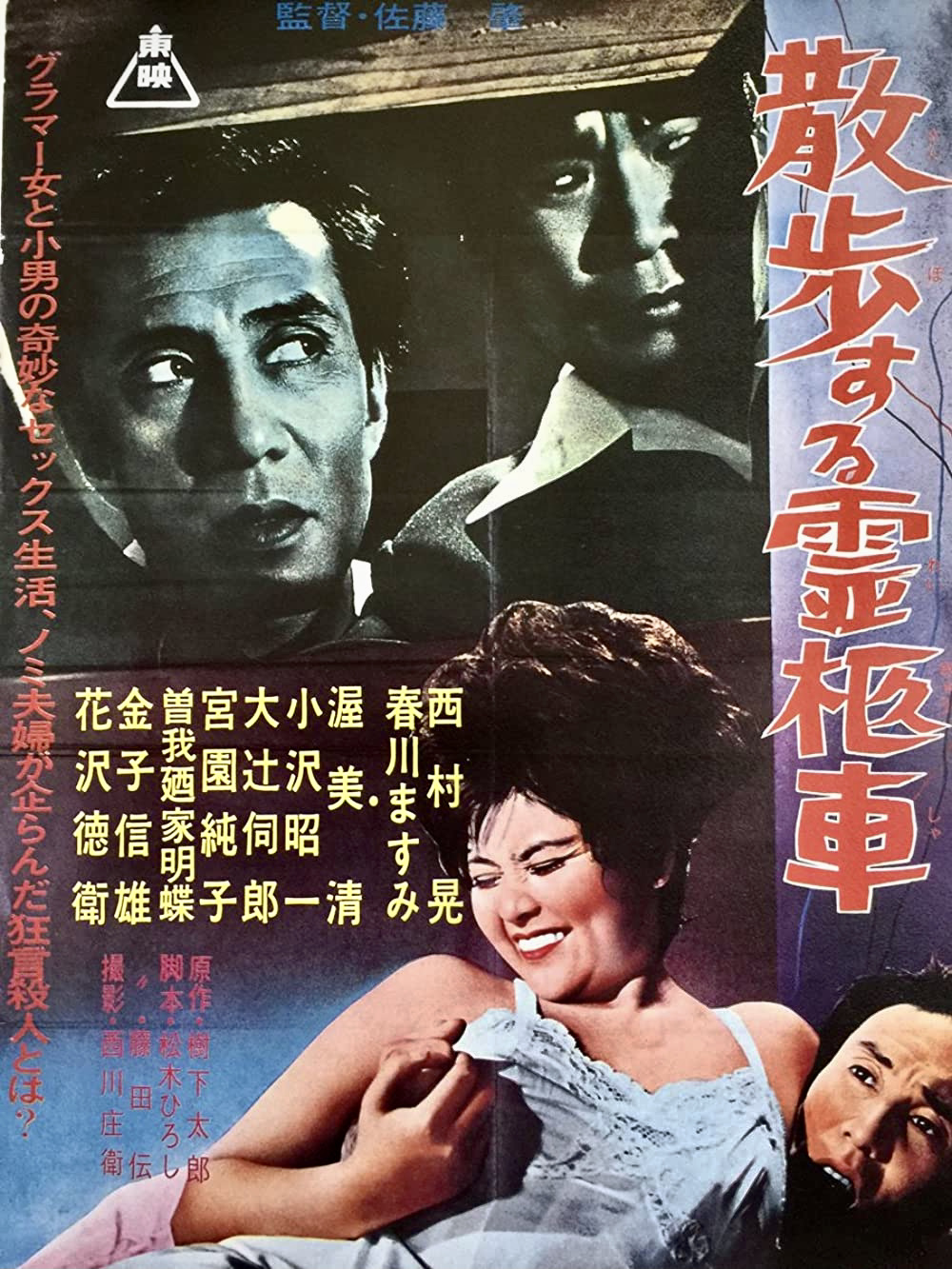
Japanese film poster for THE GLAMOROUS GHOST (1964)

The Glamorous Ghost (Japanese Title: Sanpo Suru Reikyusha, 1964) is something of a rarity in Japanese cinema – a noir comedy. This is the sort of twisty, convoluted farce in which all of the main characters are greedy, immoral and deceitful and you end up rooting for Asami (Ko Nishimura), the taxi driver protagonist, only because he is a pitiful underdog with a simple dream – to retire and run a pig farm in the country. His plan to accomplish that, however, involves blackmail and worse and before The Glamorous Ghost reaches its macabre but amusing climax, most of the major players have departed this mortal coil.

Continue reading

What a Piece of Work is Man

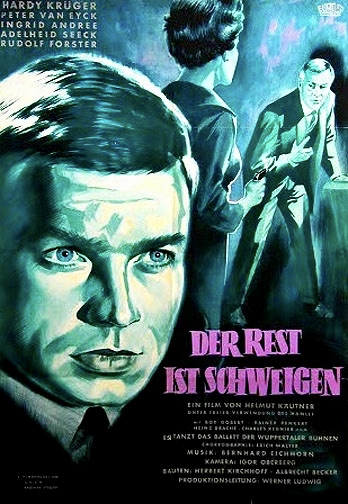
John Claudius, a professor of philosophy at Harvard, returns to his home in Germany after 20 years. As a young boy, he was sent to live with his mother’s relatives in Pittsburgh before World War II broke out. In his absence, his father built a financial empire with his munitions plant and became a respected member of the Nazi party. After Claudius senior was killed in a bombing raid, John’s mother Gertrud married Paul Claudius, the younger brother of her husband. The reason for John’s unexpected visit after 20 years is motivated by suspicions that his father was murdered by Paul and he is determined to learn the truth. Sound familiar? It should because The Rest is Silence (1959, German title: Der Rest ist Schweigen) is a loose adaptation of William Shakespeare’s Hamlet set in a post-WW2 Germany.

Continue reading