Moviegoers often complain about the Hollywood practice of remaking a film that was popular the first time around so why make it again. The answer is obvious. A good story is worth retelling again and again and author Peter B. Kyne is one of those writers whose various novels and stories have been adapted to the screen more than 100 times, especially during the silent and early sound era. Many of these works were also adapted by screenwriters without his consent or any compensation from the studios but most film buffs will recognize his most popular creation, which was a 1913 novella entitled Three Godfathers (It first appeared in The Saturday Evening Post in November 1912). D.W. Griffith made a short silent version of it in 1913 with Harry Carey called The Sheriff’s Baby. There was a Universal silent version in 1916 which also starred Harry Carey, then a remake directed by John Ford in 1920 called Marked Men, and yet another remake by Ford in color and starring John Wayne in 1948 entitled 3 Godfathers. Other adaptations include a made-for-TV version entitled The Godson in 1974 and even a 2003 Japanese anime called Tokyo Godfathers from director Satoshi Kon as a homage to the original story. But one version that is often overlooked is Hell’s Heroes (1929) directed by William Wyler.
Continue readingTag Archives: The Film Foundation
The Night of Counting the Years

It is not that common to encounter films from Egypt in the U.S. and only a handful have managed to enjoy theatrical distribution here in either film festival or art house screenings over the years. Youssef Chahine from Alexandria, Egypt is probably the best known director with more than 40 feature films to his credit including The Blazing Sun (1954) featuring Omar Sharif in his film debut and Bab el Hadid (Cairo Station, 1958), which brought him international attention. Other than Chahine, you might recognize Moshi Mizrahi although his best-known films were made in other countries; The House on Chelouche Street (1973), an Oscar nominee for Best Foreign Language Film was made in Israel, and Madame Rosa (1977) and I Sent a Letter to My Love (1980), both starring Simone Signoret, were filmed in France. A more contemporary Egyptian director is Atom Egoyan, although he was raised in Western Canada where most of his movies have been made including Exotica (1994) and The Sweet Hereafter (1997).

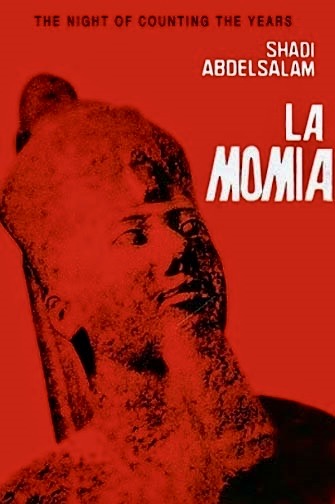
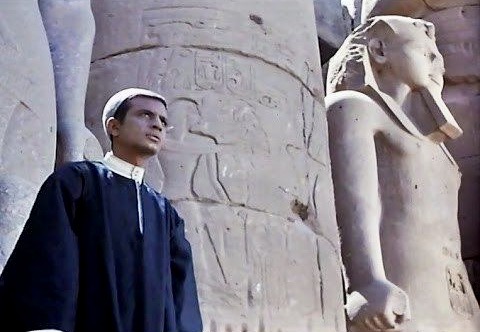
Many film historians and critics, however, often list Chadi Abdel Salam as one of the greatest Egyptian directors of all time on the basis of his solo feature film from 1969, Al-mummia (The Mummy aka The Night of Counting the Years), which has slowly acquired the status of a classic in its own country and around the world, thanks to the efforts of Martin Scorsese and The Film Foundation, which restored the film in 2009 in association with the Cineteca di Bologna and the Egyptian Film Center.
Continue readingThe Year of the Hare

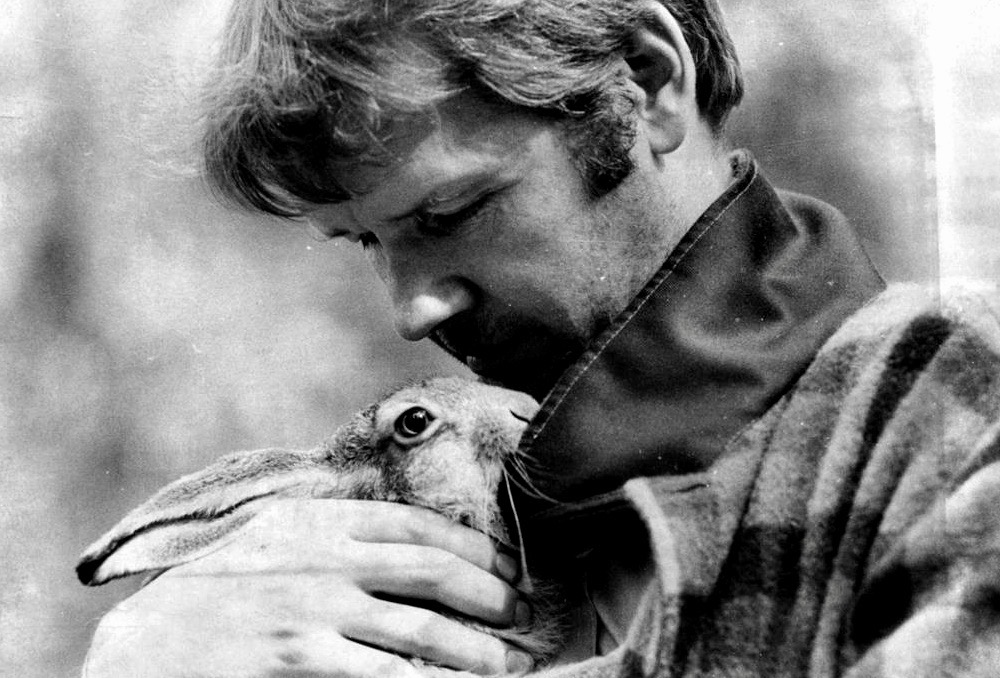
Road trip movies in which the main character goes on a journey with his pet is not that unusual in the annuals of cinema although the pet is usually a dog (Kelly Reichardt’s Wendy and Lucy, 2008) or a cat (Paul Mazursky’s Harry and Tonto, 1974). What makes Janiksen Vuosi (English title, The Year of the Hare, 1977) decidedly offbeat is that the protagonist Kaarlo Vatanen (Antti Litja) bonds with a hare that his car has hit and nurses it back to health as they wander into the wilderness. Vatanen, a marketing executive, has become completely disillusioned with modern life and tries to abandon everything – his career, his wife, his possessions – and get back to nature, living off the land and the kindness of strangers. In the process, he discovers a new best friend in the wounded hare, which is never given a name.
Continue reading