
A Whole Lot of Nunsense

The Spanish film poster for DARK HABITS (1983), directed by Pedro Almodovar.

Do you have a favorite nun movie? It seems that the most popular and commercially successful of the lot are either serious dramas like The Nun’s Story (1959) or comedy/musicals such as The Sound of Music (1965) and Sister Act (1992). There is also the more polarizing subgenre known as nunsploitation which caters to grindhouse audiences with abundant scenes of sex and violence (Jess Franco’s Love Letters of a Portuguese Nun [1977], Killer Nun [1079]) but can also embrace art house fare like Ken Russell’s The Devils (1971) and Walerian Borowczyk’s Behind Convent Walls (1978). Entre Tinieblas (English title: Dark Habits, 1983), directed by Pedro Almodovar, doesn’t fit easily into any of the above categories but, like any nunsploitation flick, it is likely to offend conservative and religious viewers. Still, Almodovar’s film is much closer to a Hollywood soap opera crossed with screwball comedy but its subversive and controversial nature isn’t the result of explicit sex or violence but its wicked satire of Catholicism and those who practice it. In this case, it’s a quintet of nuns who call themselves the Community of Humble Redeemers.

Continue reading
Witchcraft Through the Ages

How to best describe the 1922 Swedish film Haxan (also known as Witchcraft Through the Ages) by Danish director Benjamin Christensen? While not a conventional documentary by anyone’s standards, it is not a traditional narrative film either and straddles several genres in its exploration of witchcraft and the black arts from the Dark Ages up to 1921.

Continue reading

The Eternal Search for Paradise

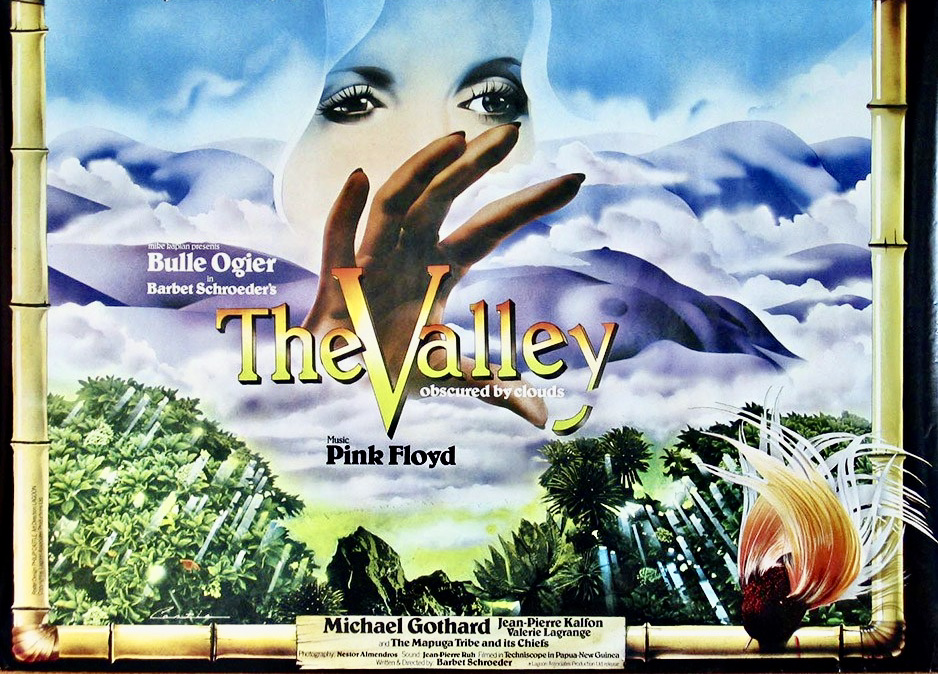
What is it about human nature that makes men want to climb the highest mountains, explore unknown regions in search of a rumored paradise or challenge their perceptions of the world in the name of self-discovery? It is this eternal quest that drives the narrative of  La Vallée (English title: The Valley, 1972), Barbet Schroeder’s second feature film after More (1969), a drug addiction drama that explores a similar theme of people who go too far in seeking ultimate experiences and sensations. Both films were made at a time when the youth culture of the late sixties was becoming more pessimistic and cynical about the hippie lifestyle. While More is a deep dive into hedonism that has the structure of a traditional drama, The Valley is a stranger affair. It combines ethnographic documentary elements with a loose storyline about a small group of hipster explorers who are intent on discovering an unexplored area on a map of Papua, New Guinea that is marked as a valley obscured by clouds.  

Continue reading