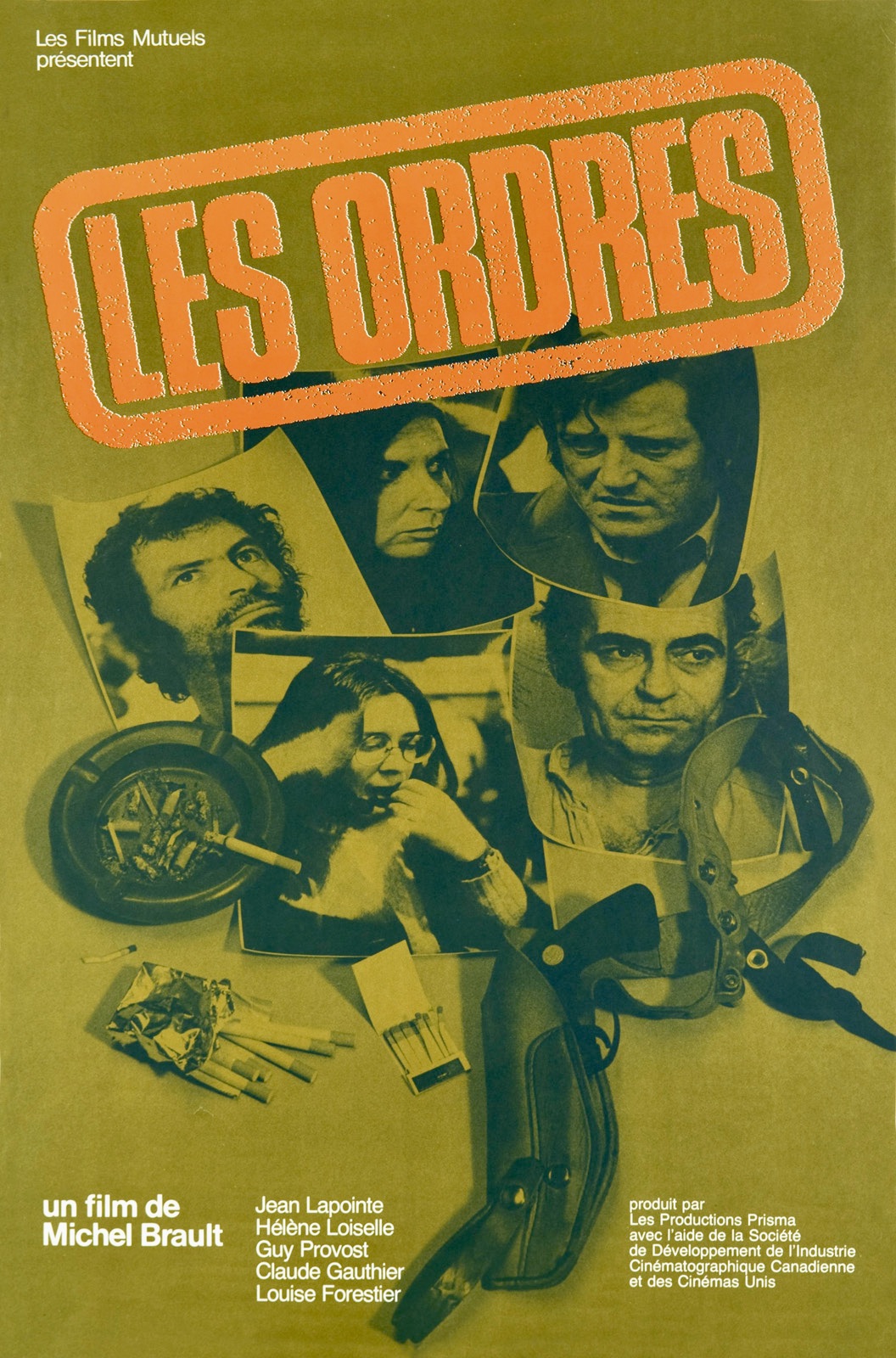
In October of 1970, the Canadian government was thrown into a state of turmoil by the actions of Front de Liberation du Quebec (FLQ), a terrorist group that wanted to achieve independence for Quebec and make it a socialist province. After the FLQ first kidnapped British diplomat James Cross on October 5th and followed it up with the abduction of Quebec Cabinet Minister Pierre Laporte five days later, Pierre Trudeau, Canada’s Prime Minister, called in the army and invoked the War Measures Act, which gave the police complete authority to arrest and interrogate anyone deemed suspicious, regardless of whether there was any evidence or not. Over 400 people were rounded up and subjected to numerous human rights abuses before being released, some after more than 21 days in jail. Les Ordres (1974), a cinema verite dramatization of this incident by Canadian director/cinematographer Michel Brault, follows the travails of five suspects, based on the actual transcripts of their incarceration.
Continue readingTag Archives: The Battle of Algiers
In the Shadows of the OAS
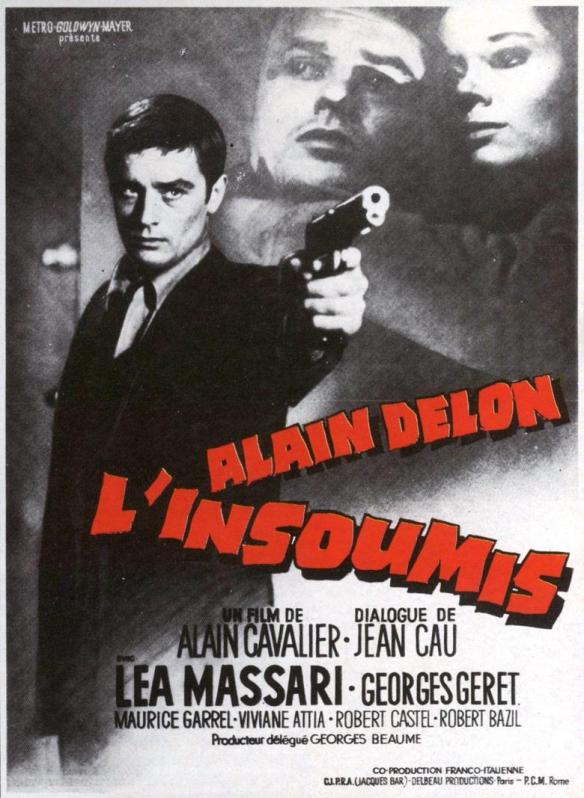
L’insoumis (1964) aka The Unvanquished is a relatively unknown but deeply compelling and haunting French film from director Alain Cavalier that aired several years ago on TCM in an English language version titled Have I the Right to Kill? (It was originally distributed by MGM in the U.S.) Shot in glorious black and white by master cinematographer Claude Renoir, the film plays like a politically-charged film noir and it could easily be the best of Alain Delon’s early performances. In the other key role, Lea Massari, the beautiful Italian actress who is best known as the warm, charismatic mother in Louis Malle’s Murmur of the Heart (1971), has rarely been more appealing. Continue reading
Fishing with Dynamite
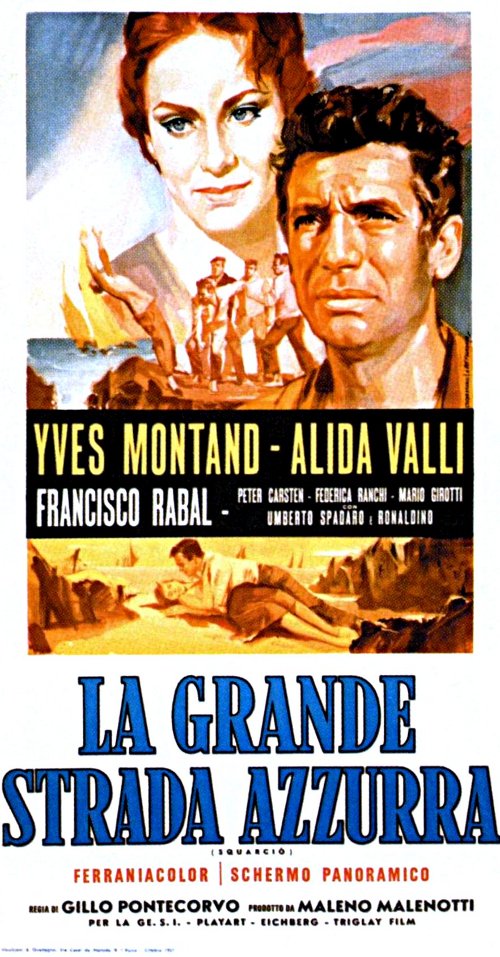
Gillo Pontecorvo began as a documentarian and his interest in social and political issues was already evident in early works like Giovanni (1955), which follows a textile laborer and her female co-workers through punishing work conditions into a full-blown protest against the factory owners. So it comes as no surprise that his first feature length film, The Wide Blue Road (aka La Grande Strada Azzurra, 1957), has an underlying social agenda even if it looks like a slice-of-life melodrama on the surface. Continue reading