Anatomy of a Marriage

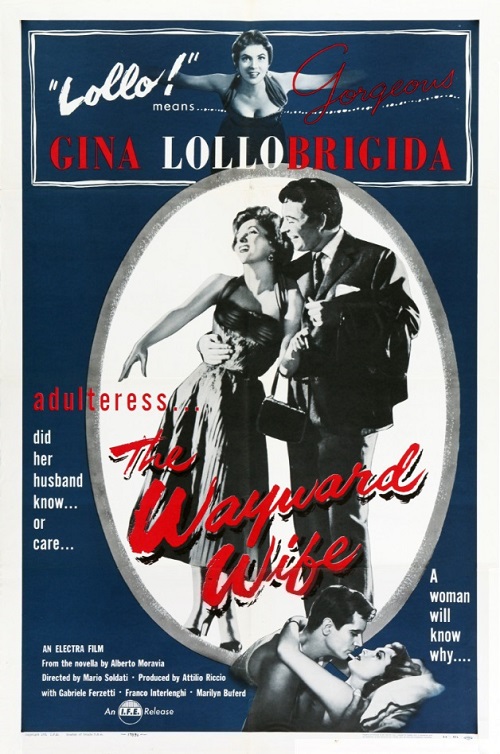
There is little doubt that Gina Lollobrigida’s rise to fame in the post-WW2 years was attributed to her beauty and sex appeal but there was another reason she achieved international recognition – she was a gifted actress who was magnetic and believable in any film genre. In fact, some of her best work is evident in a few key films of the early 1950s but is often overshadowed by the glossy Hollywood productions she made during her peak years such as Solomon and Sheba (1959), Never So Few (1959) and Come September (1961). Rene Clair’s romantic fantasy Beauties of the Night (1952) is generally credited as Lollobrigida’s breakthrough film and Luigi Comencini’s Bread, Love and Dreams (1953) brought her international acclaim as an actress (She was nominated for Best Foreign Actress by BAFTA and won Best Actress from the Italian National Syndicate of Film Journalists). But she had already proven herself as someone who could convincingly move from war drama (Achtung! Banditi!, 1951) to costume swashbuckler (Fanfare La Tulip, 1952) to sex farce (Wife for a Night, 1952) and La Provinciale (English title: The Wayward Wife, 1953), directed by Mario Soldati, is an impressive early dramatic showcase for Lollobrigida that is almost forgotten today.

Continue reading

How to Wreck a Hollywood Soiree

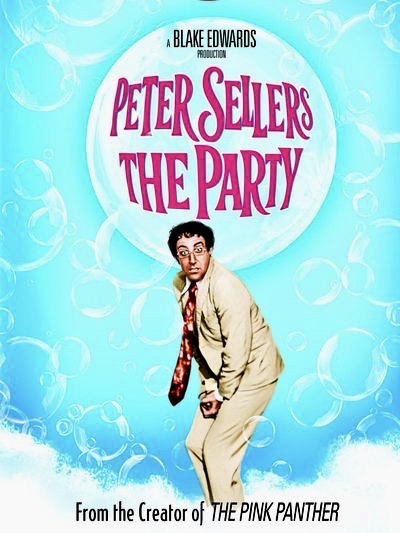
You don’t have to go back that many years to compile a long list of Hollywood films in which white actors are cast as Native Americans, Asians, Hispanics, African Americans, Pacific islanders, Arabs, etc. In fact, this controversial practice continues into the 21st century with such conspicuous portrayals like Jake Gyllenhaal as an Afghan orphan in Prince of Persia: The Sands of Time (2010) and Johnny Depp as Tonto in The Lone Ranger (2013). If you were creating a top ten hall of shame, however, it’s a good bet that Blake Edwards’ The Party (1968) starring Peter Sellers in brownface makeup as Indian film star Hrundi V. Bakshi would be near the top of the list. Yet, the film is considered by many film critics and movie lovers as one of Edwards’ best comedies and has a cult following that has nothing to do with racial stereotypes. It is also considered a radical departure from other comedies of that time for its improvised, almost experimental approach to the genre.  

Continue reading

The Prince and the Peasant

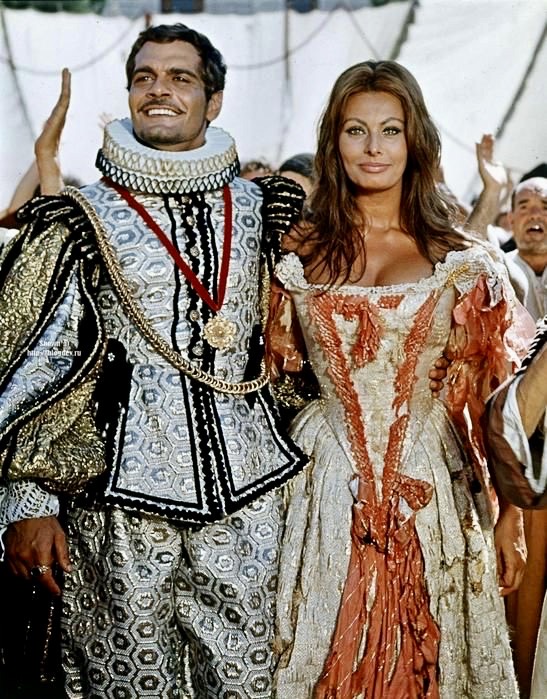
Will there be a happy ending for Prince Rodrigo (Omar Sharif) and Isabella Candeloro (Sophia Loren) in More Than a Miracle (1967), directed by Francesco Rosi.

Imagine, if you can, a rustic Neapolitan fairy tale directed by Francesco Rosi in the docudrama style of his post-neorealism films of the early sixties like The Moment of Truth (1965), shoot it in Technicolor and Techniscope, add a lush musical score by Piero Piccioni and you get More Than a Miracle (1967), a zesty Southern Italian fantasy-romance that was more appropriately titled Cinderella, Italian Style in Europe.   Continue reading

The Neopolitan Trinity

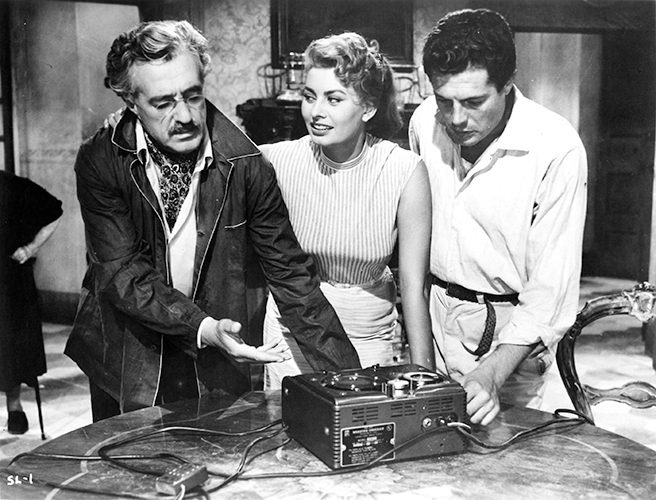
Vittorio De Sica (left), Sophia Loren, Marcello Mastroianni in TOO BAD SHE'S BAD (1955)

Vittorio De Sica (left), Sophia Loren, Marcello Mastroianni in TOO BAD SHE’S BAD (1955)

Often overlooked or dismissed as a minor comic trifle, Peccato che sia una canaglia (English title: Too Bad She’s Bad) has, in recent years, acquired a much more favorable reassessment from film scholars and film buffs due to occasional revivals on Turner Classic Movies and a 2004 DVD release from Ivy Video. It not only has a delightful, rakish charm and evocative on-location filming in Rome but showcases three of the most iconic names in Italian cinema directed by the legendary Alessandro Blasetti, whose career began in the silent era and spanned six decades. Also noteworthy is the fact that the film is based on the short story Il fanatico by Alberto Moravia, the celebrated Italian novelist who saw many of his novels turned into major films – la ciociara became Vittorio De Sica’s Two Women, Il disprezzo became Jean-Luc Godard’s Contempt and Il conformista became Bernardo Bertolucci’s The Conformist. Continue reading