Sun Tribe Redux

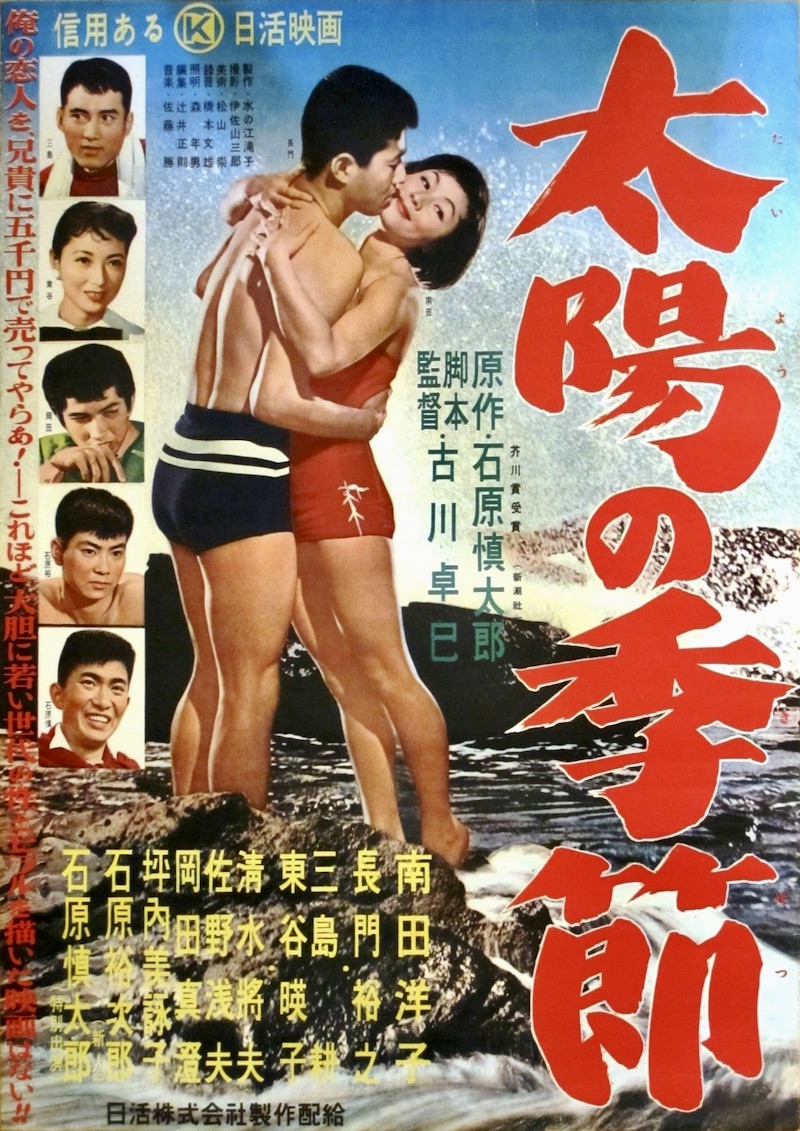
The Japanese film poster for SEASON IN THE SUN (1956) aka Taiyo no Kisetsu.

When Ishihara Shintaro died on February 1, 2022 at age 89, most obituaries focused on his career as a politician in Japan. He first served as a member of the House of Councillors (1968 to 1972) and then as a member of the House of Representatives (1972-1995) before becoming the Governor of Tokyo from 1999 to 2012. A controversial figure in his own country, Shintaro was famous for his ultra-nationalist stance on Japan and extreme right-wing views such as discriminating against Japanese-Koreans, the disabled, women, LGBT and other social minorities. He is now considered an early proponent of “hate speech” and often denied historical accounts of atrocities committed by the Japanese against the Chinese in the infamous Nanjing Massacre of 1937, which in Japan is the same as being a Holocaust denier. What is most surprising about Shintaro, however, is his earlier career as an author and highly successful screenwriter for movie studios like Nikkatsu, Daiei and Shochiku. His critically acclaimed first novella, Taiyo no Kisetsu (English title: Season of the Sun), was published in 1955 and he adapted it into a film for director Takumi Furukawa. It became a box office sensation and inspired several successors in a film movement that became known as the “Sun Tribe” (aka Taiyozoku) movies.

Continue reading
The Faithful and the Faithless

The Japanese film poster for THIS TRANSIENT LIFE (1970).

Some people believe in heaven and the afterlife while others are convinced that human life is temporal and when it ends nothing remains but a corpse. A dramatization of those opposing views in a film would be a challenging task for any director but Japanese director Akio Jissoji confronts a number of philosophical and religious matters by exploring Buddhist thought and practices versus human desire in Mujo (English title: This Transient Life, 1970). The result is a fascinating and visually innovative character study that manages to balance the sacred and the profane in one of the most overlooked Japanese films of the 70s which is finally starting to receive its due thanks to resurfacing on Blu-ray in recent years.

Continue reading

Guilty Bystanders

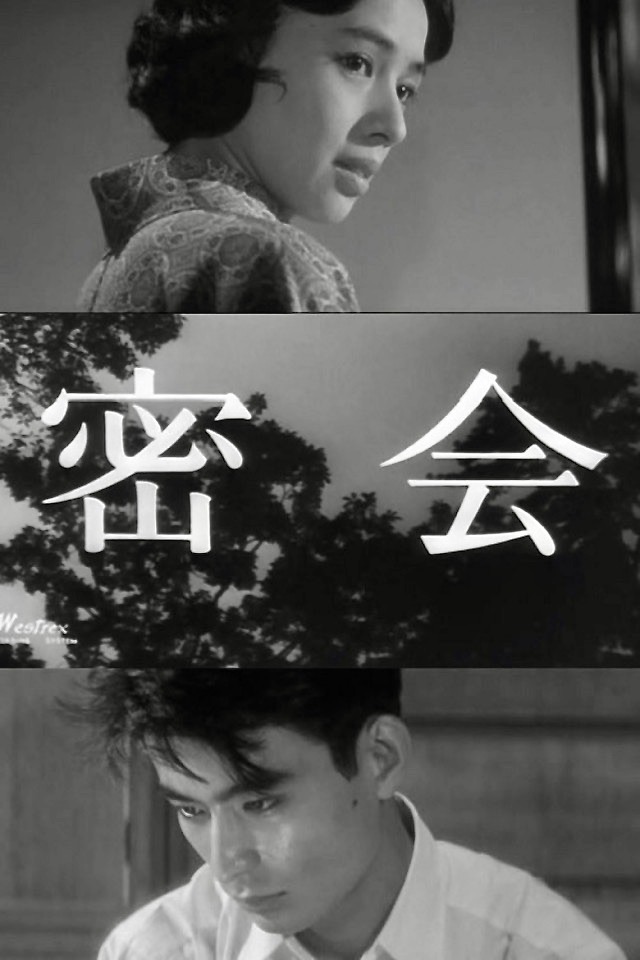
The Japanese film poster for Mikkai aka THE ASSIGNATION (1959), directed by Ko Nakahira.

A young couple are enjoying a romantic rendezvous in a hidden grove at a city park at twilight. It turns out to be an illicit affair. The woman is the married wife of a law professor and her lover is one of his students. Their privacy is interrupted by the arrival of a speeding taxi that crashes into an embankment nearby. Inside the driver is seen struggling with the backseat occupant. It ends badly with the driver murdered and his body dragged into the bushes. The killer flees and the young couple are faced with a dilemma. Should they go to the police and risk exposing their affair or remain silent? This is the pressing issue that drives the narrative of The Assignation (Japanese title: Mikkai, 1959), directed by Ko Nakahira. 

Continue reading