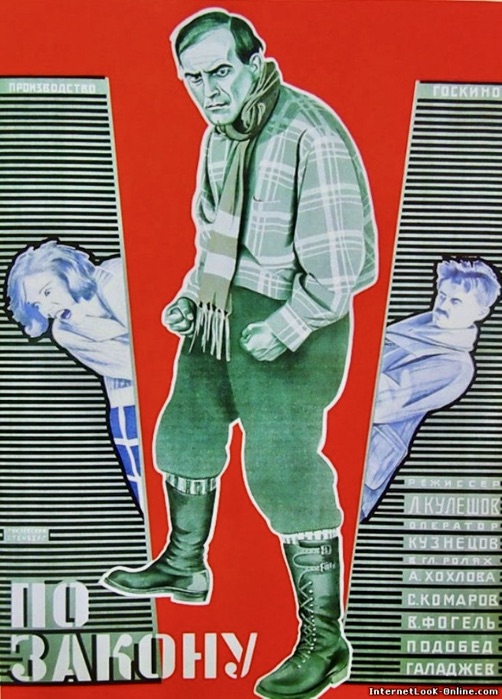
It is not a surprise that novelist/journalist Jack London was the most popular writer of the early 20th century and he enjoyed an international readership, especially in Japan, Eastern Europe and Russia. In fact, one of the landmark films of early Soviet cinema is By the Law (Russian title: Po Zakonu, 1926), based on London’s short story The Unexpected, and directed by Lev Kuleshov, a former painter turned set designer who eventually became a film theorist and director who launched the montage movement of the 1920s (Sergei Eisenstein [The Battleship Potemkin, 1925] was one of his students).
Continue readingTag Archives: Sergei Eisenstein
Georgia on My Mind

Svaneti is not a planet in the solar system or some alternate universe out of a science fiction fantasy but it might as well be. In truth, it is a remote region located in the northwestern part of the Republic of Georgia on the southern slopes of the Caucasus Mountain range. For centuries the area was cut off from civilization due to its inaccessible location in the mountains plus the extreme weather, that usually included eight straight months of snowfall, also made it unwelcoming. After Georgia was invaded and annexed by the Soviet Union in 1922, the region was subjected to Stalin’s five-year plan (1928-1932), which was created to spawn agriculture collectives across the nation and introduce large-scale industrialization. But Svaneti was so isolated from the rest of the world that it took a while for Soviet workers to reach the area and Jim Shvante (Marili svanets) [English title: Salt for Svanetia (1930)] is a portrait of the lives and traditions of the Ushkul tribe in that inhospitable domain before the Soviets arrived to develop it. The result is not a typical documentary but more of a folk culture microcosm as captured by some wildly creative ethnographic filmmaker.
Continue readingMusicals from Behind the Iron Curtain

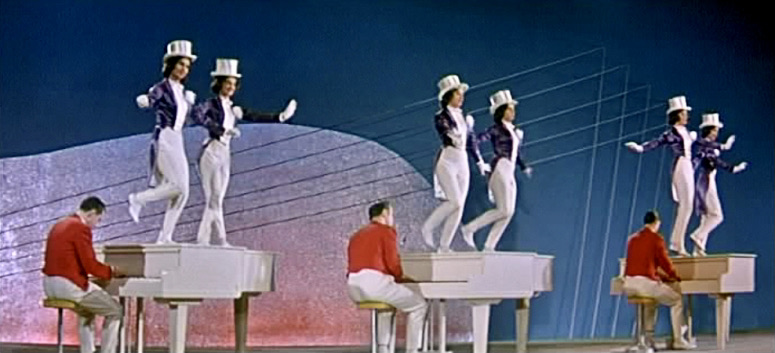
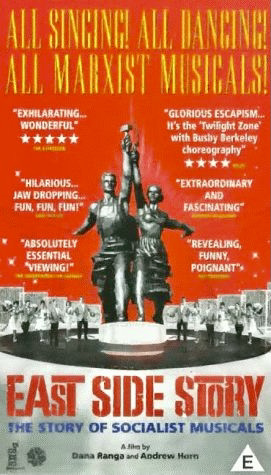
If you are a dedicated fan of movie musicals, you have probably been tempted to venture beyond the realm of Hollywood’s golden era to explore classic musicals from other countries like France (The Umbrellas of Cherbourg, 1964), Germany (The 3 Penny Opera, 1931) or England (Evergreen, 1934). You would certainly have no trouble discovering top rated favorites from India which produces between 1,500 to 2,000 Bollywood movies a year, most of which include at least three to five musical numbers. It might be harder though to dig up a famous film musical from countries as diverse as…say, Sweden, Japan or Egypt…but they definitely exist and there are more than you would think. What you probably haven’t seen is a socialist musical from Russia or any of its satellite countries during the Communist regime. There’s a reason for that. Those films weren’t exported outside Iron Curtain countries during that era but you can experience a highly entertaining sampler of the genre in East Side Story, a documentary on Marxist musicals that premiered in U.S. theaters in 1997.
The First Anti-American Spy Film?
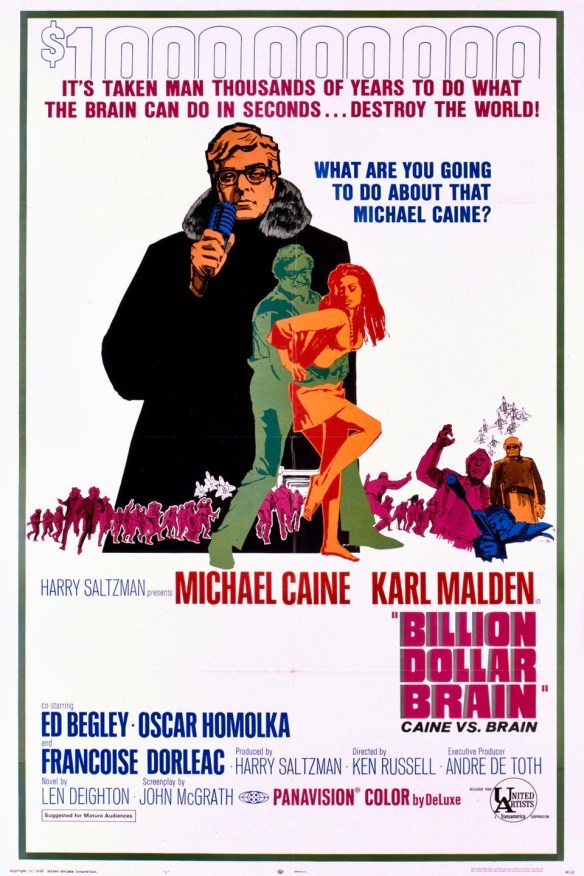
That was how director Ken Russell described his production of Billion Dollar Brain (1967). Whether that claim is true or not, Russell maintained it was the main reason the third entry in the Harry Palmer spy series failed at the box office. To be totally honest, none of the competing rivals in the film – Russia, the U.K., Latvia and the U.S. – are preferable over the other and come across as cynical, opportunistic entities that are only focused on their own agendas and self interests. Seen today, Billion Dollar Brain is easily most entertaining film in the five-movie franchise and deserves a reappraisal. Continue reading
A Paean for Terra Firma
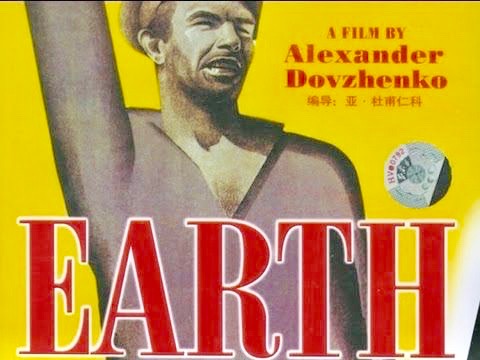
From an early age I developed a fascination with film but it wasn’t until college when my film interests expanded beyond American cinema to include international films and more specialized genres like underground, silent, documentary and exploitation movies. A Film History 101 course at the University of Georgia, curated by a drama professor, was partly responsible for that due to his eclectic overview which sampled the early work of Sam Fuller (The Steel Helmet, Park Row), Fritz Lang silents (Die Nibelungen: Siegfried & Kriemhild’s Revenge), the roots of Neorealism (La Terra Trema) and Hollywood studio system gems (George Sidney’s Scaramouche, An Affair to Remember). What made one of the strongest impressions, however, were examples of early Soviet cinema like Sergei Eisenstein’s Battleship Potemkin and Dziga Vertov’s Man With a Movie Camera. And my favorite of them all was Aleksandr Dovzhenko’s Earth (Russian title: Zemlya, 1930), the third film in a trilogy that included Zvenyhora (1928) and Arsenal (1929). Continue reading