
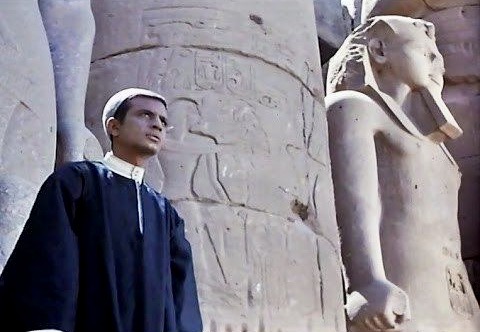
The Night of Counting the Years

Wanis (Ahmed Marei) wants his tribe to stop looting their heritage in the 1969 Egyptian drama THE NIGHT OF COUNTING THE YEARS aka Al-mummia (The Mummy).

It is not that common to encounter films from Egypt in the U.S. and only a handful have managed to enjoy theatrical distribution here in either film festival or art house screenings over the years. Youssef Chahine from Alexandria, Egypt is probably the best known director with more than 40 feature films to his credit including The Blazing Sun (1954) featuring Omar Sharif in his film debut and Bab el Hadid (Cairo Station, 1958), which brought him international attention. Other than Chahine, you might recognize Moshi Mizrahi although his best-known films were made in other countries; The House on Chelouche Street (1973), an Oscar nominee for Best Foreign Language Film was made in Israel, and Madame Rosa (1977) and I Sent a Letter to My Love (1980), both starring Simone Signoret, were filmed in France. A more contemporary Egyptian director is Atom Egoyan, although he was raised in Western Canada where most of his movies have been made including Exotica (1994) and The Sweet Hereafter (1997).
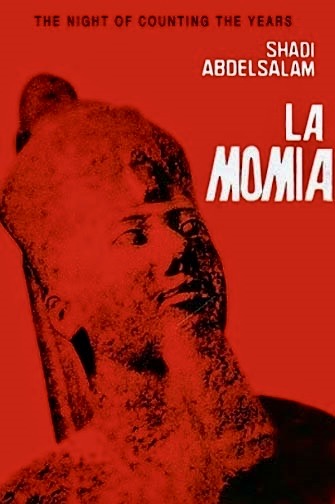
The Spanish film poster for The Mummy (Al-mommia, 1969) aka THE NIGHT OF COUNTING THE YEARS from Egyptian director Chadi Abdel Salam.

Many film historians and critics, however, often list Chadi Abdel Salam as one of the greatest Egyptian directors of all time on the basis of his solo feature film from 1969, Al-mummia (The Mummy aka The Night of Counting the Years), which has slowly acquired the status of a classic in its own country and around the world, thanks to the efforts of Martin Scorsese and The Film Foundation, which restored the film in 2009 in association with the Cineteca di Bologna and the Egyptian Film Center.  

Continue reading
Milanese Malaise

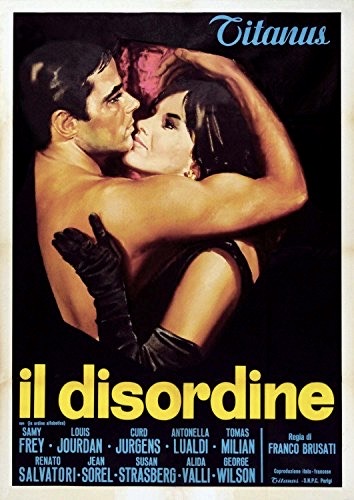
The Italian film poster for DISORDER (1962).

Any art house patron in the early sixties must have thought modern society was headed toward a complete collapse as witnessed by the emptiness of life and the bored, amoral behavior of characters in films like Federico Fellini’s La Dolce Vita (1960). That film was mostly a portrait of wealthy, jaded Romans and ambitious social climbers that was probably the most famous in a wave of films that viewed Italian society as a lost and alienated culture. Michelangelo Antonioni’s L’Avventura (1960), La Notte (1961) and L’Eclisse (1962) offered similar views of a world where modern progress and technology had a dehumanizing effect on relationships while Antonio Pietrangeli’s I Knew Her Well (Italian title, Lo la conoscevo bene, 1965) focused on a naïve working class woman who seeks an acting career in Rome but finds herself exploited and eventually discarded by the people that profession attracts. Less well known, Franco Brusati’s Il Disordine (Disorder, 1962) differs from the above films in that it depicts both upper class and economically strapped folks in Milan who share the same sense of disillusionment and despair over their lot in life. Also, it is almost epic in scale and more tragic and heartfelt than the aforementioned titles. 

Continue reading