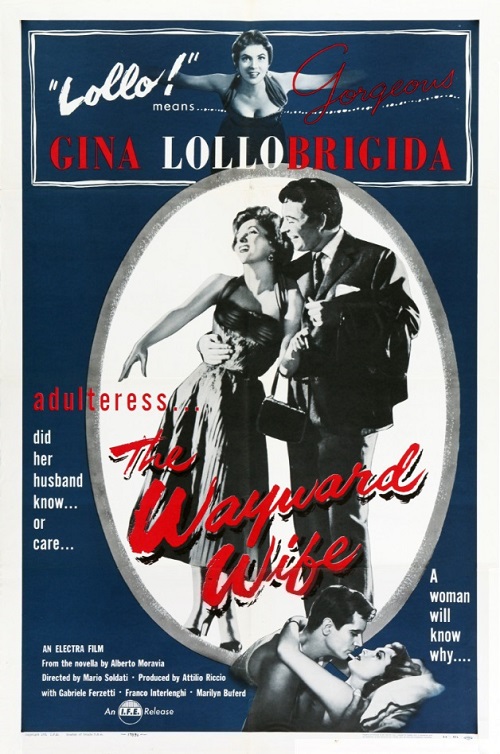
There is little doubt that Gina Lollobrigida’s rise to fame in the post-WW2 years was attributed to her beauty and sex appeal but there was another reason she achieved international recognition – she was a gifted actress who was magnetic and believable in any film genre. In fact, some of her best work is evident in a few key films of the early 1950s but is often overshadowed by the glossy Hollywood productions she made during her peak years such as Solomon and Sheba (1959), Never So Few (1959) and Come September (1961). Rene Clair’s romantic fantasy Beauties of the Night (1952) is generally credited as Lollobrigida’s breakthrough film and Luigi Comencini’s Bread, Love and Dreams (1953) brought her international acclaim as an actress (She was nominated for Best Foreign Actress by BAFTA and won Best Actress from the Italian National Syndicate of Film Journalists). But she had already proven herself as someone who could convincingly move from war drama (Achtung! Banditi!, 1951) to costume swashbuckler (Fanfare La Tulip, 1952) to sex farce (Wife for a Night, 1952) and La Provinciale (English title: The Wayward Wife, 1953), directed by Mario Soldati, is an impressive early dramatic showcase for Lollobrigida that is almost forgotten today.
Continue readingTag Archives: L’Avventura
The Lost Souls of Sao Paulo
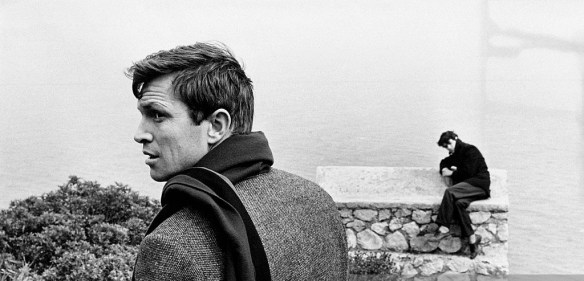
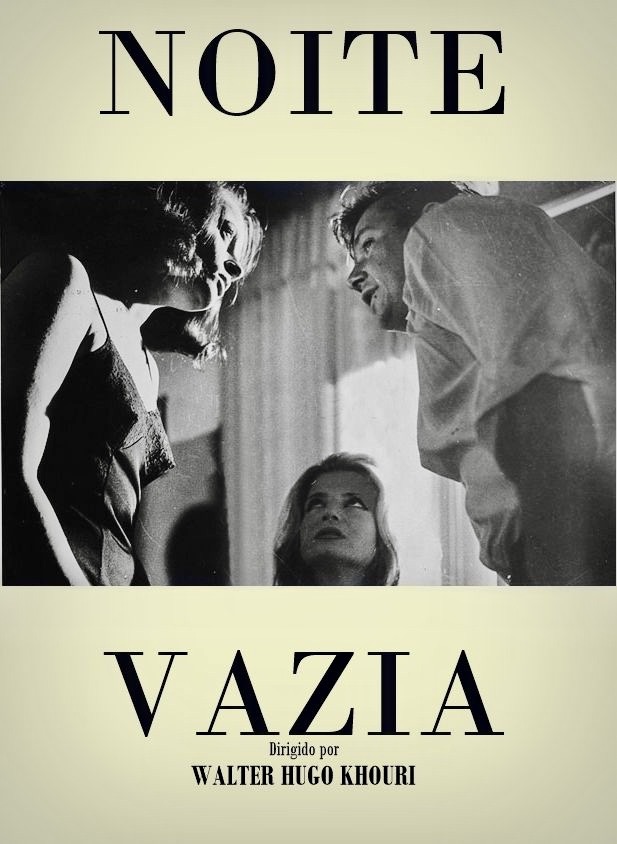
Long Day’s Journey into Night is the title of Eugene O’Neill’s Pulitzer Prize winning 1956 play but it could also serve as a succinct capsule description of numerous movies from the 1960s that were clearly influenced by Michelangelo Antonioni’s L’avventura (1960) and its themes of alienation and existential despair. Some examples include Giuseppe Patroni Griffi’s Il Mare (1962) which follows three strangers on the isle of Capri during a bleak winter season as they try to connect with each other. Jean-Luc Godard’s Alphaville (1965) depicts a dystopian futuristic society in which a detective finds himself out of place in a modernistic Paris controlled by an oppressive artificial intelligence. And Jacques Demy’s Model Shop (1969) uses the urban sprawl of Los Angeles and its smog-creating car culture as a backdrop to an unemployed architect’s search for meaning in his life. Yet, the most Antonioni-like film of all and the least known is probably Noite Vazia (1964) by Brazilian director Walter Hugo Khouri, which traces a dusk-to-down encounter between two men and two women amid the sterile cityscapes of modern Sao Paulo.
Continue readingDisconnected and Lost in Capri
When did alienation in modern society become a favorite thematic concern in the culture and the arts, particularly in the cinema? Certainly the films of Michelangelo Antonioni addressed the inability of people to connect, feel or relate to each other in a post-industrial age world as early as 1957 in Il Grido. But by the early sixties, it seemed as if every major film director in the world was addressing the topic on some level. A general sense of malaise was in the air as if the modern world was having a counterproductive effect on humanity, creating a sense of futility, amorality or complete apathy. You could see aspects of this reflected in Federico Fellini’s La Dolce Vita (1960), Ingmar Bergman’s Through a Glass Darkly (1961), Alain Resnais’s Last Year at Marienbad (1961), Luis Bunuel’s The Exterminating Angel (1961) and Jean-Luc Godard’s My Life to Live (1962). All of these are considered cinematic masterworks of the 20th century but there are also many worthy and lesser-known contributions to the pantheon of alienation cinema and one of the most strikingly is Il Mare (The Sea), the 1963 directorial debut of Giuseppe Patroni Griffi. Continue reading