
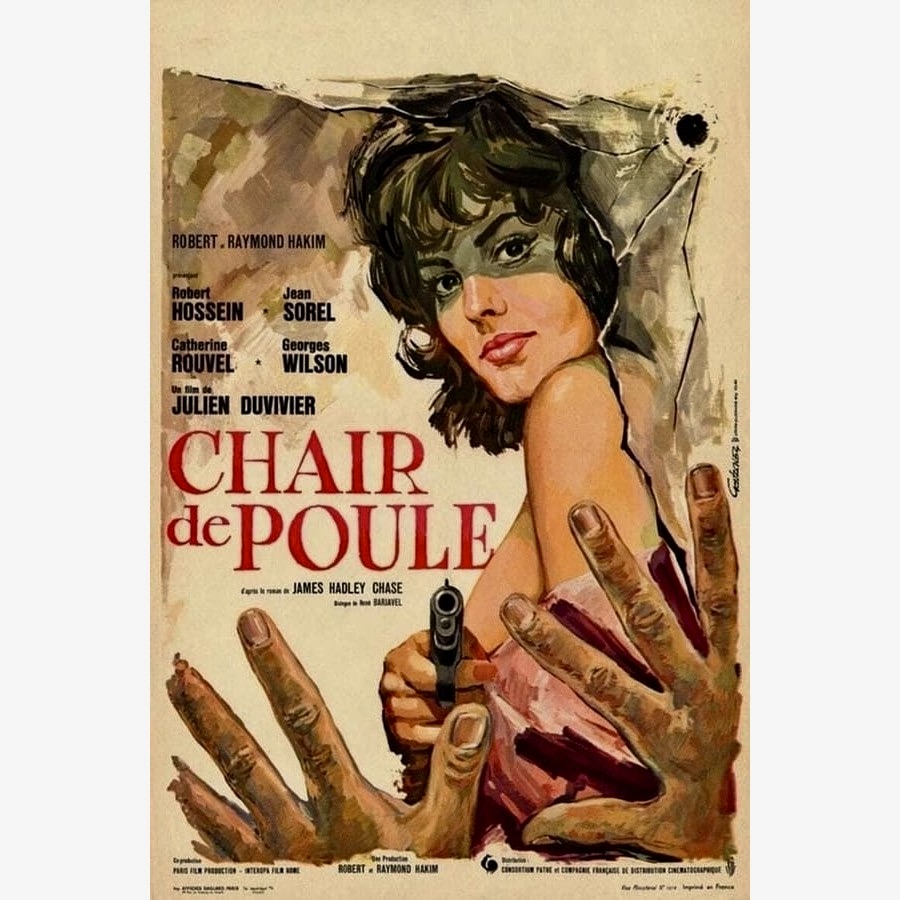
Daniel and Paul are professional locksmiths and good friends who work for the same company. When they mastermind the robbery of a client by breaking into a safe Daniel had previously repaired, the theft goes awry, with the client dying from a blow to the head. Paul escapes but Daniel is shot and injured by the police in the ensuing chase and sentenced to 20 years in prison. After a year in the stir, Daniel escapes by picking the jail cell lock (of course) and tries to elude the authorities in a desert-like region of Alpes-Maritimes in southeastern France. Under an assumed name, he manages to get hired on as an attendant at an isolated gas station run by Thomas and his sexy young wife Maria but Daniel soon realizes he has created a new prison for himself.
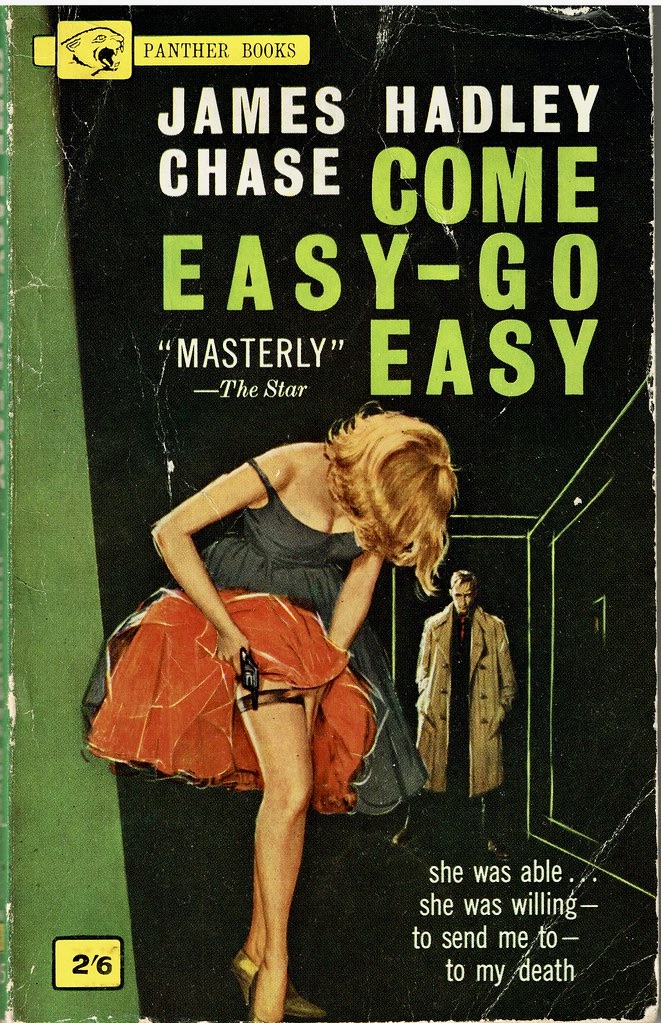
Based on the 1960 crime noir Easy Come, Easy Go by British author James Hadley Chase, Chair de Poule (English title: Highway Pick-Up, 1963) is the penultimate film of the legendary French director Julien Duvivier. If the basic premise sounds like it was inspired by The Postman Always Rings Twice, you wouldn’t be completely wrong. Chase (1906-1985), who used many pseudonyms during his career such as Raymond Marshall and Ambrose Grant, was actually motivated to become a writer after reading James M. Cain’s 1934 novel. Chase’s first novel, No Orchids for Miss Blandish (1939), was an overnight best seller and was adapted into a stage play and two film versions, one in 1948 and one in 1971, under the title The Grissom Gang, which was directed by Robert Aldrich.
Continue reading
 Cinema Sojourns