
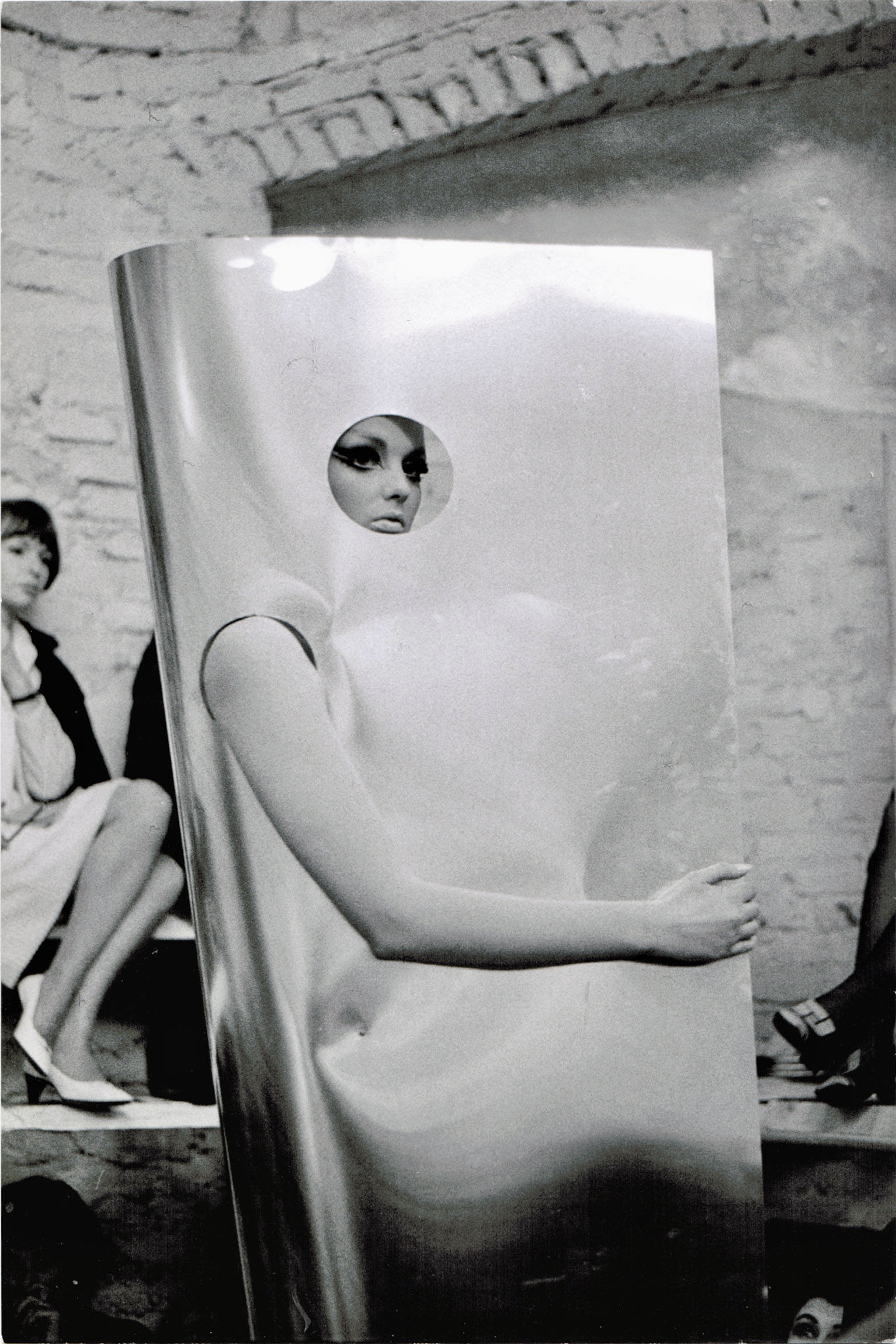
Fashion in the Nuclear Age

Models wearing metal sculptures as clothes are featured in a bizarre fashion show in the opening to William Klein’s WHO ARE YOU, POLLY MAGGOO? (1966).

The fashion industry has always been fair game as a target for satirists but the majority of movies about the fashion world have mostly been glamorizations of it (Funny Face, The Devil Wore Prada) or serious validations of the business like the 1995 documentary Unzipped featuring designer Isaac Mizrahi or The September Issue (2007), which focuses on Anna Wintour, editor-in-chief of Vogue. It is much harder to come up with memorable satires on the subject although the supremely silly Zoolander (2001) is fun and Robert Altman’s Ready to Wear aka Pret-a-Porter (1994) is an amusing minor trifle. One of the few exceptions is Qui Etes-Vous, Polly Maggoo? (English title: Who Are You, Polly Maggoo?, 1966), the feature film debut of renowned photographer William Klein, which brilliantly skewers the profession while dazzling you with its visual inventiveness and giddy high spirits.

Continue reading
The Ambrose Bierce Civil War Trilogy

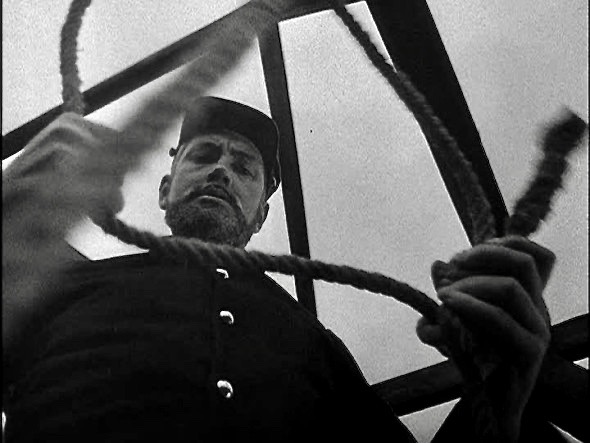
A Union soldier prepares a noose for an accused saboteur in An Occurrence at Owl Creek Bridge, an episode in the three part film, Au Coeur de la vie (In the Midst of Life, 1963).

Stephen Crane’s The Red Badge of Courage, Jessamyn West’s The Friendly Persuasion, Walt Whitman’s collection of poems Drum-Taps and Margaret Mitchell’s Gone With the Wind are among some of the most famous examples of historical fiction and literature about the American Civil War. More recent works would have to include Charles Frazier’s Cold Mountain and Michael Shaara’s trilogy (Gods and Generals, The Killer Angels and The Last Full Measure) but some of the most evocative and unsentimental writing about the War Between the States can be found in the Civil War short stories of Ambrose Bierce, who served in the Union Army’s 9th Indiana Volunteer Infantry. I find it surprising that no major American feature films have been based on his work yet several of his short stories have been adapted for the screen in Poland, England and France. And the most memorable one of all remains Robert Enrico’s Au Coeur de la Vie (In the Midst of Life, 1963).  Continue reading