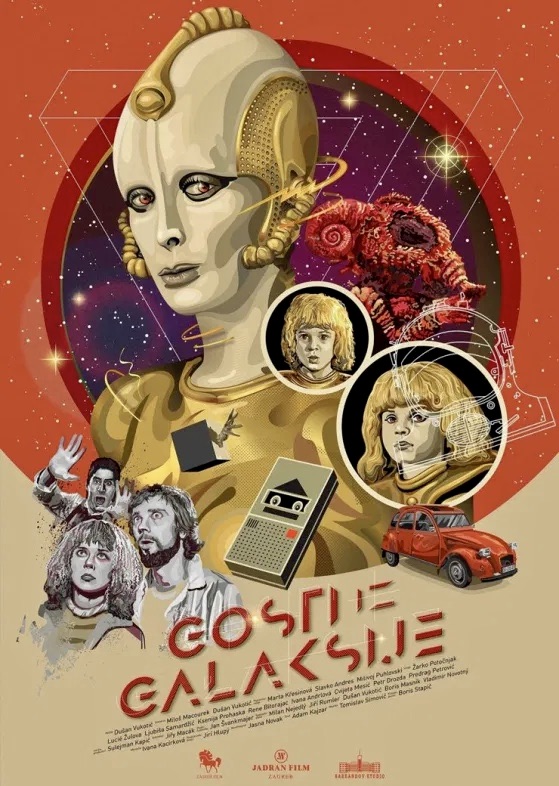
I always welcome the opportunity to learn new words and I discovered one today from an unlikely source – Visitors from the Arkana Galaxy (1981), a science fiction fantasy from Yugoslavia. In the movie, an aspiring writer questions a psychiatrist about the possibility of fictional characters from a story becoming real creations through the power of thought. The psychiatrist calls it Tellurgy – a non-existence word – but Tulpa is a noun that has the same meaning and refers to a being or object that is created in the imagination by visualization techniques. There have certainly been other movies to explore this phenomenon – Forbidden Planet (1956), Stranger Than Fiction (2006), Ruby Sparks (2019) – but Visitors of the Arkana Galaxy takes the concept in unexpected directions, employing genre parody, surrealism and a healthy dose of black comedy.
Continue readingTag Archives: Jan Svankmajer
The Tree Stump Baby
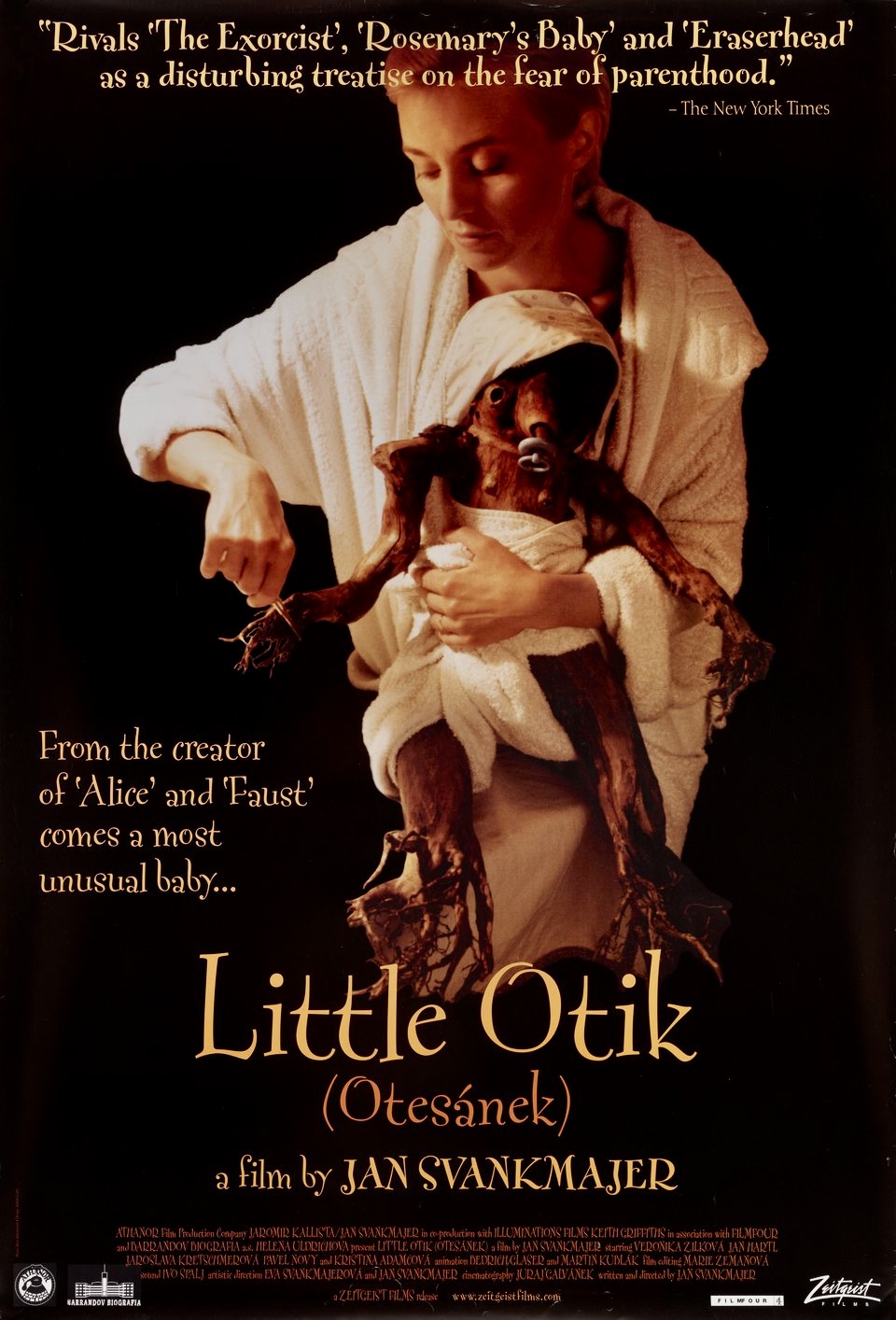
“Be careful what you wish for” is one of those popular expressions that offers cautionary advice for those who want something too desperately. And it has been illustrated repeatedly in literature and movies from timeless folk tales like Faust and The Golem to more recent efforts like Little Otik (2000), Czech filmmaker Jan Svankmajer’s take on Otesanek, a 19th century fairy tale by Karel Jaromir Erben. Svankmajer updates the tale about a childless couple and their substitute baby to contemporary times but also manages to weave in some of his favorite obsessions and thematic concerns (food, cannibalism, human fears) into a darkly funny but nightmarish portrait of parenthood and child rearing. Despite its stature as a fable, Little Otik is certainly not for children and probably not the best viewing option for expectant mothers either.
Continue readingKarl Loves His Work

Popular Czech actor Rudolf Hruskinsky is the demonic central character in Juraj Herz’s The Cremator (1969).
One of my favorite movements of the 20th century in cinema was the emergence of the Czech New Wave. Out of this creative period, which lasted from roughly 1962 through 1970, the film world was introduced to such innovative filmmakers as Milos Forman (Loves of a Blonde, 1964), Ivan Passer (Intimate Lighting, 1965), Jiri Menzel (Closely Watched Trains, 1966), Vera Chytilova (Daisies, 1966) and Jan Nemec (A Report on the Party and the Guests, 1966). In recent years, other Czech directors have been reappraised and elevated in stature thanks to the proliferation of DVD and Blu-ray restorations of such movies as The Sun in a Net (1961) by Stefan Uher, Pavel Juracek’s Case for a Rookie Hangman (1970) and Valerie and Her Week of Wonders from Jaromil Jires (1970). We can now add to that list The Cremator (1969), Juraj Herz’s macabre fable, which is finally being recognized as one of the key films from the Czech New Wave. Continue reading

