Child’s Play

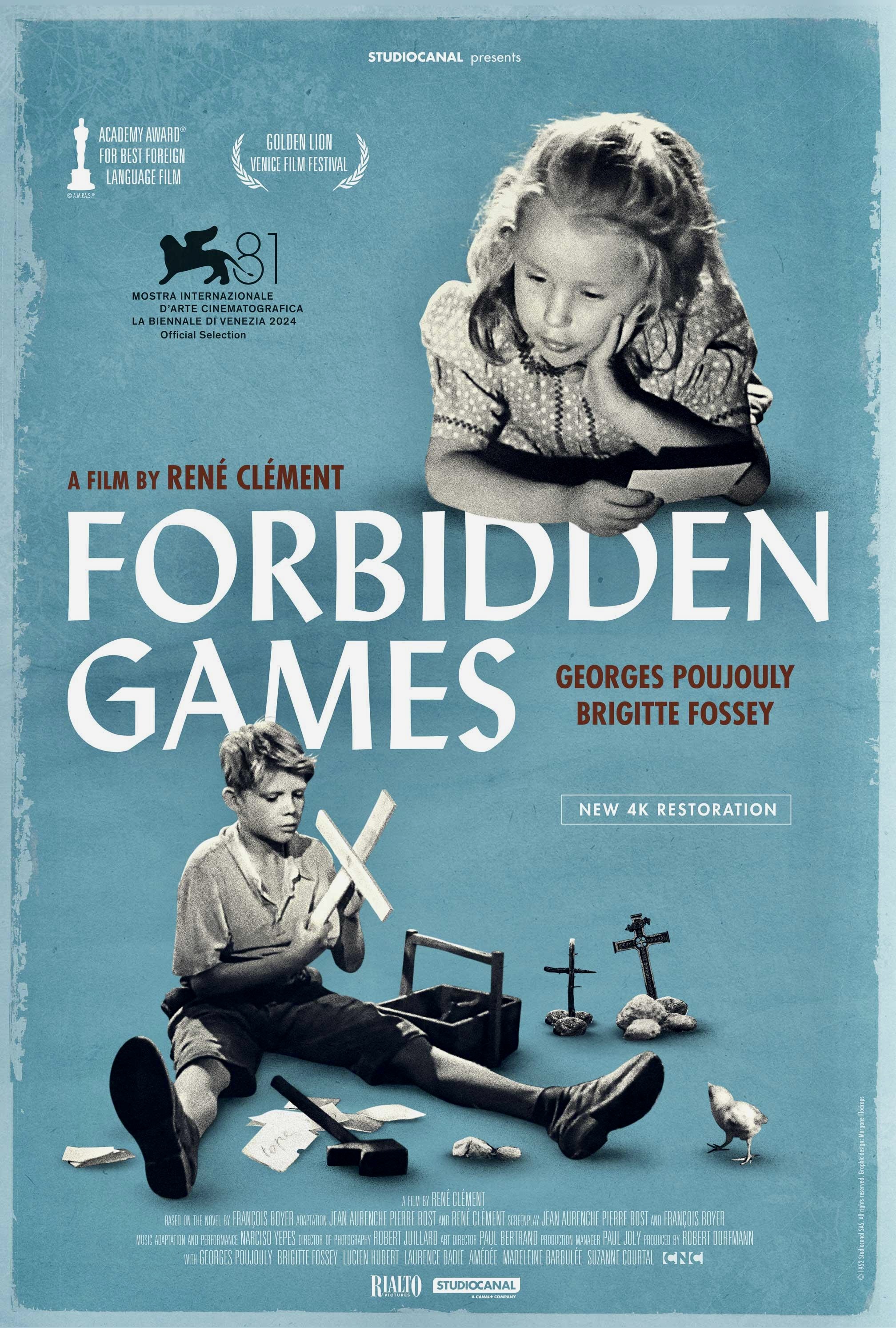
June 1940. A long line of French refugees flee Paris for the countryside during the German invasion of France in WW2. Among the evacuees are a young couple with their 5-year-old daughter Pauline and her pet dog Jock. When the couple’s car stalls on the road, angry refugees push it out of the way and down a hill. The family grab whatever they can carry from their stranded vehicle and return to the road as German aircraft start dropping bombs. In the confusion, Jock runs off and Pauline chases after him. Her parents follow in pursuit but the family is forced to take shelter again as aerial machine-gunners target the escaping Parisians. This time the parents and the dog are mortally wounded and Pauline is left abandoned. She wanders into the countryside clutching her dead pet, not really comprehending what has happened to her. All of this occurs in the few ten minutes of Jeux Interdits (English title: Forbidden Games), one of the most powerful war films of all time. Yet, it is unique within its specific genre because it does not focus on the war itself but the effects of the devastation on a young child. Directed by Rene Clement, the film became an international sensation and won a honorary Oscar as Best Foreign Film of 1952.
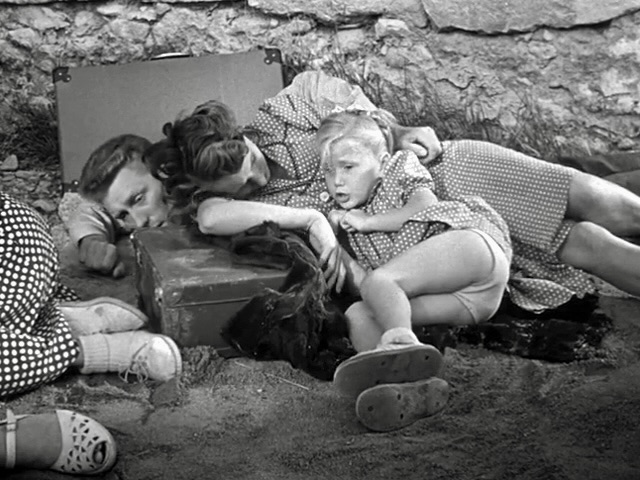
Paulette (five year old Brigitte Fossey) is left an orphan after her parents are killed in a German aerial raid in FORBIDDEN GAMES (1952).
Continue reading

Like a Bull in a China Shop

In 2016 the Cohen Media Group released My Journey Through French Cinema, written and directed by Bertrand Tavernier. It was not a traditional survey of French Cinema but a much more idiosyncratic and personal look at favorite films and directors from France in the eyes of Tavernier. In this way, it seemed inspired by Martin Scorsese’s 1999 documentary on Italian cinema, My Voyage to Italy, which shined a light on forgotten and underrated movies that deserved re-evaluation. Tavernier certainly covered some landmarks of French cinema in his overview but he also devoted time to specific directors like Jacques Becker and Jean-Pierre Melville while including favorite film composers and cinematographers as well. Some of Tavernier’s choice were fascinating obscurities and others were grade-B genre films that were so stylish and well-made that they served as superior examples of their craft such as Edmond T. Greville’s Le Diable Souffle aka Woman of Evil (1947) and Gilles Grangier’s Hi-Jack Highway aka Gas-Oil (1955). I was especially intrigued by film clips from the crime thriller Ca Va Barder (1955), which was directed by blacklisted American director John Berry (it was his first credited feature in France) and starred expatriate American actor Eddie Constantine as two-fisted itinerant adventurer Johnny Jordan. His rough and tumble character is as disruptive as a bull in a china shop.

Continue reading