
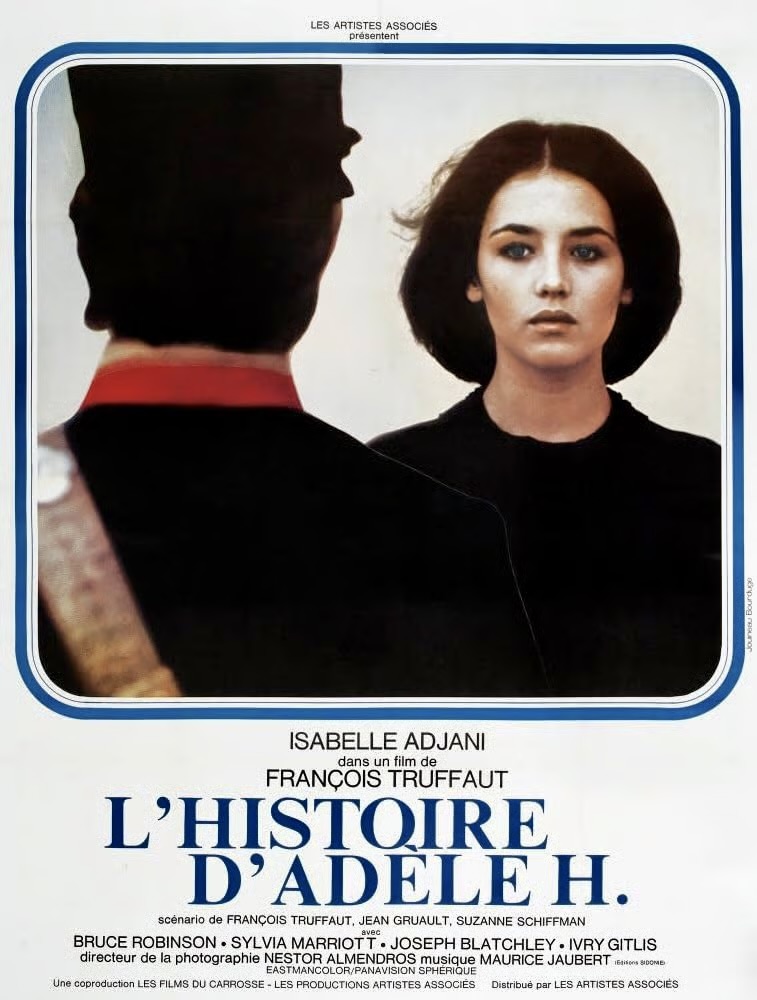
Francois Truffaut is one of those directors whose career peaked early with the phenomenal semi-autobiographical debut film The 400 Blows in 1959 at the dawn of the Nouvelle Vague and followed it with two more masterworks – Shoot the Piano Player (1960) and Jules and Jim (1962). The next ten years were more erratic with some successes like Stolen Kisses [1968] and The Wild Child [1970] and several disappointments, which were either box office flops (Fahrenheit 451 [1966]) or poorly received by French critics such as The Bride Wore Black [1968]. Then he revived his career and critical standing with two masterpieces in a row, Day for Night (1973) and The Story of Adele H. (1975). The former was a delightful, audience-pleasing homage to moviemaking which was nominated for four Oscars (and won for Best Foreign Language Film) but the latter was a much darker affair, based on real events, and focused on an obscure literary figure, Adele Hugo, the fifth and youngest child of Victor Hugo, who was one of France’s most famous writers and poets.
Continue reading
 Cinema Sojourns