
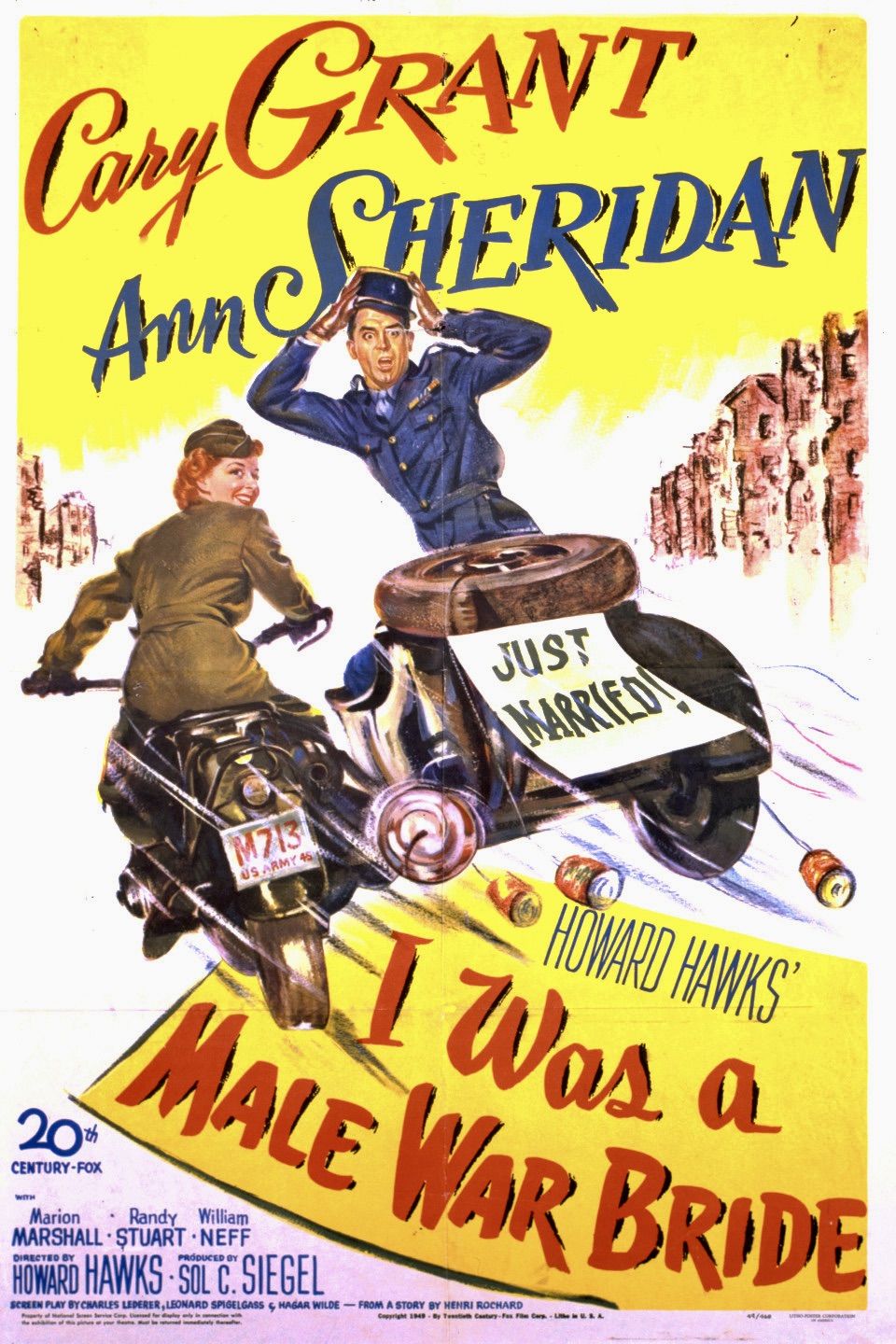
There are certain movie titles that make you pause and consider the mystery, allure or absurdity of their meaning. They can promise so much and deliver so little like Billy the Kid vs. Dracula (1966) or She Gods of Tiger Reef (1958). Or they can overdeliver on their promise to an astonished but grateful audience as in Russ Meyer’s infamous Faster, Pussycat! Kill! Kill! (1965). They can also mislead and confound you with wording so vague or fanciful that you have no earthly idea what it’s about as in Lord Love a Duck (1966), The Day the Fish Came Out (1967), or All the Fine Young Cannibals (1960), which inspired the name of the Brit pop trio that had a hit with “She Drives Me Crazy.” Then there are those completely frank and unambiguous titles that reveal the pure essence of the film in a no-nonsense manner – Teenagers from Outer Space (1959) and I Was a Male War Bride (1940). Or titles that are so much fun to say that you simply love saying them out loud just to hear the sound of them rolling off your tongue like Rat Pfink a Boo Boo (1966) or Puddin’ Head (1941).
 Cinema Sojourns