
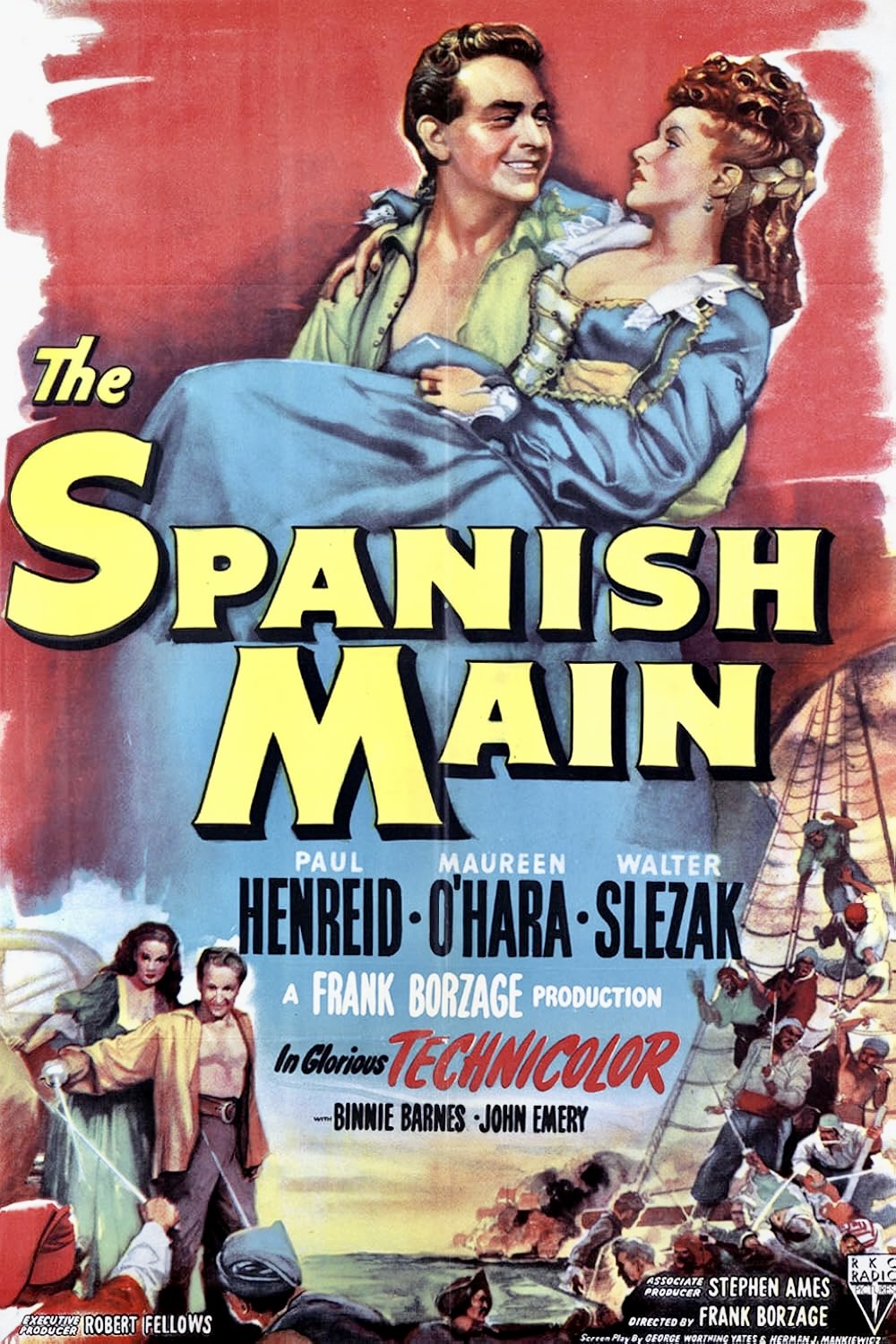
In the pantheon of great Hollywood directors from the 1930s, Frank Borzage and his films are often overshadowed by the work of such peers as Frank Capra, George Cukor and Ernst Lubitsch. Yet many film historians and scholars consider his work the equal of these better-known directors with such exemplary examples as 7th Heaven (1927) and Bad Girl (1931) – both of which won Borzage the Oscar for Best Director – plus Man’s Castle (1933), History is Made at Night (1937), Three Comrades (1938) and The Mortal Storm (1940). Often referred to as “The Great Romanticist,” whose most famous films usually focused on the redemptive power of love, Borzage began to fall out of favor in his later career when his films were seen as old-fashioned and anachronistic. But he was still capable of turning out a late period masterpiece such as the poetic film noir Moonrise (1948) as well as handle a big budget studio entertainment like The Spanish Main (1945). The latter pirate tale may seem atypical for a Borzage film but don’t forget he also dabbled in other unlikely genres such as war dramas (Flight Command, 1940) and musicals (Seven Sweethearts, 1942). It was also a rousing costume adventure which compared favorably to the swashbucklers of Errol Flynn such as Captain Blood (1935) and The Sea Hawk (1940), with the added attraction of being filmed in glorious Technicolor by George Barnes.
Continue reading
 Cinema Sojourns