Child’s Play

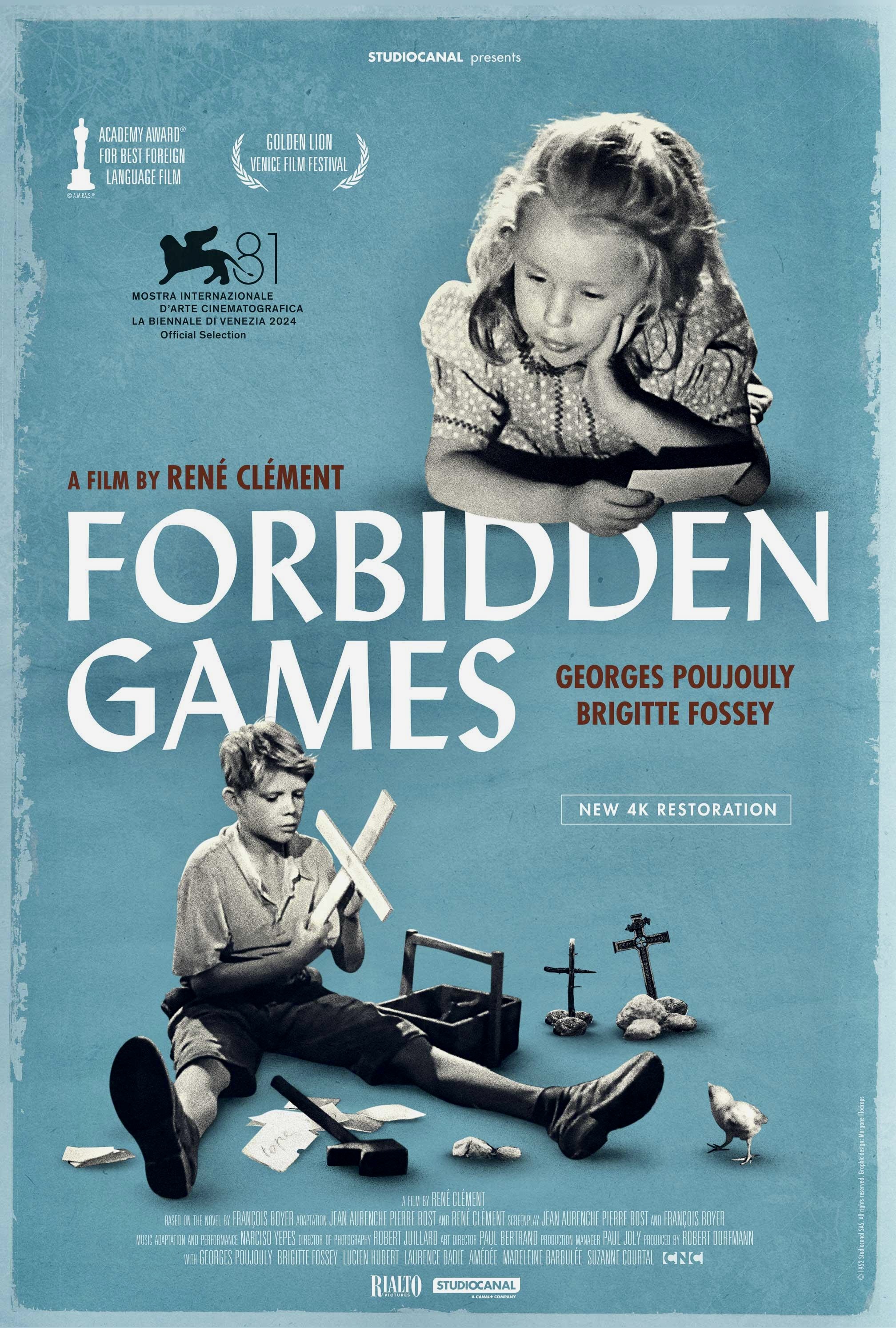
June 1940. A long line of French refugees flee Paris for the countryside during the German invasion of France in WW2. Among the evacuees are a young couple with their 5-year-old daughter Pauline and her pet dog Jock. When the couple’s car stalls on the road, angry refugees push it out of the way and down a hill. The family grab whatever they can carry from their stranded vehicle and return to the road as German aircraft start dropping bombs. In the confusion, Jock runs off and Pauline chases after him. Her parents follow in pursuit but the family is forced to take shelter again as aerial machine-gunners target the escaping Parisians. This time the parents and the dog are mortally wounded and Pauline is left abandoned. She wanders into the countryside clutching her dead pet, not really comprehending what has happened to her. All of this occurs in the few ten minutes of Jeux Interdits (English title: Forbidden Games), one of the most powerful war films of all time. Yet, it is unique within its specific genre because it does not focus on the war itself but the effects of the devastation on a young child. Directed by Rene Clement, the film became an international sensation and won a honorary Oscar as Best Foreign Film of 1952.
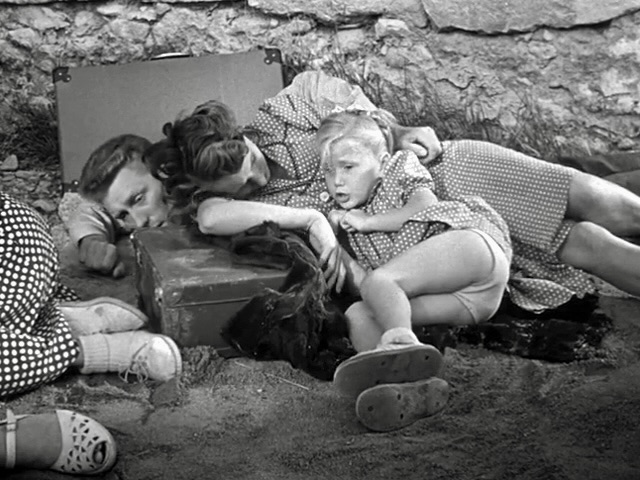
Paulette (five year old Brigitte Fossey) is left an orphan after her parents are killed in a German aerial raid in FORBIDDEN GAMES (1952).
Continue reading

Christmas Lockdown in the Eternal City

An alternate release poster for the Roberto Rossellini film ERA NOTTE A ROMA (1960)

Available for years in inferior public domain prints and poor video transfers, Robert Rossellini’s influential WW2 trilogy [Rome Open City (1945), Paisan (1946) and German Year Zero (1949)], which firmly established him as the “father of Neorealism”, finally received 4K high-definition digital transfers from The Criterion Collection in 2017. Linked thematically to this trilogy, however, is a later Rossellini film, Era Notte a Roma [English title, Escape by Night aka Blackout in Rome,1960), which, unfortunately, has never enjoyed the reputation or respect of this seminal trilogy. I first saw a 16mm print of the film from Films Inc. years ago when it still licensed titles from The Audio Brandon Collection. I had a chance to revisit Era Notte a Roma again recently on DVD and am still baffled by the movie’s low profile since its original release.

Continue reading

The Great Displacement

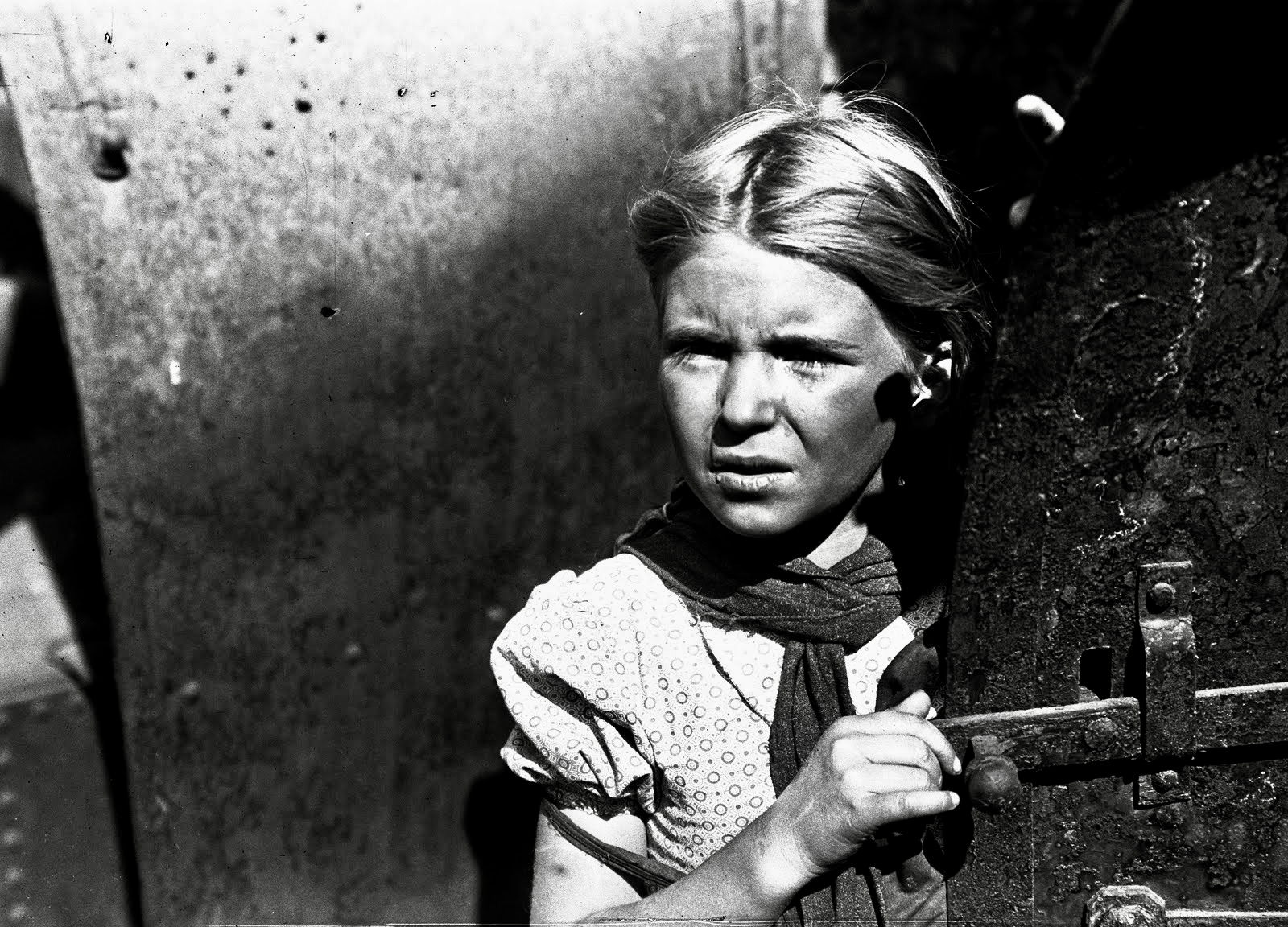
At the end of WW2, it was estimated that more than 6 million people had been displaced from their homes and roughly 180,000 of these were children. Some were concentration camp survivors, others were orphaned or separated from their families, hiding in monasteries or living with strangers. There have been a handful of films that dealt with this traumatic situation and Fred Zinnemann’s The Search (1948) is probably the most famous post-war American film on the subject. It was nominated for four Academy Awards and won a special Juvenile Oscar for Ivan Jandl as a homeless kid separated from his Czech mother. Europe also produced some landmark films about displaced children during WW2 including Roberto Rossellini’s Germany Year Zero (1948) and Rene Clement’s Forbidden Games (1952) but Somewhere in Europe aka It Happened in Europe (Hungarian title: Valahol Europaban) from Hungarian director Geza von Radvanyi was one of the first films to address war orphans trying to fend for themselves. Released in 1947, the film is less well known than other post-war dramas from the same period but it is a harrowing portrait of a dire situation affecting Eastern Europe, especially Hungary, during the final days of the war.

Continue reading