
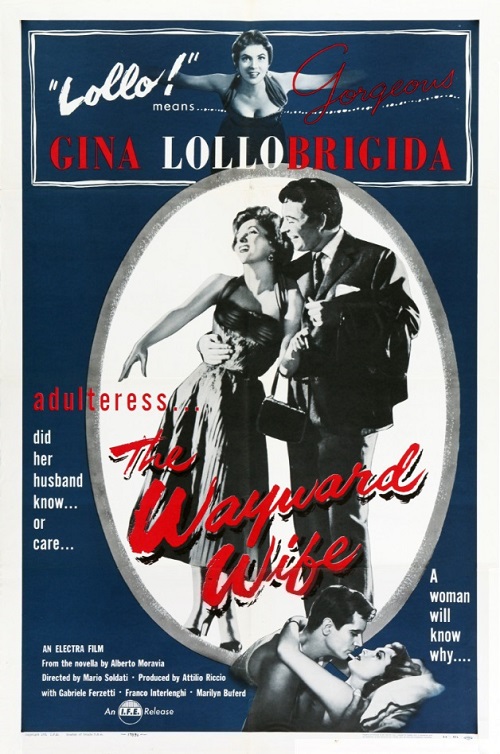
Anatomy of a Marriage

There is little doubt that Gina Lollobrigida’s rise to fame in the post-WW2 years was attributed to her beauty and sex appeal but there was another reason she achieved international recognition – she was a gifted actress who was magnetic and believable in any film genre. In fact, some of her best work is evident in a few key films of the early 1950s but is often overshadowed by the glossy Hollywood productions she made during her peak years such as Solomon and Sheba (1959), Never So Few (1959) and Come September (1961). Rene Clair’s romantic fantasy Beauties of the Night (1952) is generally credited as Lollobrigida’s breakthrough film and Luigi Comencini’s Bread, Love and Dreams (1953) brought her international acclaim as an actress (She was nominated for Best Foreign Actress by BAFTA and won Best Actress from the Italian National Syndicate of Film Journalists). But she had already proven herself as someone who could convincingly move from war drama (Achtung! Banditi!, 1951) to costume swashbuckler (Fanfare La Tulip, 1952) to sex farce (Wife for a Night, 1952) and La Provinciale (English title: The Wayward Wife, 1953), directed by Mario Soldati, is an impressive early dramatic showcase for Lollobrigida that is almost forgotten today.

Continue reading
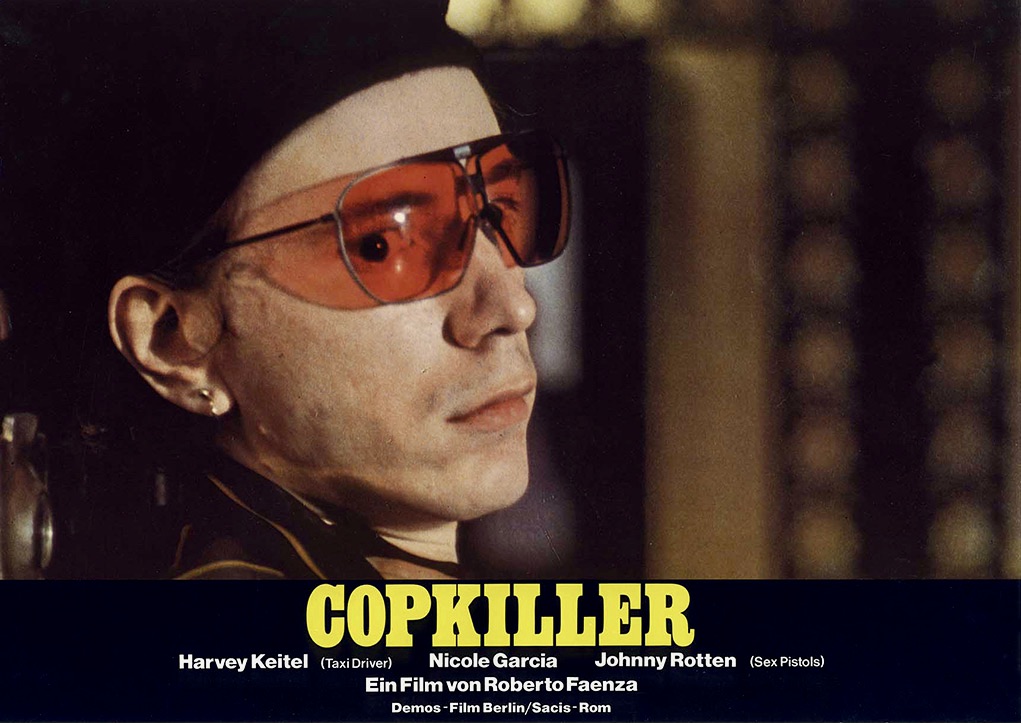
Johnny Rotten’s Alter Ego

Some movies fall through the cracks and then are rediscovered years later by movie geeks who are amazed that such formerly “lost films” even exist. Such is the case with Corrupt (1983), which was also released in some markets as Copkiller and Order of Death, the title of the psychological thriller by novelist Hugh Fleetwood which was adapted for this film. An international production with Italian and French financing, the movie marked the dramatic film debut of John Lydon aka Johnny Rotten of The Sex Pistols fame (he had previously played a version of himself in Julien Temple’s The Great Rock ‘n’ Roll Swindle [1980], which was a semi-autobiographical/fantasy account of Malcolm McLaren and his promotion/management of The Sex Pistols). Corrupt also featured Harvey Keitel in the other major role and the music score was composed by Ennio Morricone.  Due to poor distribution and marketing (those alternate titles didn’t help), the film quickly vanished from theaters but it holds up today as a fascinating precursor to Abel Ferrara’s Bad Lieutenant (1992) while channeling some of the yin-yang duality of Donald Cammel & Nicolas Roeg’s Performance (1976).

Continue reading

The Ballad of Hank McCain

John Cassavetes stars in the title role of MACHINE GUN MCCAIN (1969) aka Gli Intoccabili, an Italian crime drama directed by Giuliano Montaldo.

Lean, mean and paranoid, convict Hank McCain (John Cassavetes) is sprung from prison by West Coast mobster Charlie Adamo (Peter Falk) to rob a Las Vegas casino that is owned by an East Coast Mafia boss in the same syndicate. Adamo’s underhanded attempt to muscle in on his fellow gangster’s territory ignites a gangland war between factions with McCain caught in the middle and running for his life after he successfully pulls off a $2 million dollar heist. Along the way, McCain is double-crossed by his own son, hooks up with Irene (Britt Ekland), a bar hostess, is briefly reunited with his former mistress Rosemary (Gena Rowlands) and goes down fighting in a genuine noir finale. Although it didn’t get any respect from the critics or even much notice from film reviewers at the time, Machine Gun McCain (Italian title: Gli Intoccabili, 1968) is a remarkably taut, fast-paced B-movie crime thriller that is as feral and cagey as its title hero. Cassavetes imbues his role with a pent-up intensity that threatens to explode at any moment and often does. It’s one of his best performances and demonstrates why he was more in-demand as an actor in Hollywood instead of a director.

Continue reading