
Cinema Interruptus

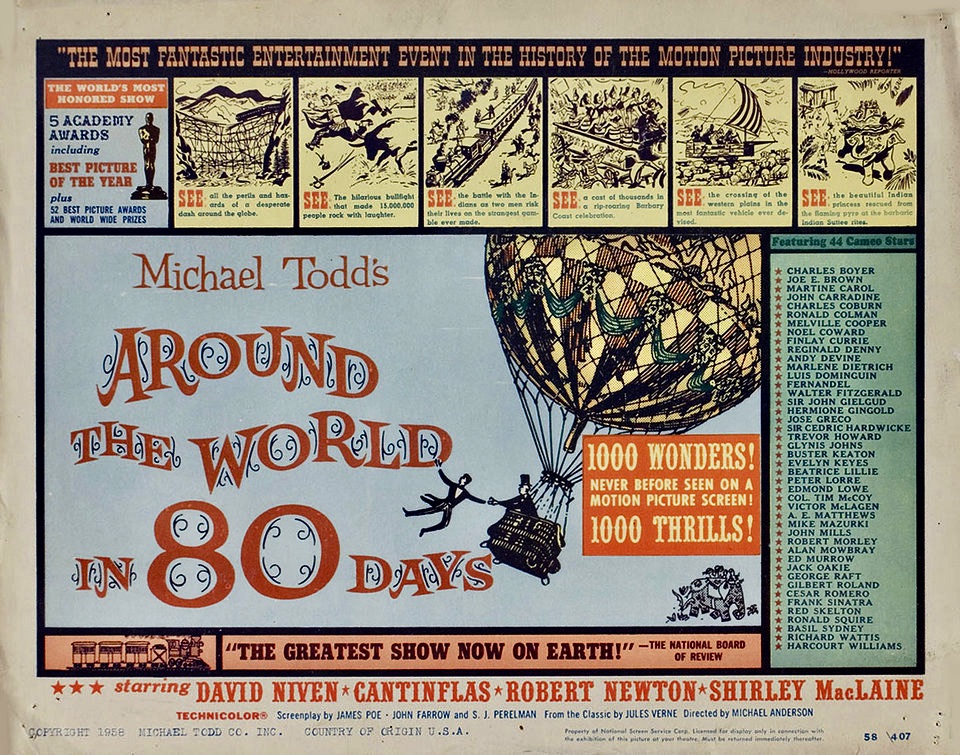
All of us have probably walked out on a movie at the theatre at some point in our lives but how often have you been forced to leave a film due to circumstances beyond your control? The few times this has happened to me are ingrained in my memory probably because it was such a rare occurrence…and because the interrupted scene and the movie itself never received the proper closure. In other words, a simple case of cinema interruptus (the Latin word for interrupted). The films in question are Around the World in 80 Days (1956), Cat on a Hot Tin Roof (1958), Don’t Give Up the Ship (1959) and Cat Ballou (1965).

Continue reading

Rupert Pupkin’s Stand-Up Act

Some movies are prescient or ahead of their time but audiences and film critics often don’t notice until many years after the original release. Sidney Lumet’s Network (1976), written by Paddy Chayefsky, is one example, but so is The King of Comedy (1983), which unlike Network, was a major box office bomb for director Martin Scorsese and received mixed reviews from the critics. Yet, it seems more relevant than ever about the cult of celebrity and the public’s obsession with the rich and famous. Although The King of Comedy was promoted as a comedy, some critics and moviegoers found the film too dark and disturbing and felt Rupert Pupkin, the title character, was just as delusional and dangerous in his own way as Travis Bickle, the anti-hero of Scorsese’s Taxi Driver (1976).

Continue reading

Playlists for the Apollo Space Missions

July 20, 2021 will mark the 52nd anniversary of man’s first moon landing by Apollo 11 and the perfect way to celebrate the event is to watch Al Reinert’s 1989 documentary on the Apollo space program, For All Mankind (not to be confused with the 2019 TV series of the same name). For those who haven’t seen it, this is not your typical talking heads documentary. The film mixes together footage from all of the Apollo missions (as well as material from the Gemini missions) in a mesmerizing, impressionistic montage with a sound design of audio bites by various astronauts, mission control personal and newscasters (none of whom are identified on-screen) and eerie music by Brian Eno with the inevitable snippet of Richard Strauss’ “Also Sprake Zarathustra” and a rendition of Santo and Johnny’s “Sleepwalk,” performed by Lee DeCarlo and Peter Manning Robinson. The emphasis is on the fulfillment of a seemingly impossible quest and not so much the individuals involved but there is one fascinating segment of For All Mankind which reveals some of the music selections the astronauts carried to the moon and is probably still being enjoyed in some distant galaxy right now.       

Continue reading

Big Bands and Tap Dancing: World War II Escapism

Reveille with BeverlyWhen Reveille with Beverly was first released in 1943, it was viewed as little more than a snappy little B musical programmer that showcased a star on the rise (Ann Miller) along with some of the top musical acts of the day. It was also a reflection of the type of assembly line escapist fare being released by Hollywood for war weary audiences and servicemen who needed a distraction from the harsh realities of a global conflict.

https://www.youtube.com/watch?v=SXAXCezjj9M

Continue reading