Human Cargo

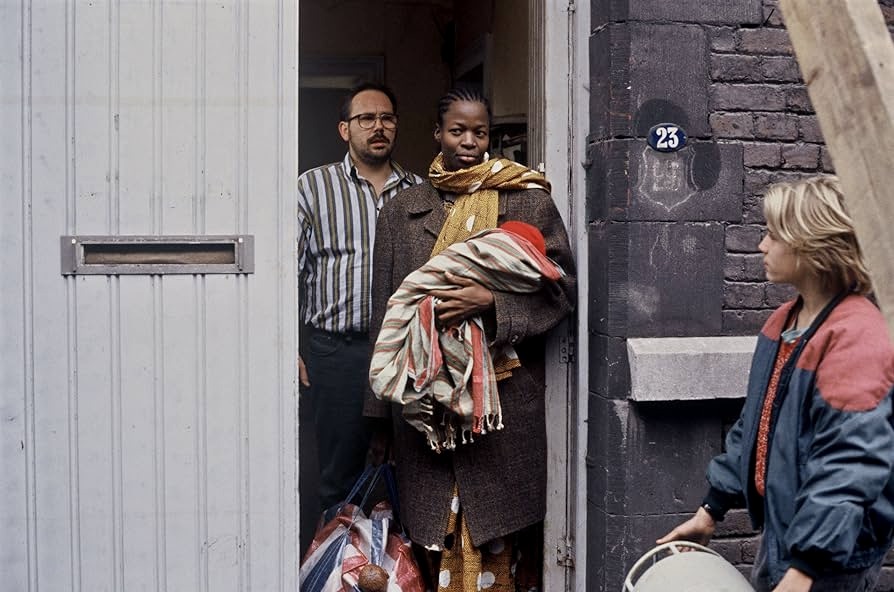
A scene from LA PROMESSE (The Promise, 1996), a Belgium film about an immigrant trafficking business starring Olivier Gourmet (left), Assita Ouedraogo, and Jeremie Renier.

Igor is a fifteen-year old kid who, in some ways, is like most teenagers his age. He likes to have fun hanging out with friends, ride his moped around and work on customizing his go-kart in his spare time. The problem is he doesn’t have much spare time. He works as a mechanic’s apprentice at a gas station but even those hours are cut short by his demanding father Roger, who needs him constantly for jobs involving building renovations, money collection and other activities related to Roger’s exploitation of illegal immigrants. Because of this, Igor has had to grow up fast with his multiple adult responsibilities but he likes the money he makes and the trust his father has placed in him. All of this is about to change when he becomes friendly with Assita, who has arrived with her newborn baby to join her husband, a West African man who does work for Roger. This is the basic set-up for Jean-Pierre and Luc Dardenne’s La Promesse (The Promise), a groundbreaking 1996 film for the brother filmmaking team about the brutal trafficking and mistreatment of undocumented immigrants in Belgium. It also serves as a stark but moving coming-of-age film.

Continue reading
Charlotte Rampling’s Wild Card

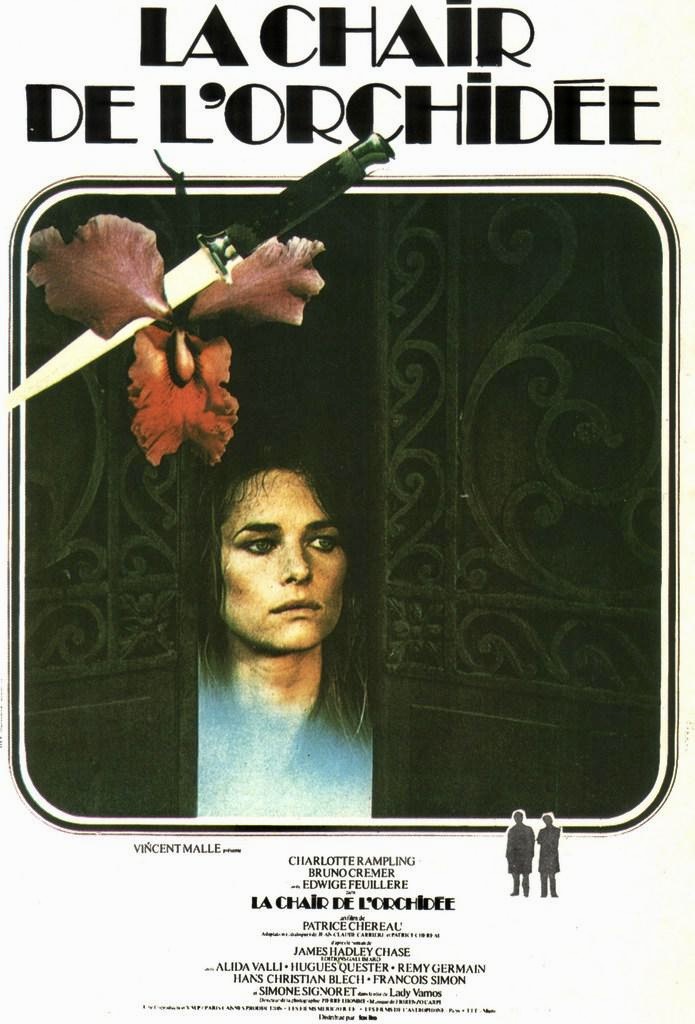
The French film poster for the 1975 thriller THE FLESH OF THE ORCHID, directed by Patrice Chereau.

Charlotte Rampling has been an international star since the mid-1970s when she appeared in Zardoz (1974), The Night Porter (1974) and Farewell, My Lovely (1975), but during her early career, critics were more likely to comment on her beauty and sex appeal over her acting talent. It wasn’t until she began appearing in the films of Francois Ozon (Under the Sand [2000], Swimming Pool [2003]) and other independent, cutting-edge directors like Dominik Moll (Lemming, 2005) and Laurent Cantet (Heading South, 2005) that Rampling finally came into her own as a critically acclaimed actress and cult favorite. She has rarely steered clear of edgy material or doing nude scenes or choosing unconventional roles over more audience friendly fare and her movies from the late sixties through the mid-nineties reflect this. Some were pretentious misfires like The Ski Bum (1971) or eccentric one-offs (Yuppi du, 1975) or mainstream showcases for her talent such as Woody Allen’s Stardust Memories (1980) and Sidney Lumet’s The Verdict (1982). Yet, even her lesser known work from this period is often worth seeking out and La Chair de I’orchidee (English title, The Flesh of the Orchid, 1975), the debut film of French director Patrice Chereau, is certainly a wild card. A psychological thriller that seems to take place in an alternate universe where everyone is misanthropic, corrupt, greedy or violent, Chereau’s first film is based on a 1948 pulp fiction novel by James Hadley Chase.

Continue reading

Billy Wilder’s Directorial Debut

The French film poster for MAUVAISE GRAINE (1934) aka Bad Seed, co-directed by Billy Wilder

Sometimes you hear a famous actor or actress state in an interview that they never watch their own movies. If they are that self-conscious, how did they ever become actors? Don’t you improve your craft by watching your films so you can see what works and what doesn’t? But some directors are guilty of this too such as Billy Wilder, who has often stated he doesn’t like watching his completed films because he always sees things he wants to change and it’s too late. Wilder has even admitted that he never watched the first movie he ever directed, Mauvaise Graine aka Bad Seed (1934), and never wanted to see it. Despite his disregard for the film, which he co-directed with Alexander Esway, Mauvaise Graine is nothing to be ashamed of and, for most Billy Wilder fans, it is an unexpected treat.

Continue reading