
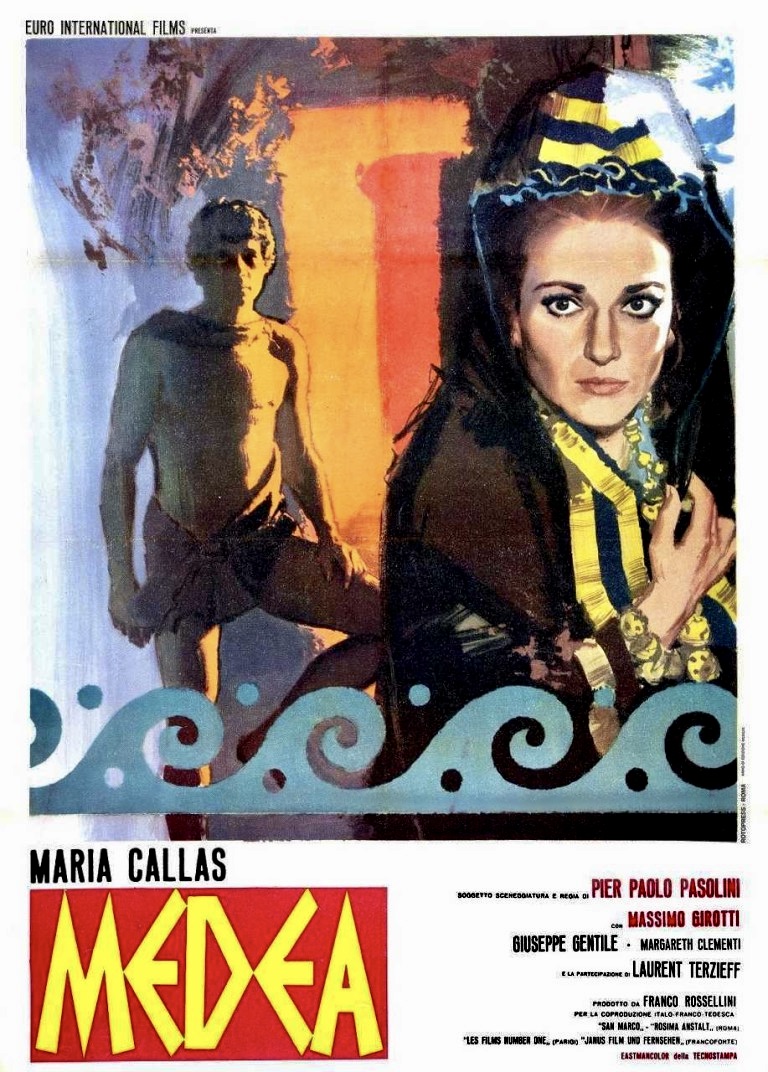
Are you well versed in Greek mythology? You’ll need to be if you take a deep dive into Pier Paolo Pasolini’s 1969 version of Medea starring the world’s most famous opera diva Maria “La Divina” Callas in her only feature film role (and she doesn’t sing). Freely adapting narrative elements from the original Greek myth as well as Euripides’ play, which was first performed in 431 BC, Pasolini presents the tragic tale in the manner of a social anthropologist crossed with an experimental filmmaker dissecting an ancient case history of a marriage gone wrong. If you aren’t familiar with the story of Jason and Medea, this interpretation can be confusing, mysterious and inaccessible at times but it is also one of the most visually and aurally dazzling of the many versions produced on stage, TV or film over the years.
Continue readingTag Archives: Franco Citti
Woody’s Benediction

His name was Woodrow Wilson Woolwine Strode and he was a football star, a professional wrestler, a WWII veteran and a famous Hollywood character actor who should have become a star. But the closest Woody Strode ever got to playing the leading role in an American film was Sergeant Rutledge (1960), in which he portrayed the title character but was fourth billed after Jeffrey Hunter, Constance Tower and Billie Burke. In an ironic twist that makes sense in a Pre-Civil Rights Hollywood, Strode had to travel to Italy to finally receive top billing and the only genuine leading role of his career in Black Jesus (1968) aka Seated at his Right (the Italian title is Seduto alla sua Destra). It is probably one of his least known films but easily his biggest role and possibly his best performance.
A Tale from the Slums of Rome
In its own way, Pier Paolo Pasolini’s 1961 directorial debut Accattone could be seen as the last gasp of the Italian neo-realism movement. It is also a remarkably self-assured first film that blends the lyrical with the sordid in its depiction of life on the outskirts of Rome where pimps, thieves and petty criminals scrounge for a living with little hope of ever escaping their dead-end existence. Based on Pasolini’s second novel, Una Vita Violenta, Accatone successfully launched Pasolini as a film director but also marked the beginning of an acting career for Franco Citti in the title role. What is most interesting is that Una Vita Violenta was again adapted for the screen under that title the following year but it is hardly ever mentioned or revived. Pasolini had no involvement with the production but it did star Franco Citti in the central role of Tommaso, a character similar to Accattone, and the two films would make a fascinating double feature in terms of their contrasting tones and directorial style. Continue reading
