
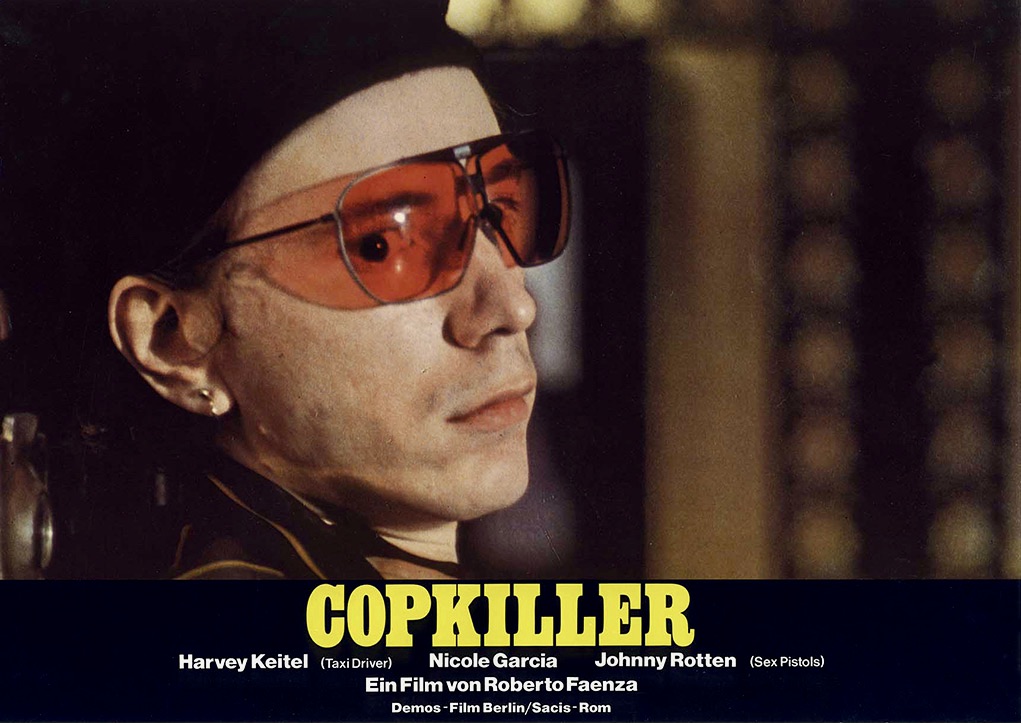
Some movies fall through the cracks and then are rediscovered years later by movie geeks who are amazed that such formerly “lost films” even exist. Such is the case with Corrupt (1983), which was also released in some markets as Copkiller and Order of Death, the title of the psychological thriller by novelist Hugh Fleetwood which was adapted for this film. An international production with Italian and French financing, the movie marked the dramatic film debut of John Lydon aka Johnny Rotten of The Sex Pistols fame (he had previously played a version of himself in Julien Temple’s The Great Rock ‘n’ Roll Swindle [1980], which was a semi-autobiographical/fantasy account of Malcolm McLaren and his promotion/management of The Sex Pistols). Corrupt also featured Harvey Keitel in the other major role and the music score was composed by Ennio Morricone. Due to poor distribution and marketing (those alternate titles didn’t help), the film quickly vanished from theaters but it holds up today as a fascinating precursor to Abel Ferrara’s Bad Lieutenant (1992) while channeling some of the yin-yang duality of Donald Cammel & Nicolas Roeg’s Performance (1976).
Continue reading
 Cinema Sojourns