
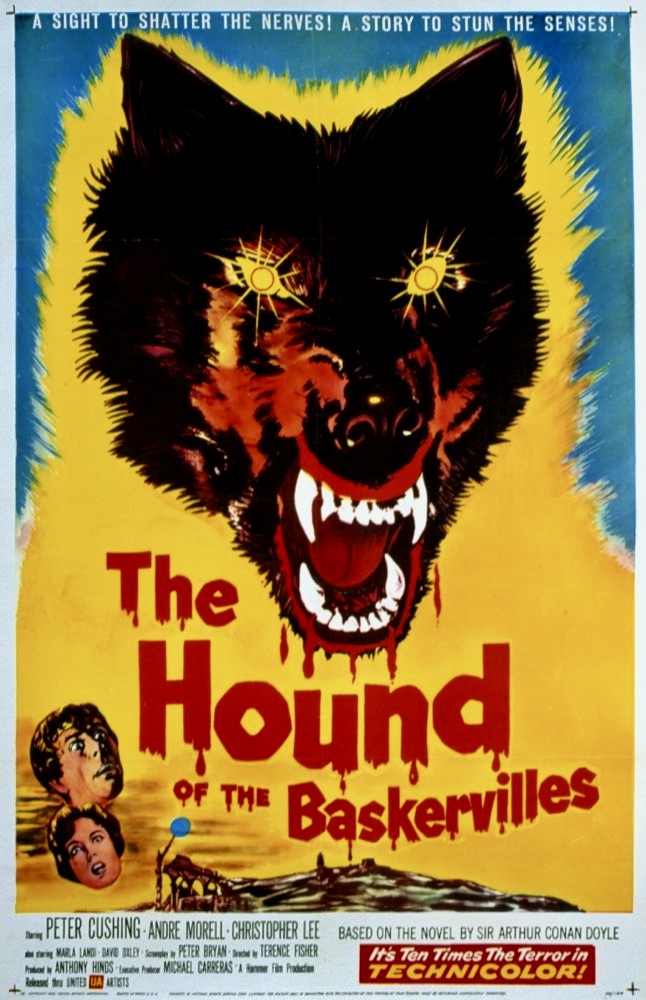
Howling on the Moors

Almost thirteen years after Basil Rathbone had filmed his final screen appearance as Sherlock Holmes, Hammer Studios decided to resurrect Sir Arthur Conan Doyle’s internationally famous detective in a Technicolor remake of The Hound of the Baskervilles (1959) which had been previously filmed with Rathbone in 1939. The eerie tale, which opens in a flashback sequence to an earlier time, depicts the origins of the Baskerville curse: the decadent Sir Hugo Baskerville brutally murders a servant girl who flees a group orgy at his mansion. Immediately following her death, however, Baskerville hears a strange braying on the moors before encountering an immense spectral hound which avenges the girl’s death. We then flash forward to the present, where Sherlock Holmes and his partner, Dr. Watson, are investigating the mysterious recent death of Sir Charles Baskerville.

Continue reading
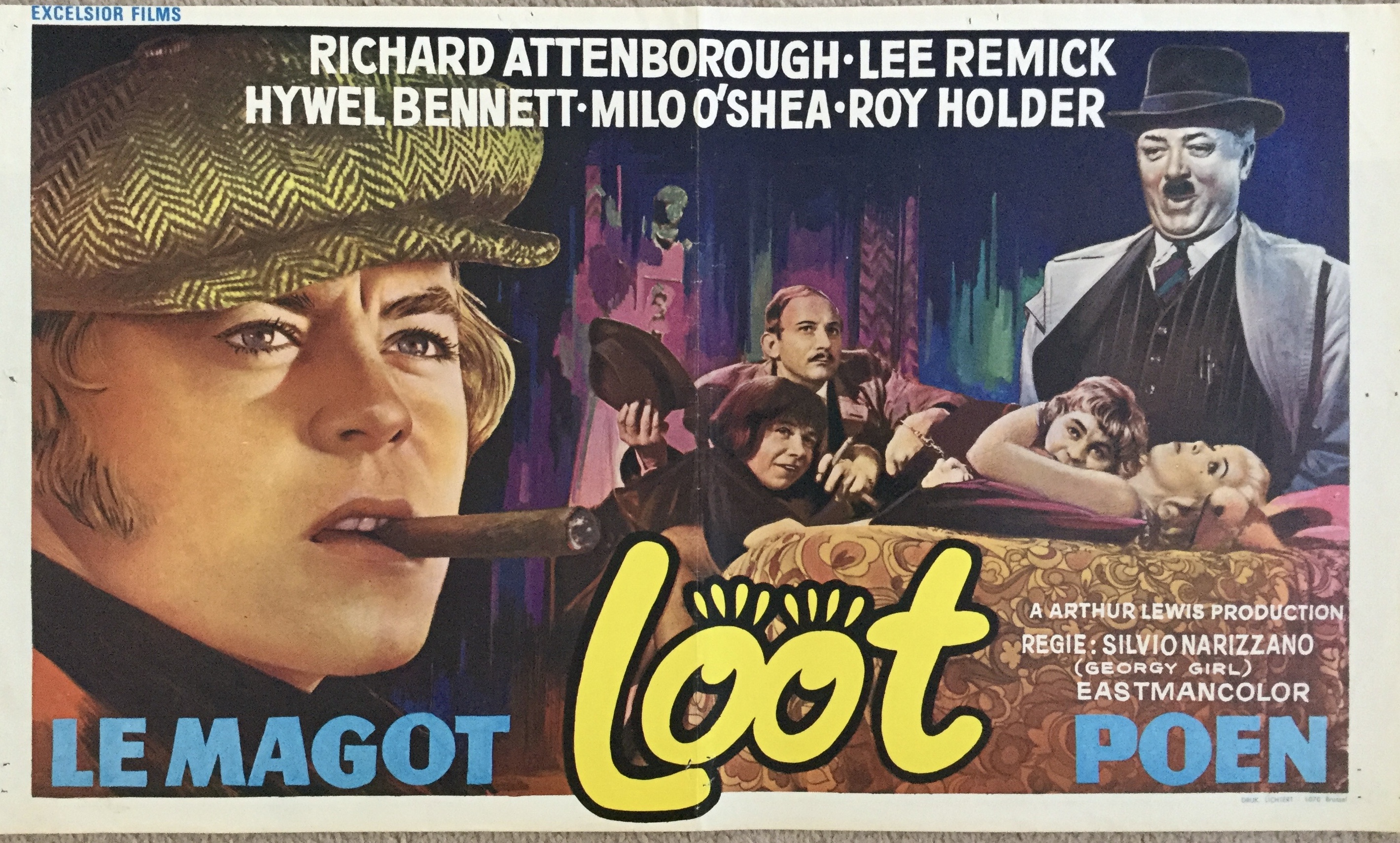
Joe Orton’s Impolite Farce

Black comedy may be an acquired taste but it still takes a clever and wickedly funny practitioner of the form to pull it off and Joe Orton was one of the best. The enfant terrible of British theatre in the sixties, Orton’s promising career was cut short in 1967 when he was bludgeoned to death by his lover Kenneth Halliwell. This final curtain, along with the events that led up to it, were covered in detail in John Lahr’s excellent biography of the acclaimed playwright Prick Up Your Ears, which was adapted to the screen in 1987 by Stephen Frears from a screenplay by Alan Bennett and featured Gary Oldman as Joe Orton. While Frears’ biopic was a fascinating character study, it didn’t really delve into the nuts and bolts of Orton’s craft or why such stages farces as Entertaining Mr. Sloane and What the Butler Saw became such popular and scandalous causes celebres among theatre critics and playgoers. The only thing that can really do justice to Orton’s particular brand of outrageous comedy and satire is a first rate production of one of his plays. A film adaptation would be much trickier because so much of Orton’s humor involves language – its proper and improper usage, double entendres, slang, class accents and other specifics. Of course, that didn’t stop filmmakers from attempting to bring his work to the screen and Loot became the second Orton play to receive the big screen treatment in 1970 (Entertaining Mr. Sloane, another Orton play adapted to film, had been released earlier in 1970).

Continue reading