

The Poet of Chaos

People tend to forgive artistic geniuses for their human imperfections when their talent is so monumental – this could also apply to any super-celebrity with landmark achievements in any field from sports to politics to music – but at a certain point, there is a limit to what society will tolerate. The protagonist of Baal, a 1970 film adaptation of the Bertolt Brecht play, is the embodiment of this. A former office clerk turned itinerant poet and musician, Baal’s work propels him to the level of a literary icon, beloved by the intelligentsia and the common man. He could care less because he hates everything, including the society that helped shape his talent. More importantly, he hates himself and that self-destructive urge informs his every act, making him one of the most nihilistic and anti-social characters even conceived for the stage or screen.

Continue reading
The Burden of Brilliance

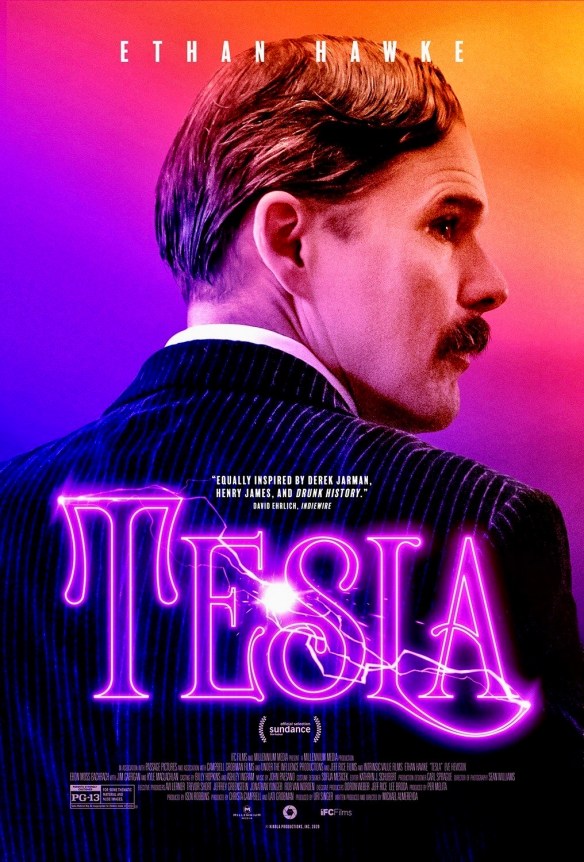
Who was Nikola Tesla? Some people know him as the scientific genius who created the alternating current (AC) electrical system which became the industry standard instead of Thomas Edison’s direct current (DC) electrical system. Tesla is also credited with developing the first X-ray films known as shadowgraphs, inventing the Tesla coil which became the basis of modern radio technology, designing the first neon sign and holding the patents for more than 250 inventions which have improved the quality of human life. Such brilliance comes with a price and the Croatian-born immigrant was also an eccentric with no talent for profitable self-promotion or successful business ventures which often affected his career adversely. Sounds like a fascinating subject for a film, right? Director/screenwriter Michael Almereyda thought so too and his 2020 movie Tesla featuring Ethan Hawke in the title role, is currently in release but be forewarned, this is NOT a conventional biopic by any stretch of the imagination.    Continue reading

Comic Strip Addiction

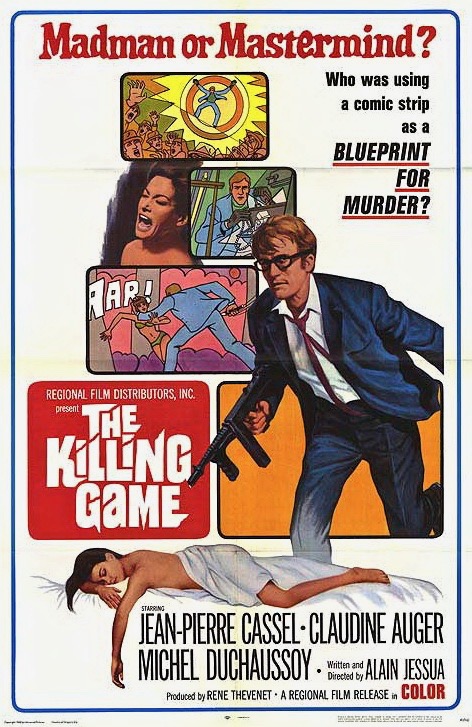
If you went by title alone, Alain Jessua’s Jeu de Massacre (released as The Killing Game in the U.S. and as Comic Book Hero in other territories) suggests it might be a murder mystery or a James Bond-like spy thriller which was still in vogue at the time of the film’s release in 1967. Instead, the film is a witty black comedy about the addictive power of pulp fiction – in this case, a superhero comic book – to ignite dangerous fantasies in readers whose grasp on reality is fragile.   Continue reading