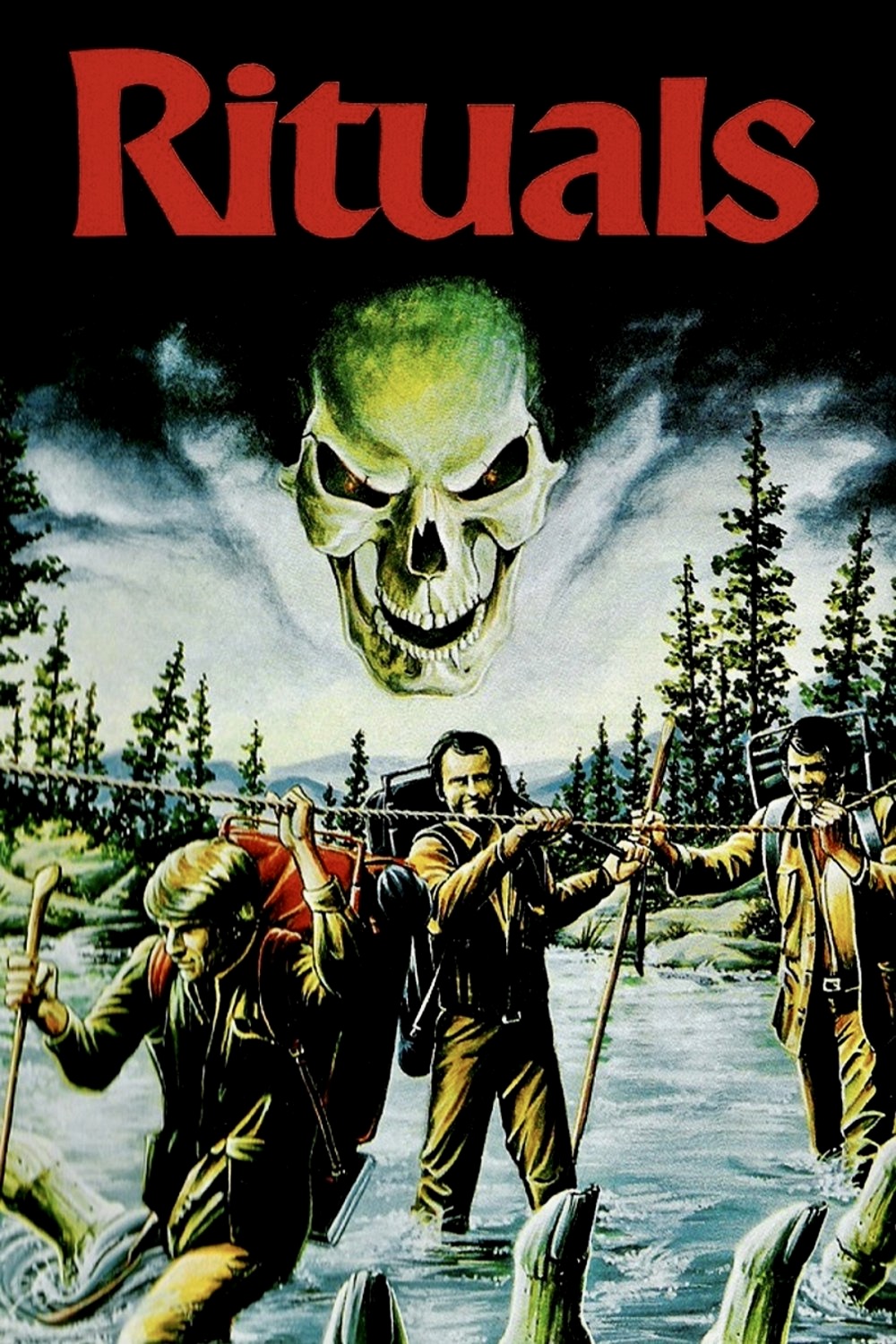
When the film version of James Dickey’s 1970 novel Deliverance, directed by John Boorman, first appeared in 1972, it was perceived as a new kind of survival tale, one in which suburban men were confronted with the primeval forces of nature and completely traumatized by the experience. While it was mostly a character-driven adventure story, it had nightmarish elements that could easily classify it as a horror film yet it had a much broader appeal than a niche genre item. Nevertheless, some filmmakers took Dickey’s basic premise of some city folks venturing into unknown rural territory and turned it into a horror film template. Some of the more infamous titles are Wes Craven’s cult favorite The Hills Have Eyes (1977), Mother’s Day (1980), a sick black comedy from Troma Entertainment, Just Before Dawn (1981), directed by Jeff Lieberman (Squirm, Blue Sunshine) and The Final Terror (1983) featuring Daryl Hannah and Rachel Ward in early roles. My favorite though is the lesser known 1977 Canadian film Rituals (aka The Creeper), which comes close to generating the kind of white-knuckle tension that defined Deliverance while adding a number of gruesome horror tropes that make it consistently creepy and harrowing.
Continue readingTag Archives: Canadian cinema
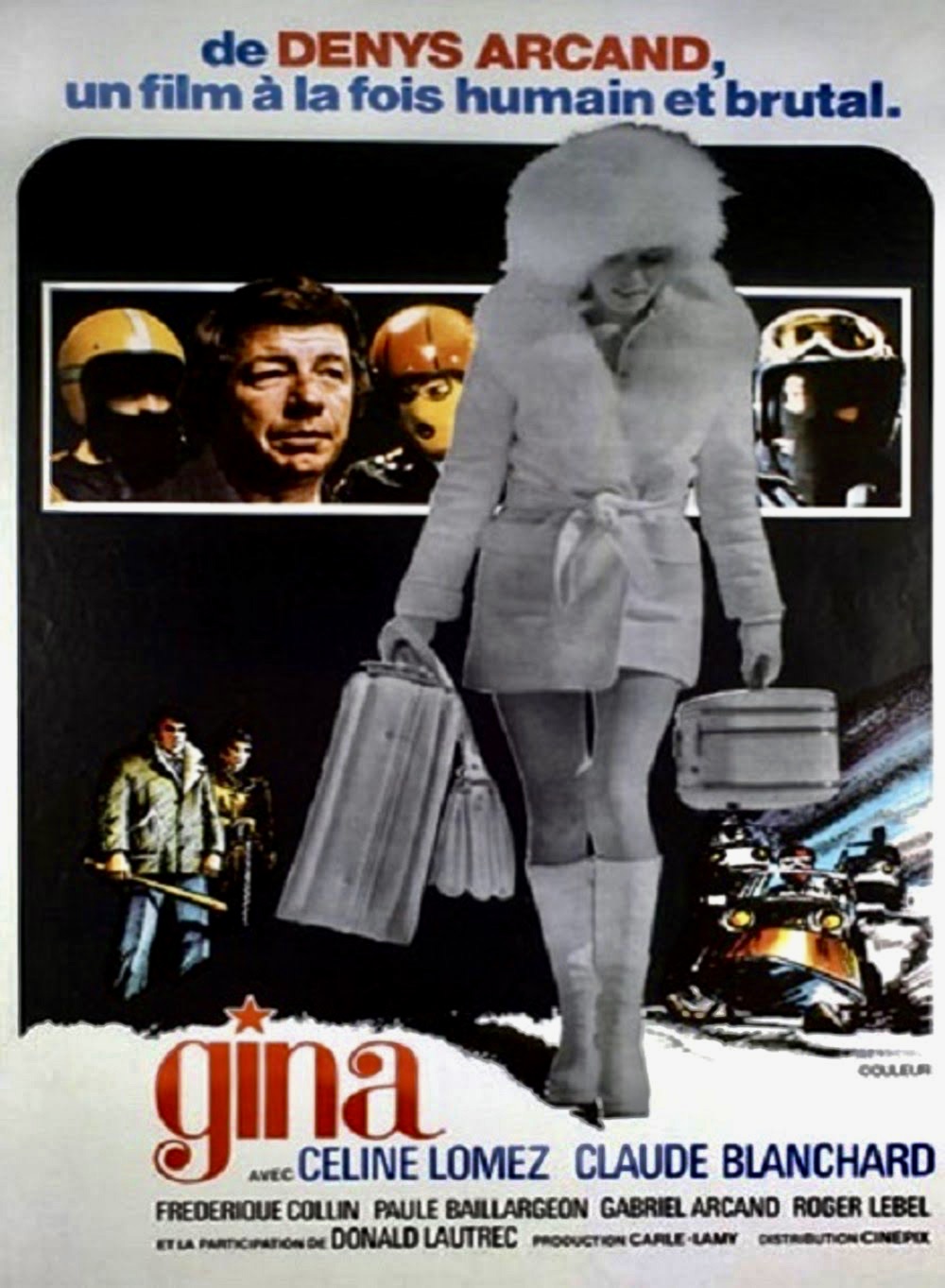
Canuxploitation or Social Realism?
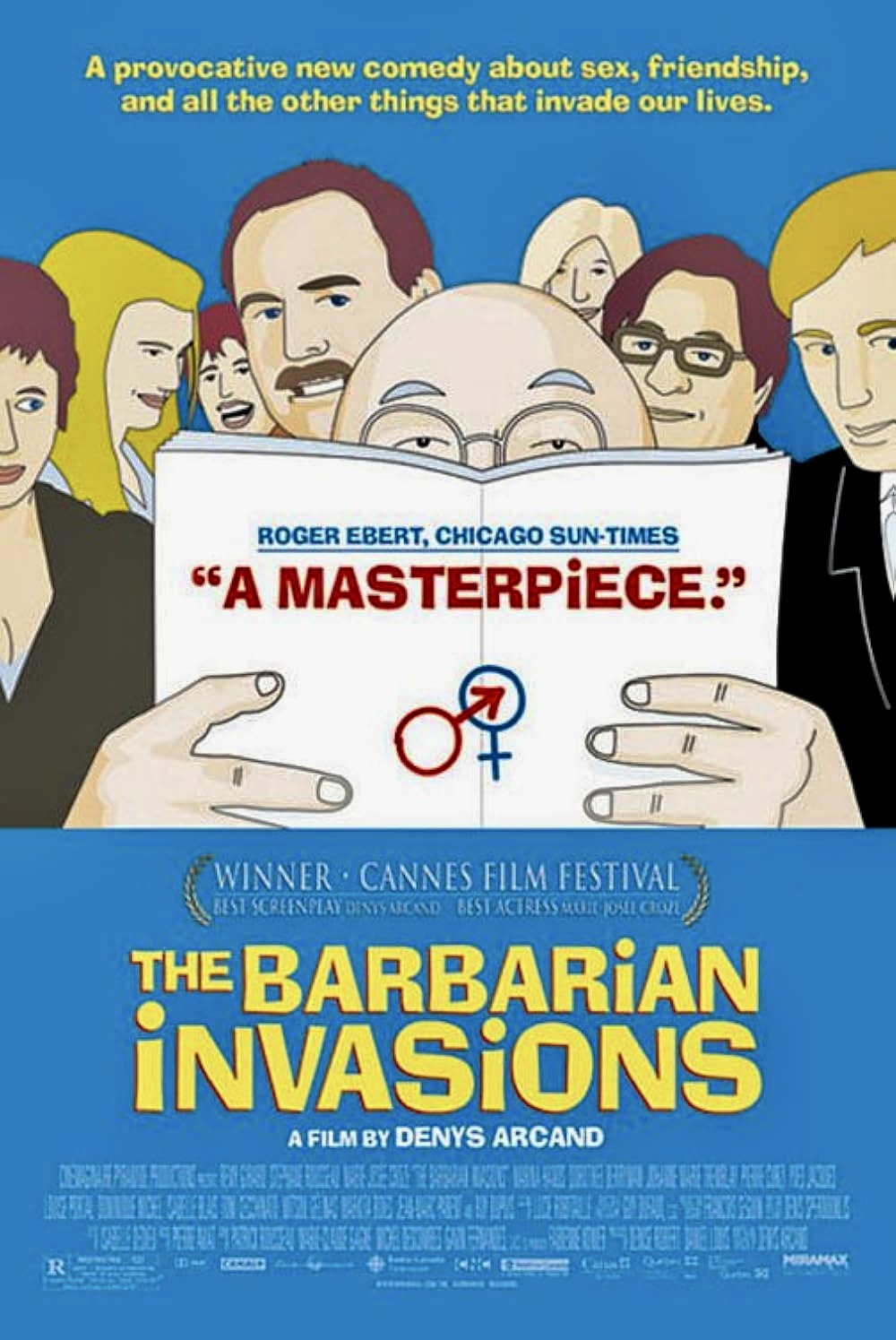
Canadian writer/director Denys Arcand burst upon the international film world in 1986 with his film The Decline of the American Empire, which won the FIPRESCI Prize at Cannes and the Best Foreign Language Film from the New York Film Critics Circle plus it received an Oscar nomination for Best Foreign Language Film (it lost to The Assault, a Nazi-themed WW2 drama from the Netherlands). A witty but cynical talkfest about a gathering of academics obsessed with sex, Decline was often compared by critics at the time to 1983’s The Big Chill, except it was a “feel bad” version of it. More critical acclaim and awards followed for Arcand’s follow-up feature Jesus of Montreal (1989) and his later work, The Barbarian Invasions (2003), which is often regarded as his finest achievement.
What most non-Canadians didn’t know at the time was that Arcand had made a name for himself making award-winning documentaries for the National Film Board of Canada and then dabbled in the B-movie genre with an unofficial trilogy of crime dramas: La Maudite Galette (English title: Dirty Money, 1972), Rejeanne Padovani (1973) and Gina (1975). These low budget efforts, all of which were shot in Quebec in the French language, helped Arcand hone his skills as a director but were decidedly down and dirty efforts compared to his more intellectual art-house fare in the 1980s yet there is nothing typical or cliched about Arcand’s crime trilogy. Dirty Money depicts a murder scheme for money gone wrong and looks like a precursor to The Coen Brothers’ Blood Simple (1984). Rejeanne Padovani is a sordid tale of political corruption, bribery and murder that was seen as a barely disguised critique of the Canadian government at the time. And Gina, probably my favorite of the three, is a strangely effective hybrid of softcore melodrama and revenge thriller crossed with a bleak portrait of working class life in the provinces – in this case, the textile mill town of Louiseville, Quebec during a particularly frigid winter.
Continue readingKafkaesque
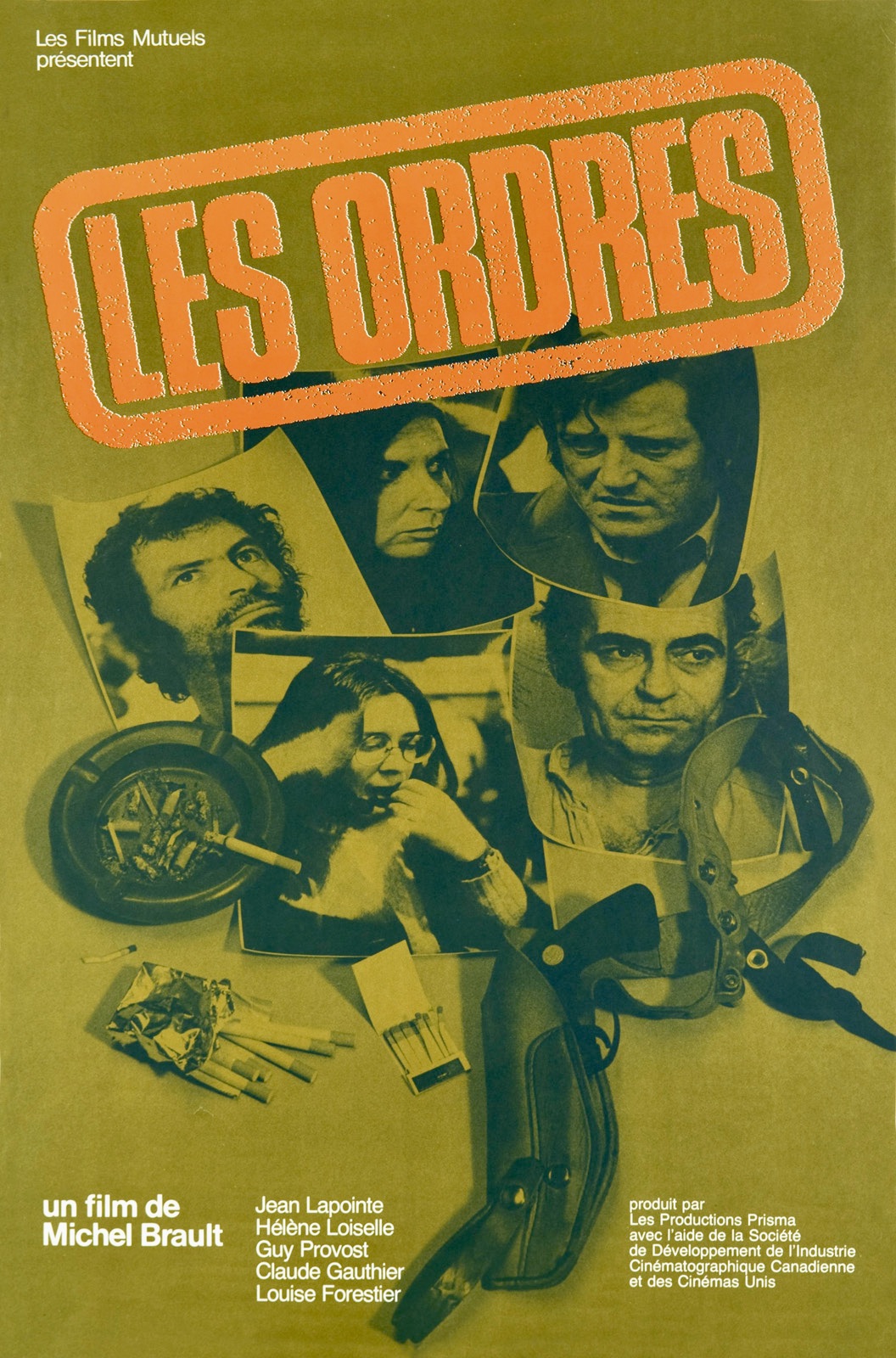
In October of 1970, the Canadian government was thrown into a state of turmoil by the actions of Front de Liberation du Quebec (FLQ), a terrorist group that wanted to achieve independence for Quebec and make it a socialist province. After the FLQ first kidnapped British diplomat James Cross on October 5th and followed it up with the abduction of Quebec Cabinet Minister Pierre Laporte five days later, Pierre Trudeau, Canada’s Prime Minister, called in the army and invoked the War Measures Act, which gave the police complete authority to arrest and interrogate anyone deemed suspicious, regardless of whether there was any evidence or not. Over 400 people were rounded up and subjected to numerous human rights abuses before being released, some after more than 21 days in jail. Les Ordres (1974), a cinema verite dramatization of this incident by Canadian director/cinematographer Michel Brault, follows the travails of five suspects, based on the actual transcripts of their incarceration.
Continue readingFight the Power
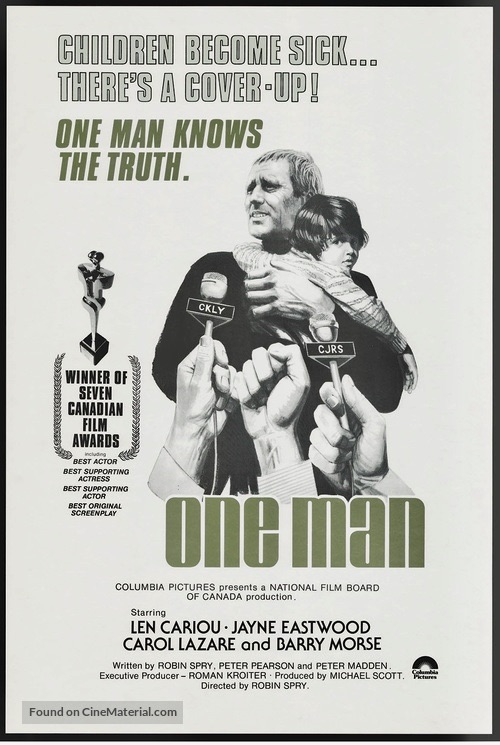
People can complain about the seventies all they want but it was a watershed decade in terms of launching new film genres like disaster movies (Airport, Earthquake, The Towering Inferno), Blaxploitation (Sweet Sweetback’s Baadasssss Song, Shaft, Superfly), conspiracy thrillers (Executive Action, The Parallax View, Three Days of the Condor), Eco-horror/sci-fi (Frogs, Night of the Lepus, Soylent Green) and slasher flicks (Black Christmas, Friday the 13th, Halloween). Arriving later in the decade was the environmental drama as represented by The China Syndrome (1979) and other films that addressed the dangers of nuclear power, man-made toxins and air pollution. Interestingly enough, one of the first movies to address the lethal health hazards of air pollution in the guise of an investigative thriller came from Canada entitled One Man (1977). It was produced by the National Film Board of Canada, directed and co-written by Robin Spry and featured Len Cariou in the leading role of a television reporter who is threatened by a powerful corporation over a controversial news story
Continue readingAutobiography of a Sleepwalker
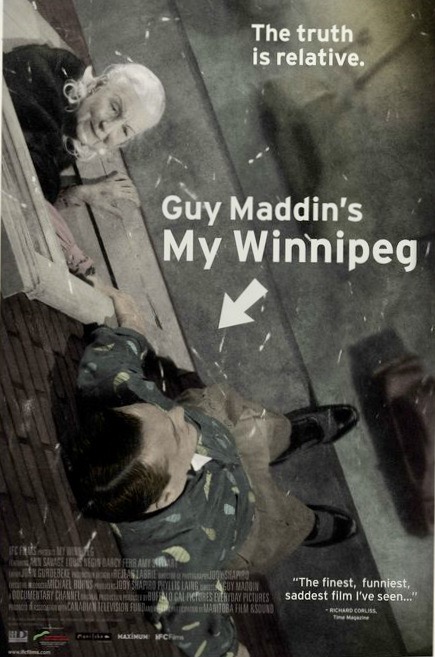
How does a filmmaker begin to craft an autobiographical film of his or her own life? Many renowned directors have tackled it but usually by using a fictionalized version of themselves under a different name though many of the incidents depicted are true. Francois Truffaut did it with The 400 Blows (1959) as did George Lucas with American Graffitti (1973) and Sam Fuller in The Big Red One (1980). Even more recently Steven Spielberg re-imagined his childhood and teenage years in The Fabelmans (2022). But no one has ever made a more personal and dreamlike meditation on their roots than what Guy Maddin accomplishes with My Winnipeg (2007), which is set in the city where the Canadian director was born and resided for much of his life. Narrated by Maddin in a voice that sounds half asleep, half awake, our somnambulistic guide creates his own mythology about himself, his family and his home town that is utterly unique. Plus, his narrator approach is totally fitting for a city that allegedly has more sleepwalkers among its residents than any other major city.
Continue readingA Danish Original and a Canadian Remake

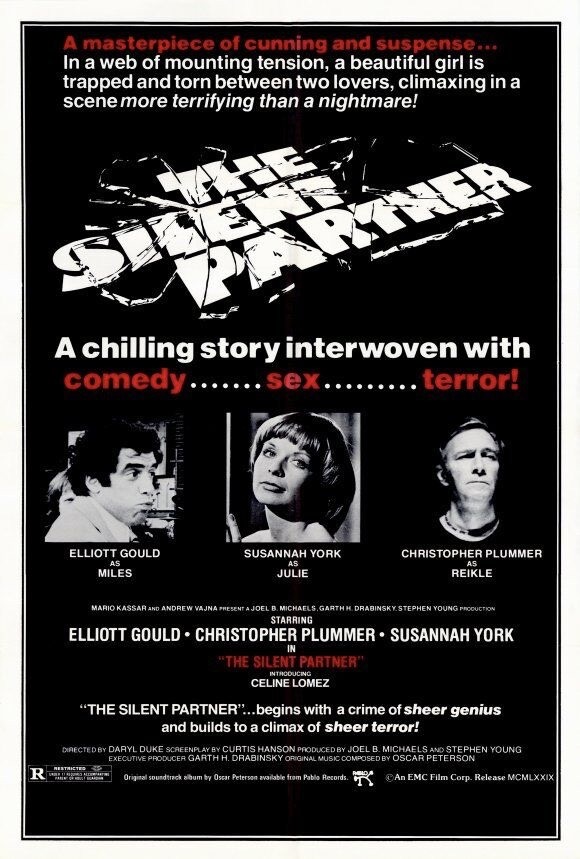
In March 1979 a small scale but offbeat and ingenious little crime drama entitled The Silent Partner slipped into U.S. theaters without any advance word. A Canadian tax shelter write-off, the movie might have passed unnoticed if it hadn’t been for a handful of U.S. film critics who championed the release such as Roger Ebert of The Chicago Sun-Times, who called it “a thriller that was not only intelligently and well acted and very scary, but also had the most audaciously clockwork plot I’ve seen in a long time…it’s worthy of Hitchcock.” And Janet Maslin of The New York Times called it “a dense, quirky, uncommonly interesting movie, this time with a high quotient of suspense.”
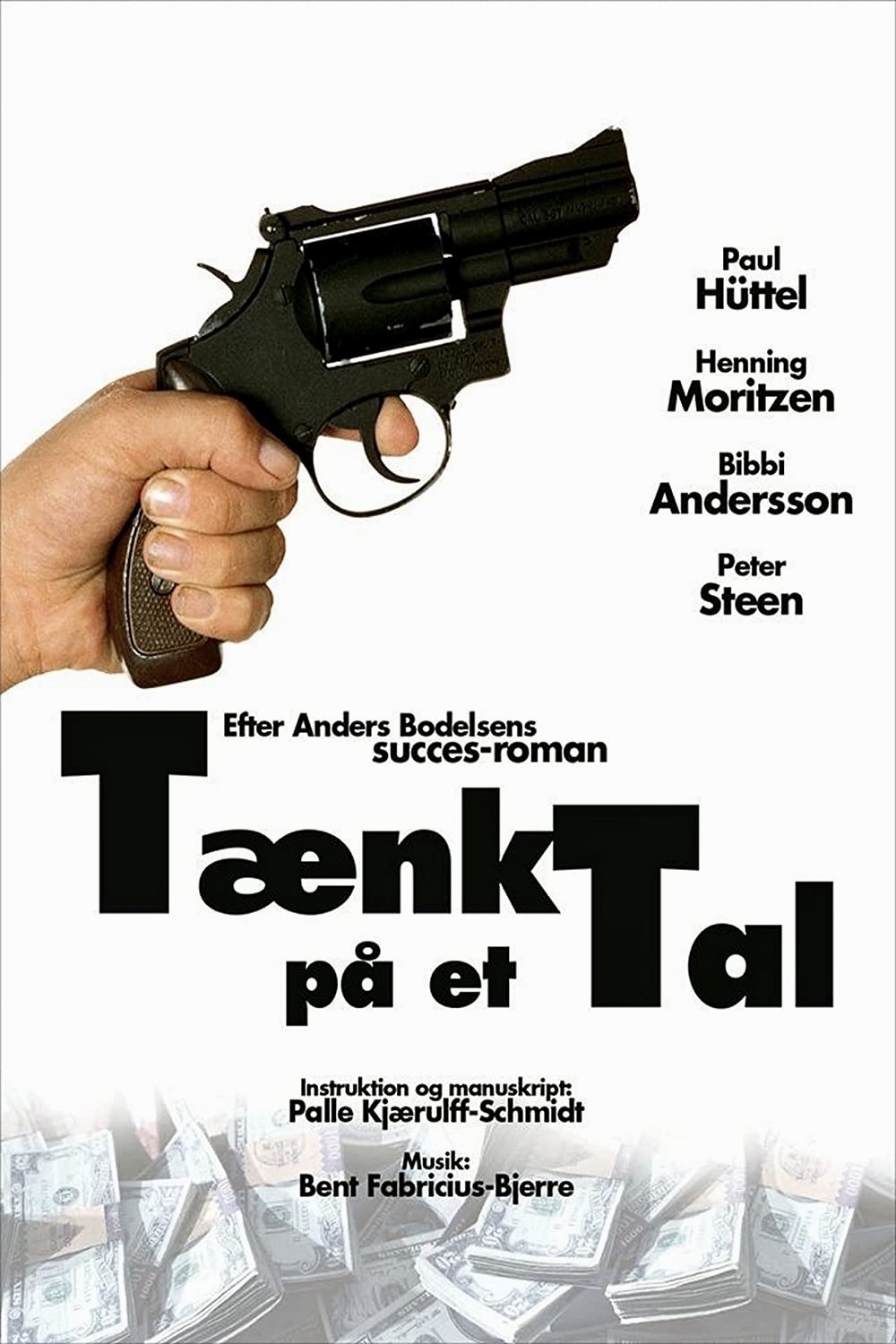
Over the years The Silent Partner has built up a considerable fan base and has become a welcome Yuletide viewing alternative (it is set during the Christmas season) to the umpteenth airings of It’s a Wonderful Life and A Christmas Carol. What most American viewers don’t realize is that The Silent Partner is a remake of the 1969 Danish thriller Think of a Number (Taenk pa et tal), directed by Palle Kjaerulff-Schmidt.
Continue readingDonald Shebib’s Feature Film Debut
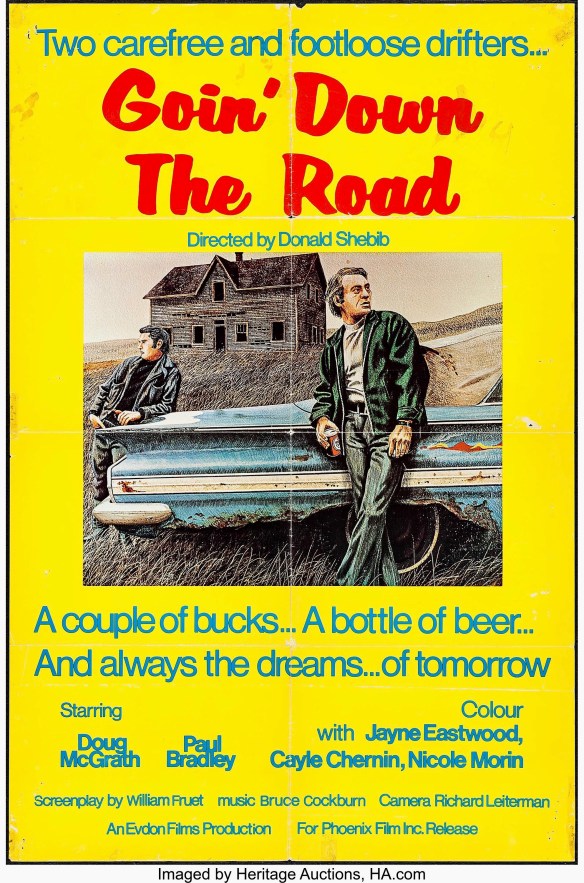
The Canadian film industry has never experienced a time in their history where their regional cinema ignited an influential movement like the Nouvelle Vague films of France in the late 50s or Australian’s New Wave films of the 70s. Instead they tend to be viewed more as a functioning subsidiary of the U.S. film industry, occasionally providing locations, cast and crew and other services to American productions. Yet, movie lovers often forget that the country’s national treasure, The Film Board of Canada, continues to be one of the most prolific creators of internationally renowned animation and documentary films, which has garnered 12 Oscars and 74 Oscar nominations to date. Canada has also produced a number of artistic and critically acclaimed feature films which have enriched world cinema such as Claude Jutra’s Mon Oncle Antoine (1971), David Cronenberg’s Dead Ringers (1988), Atom Egoyan’s The Sweet Hereafter (1997), Zacharias Kunuk’s Atanarjuat: The Fast Runner (2001), Denys Arcand’s The Barbarian Invasions (2004) and Guy Maddin’s My Winnipeg (2007). And one film that continues to make Canadian critics’ all-time top ten movie lists is Donald Shebib’s Goin’ Down the Road (1970), although it is not as well known among American viewers as the aforementioned titles. Continue reading