
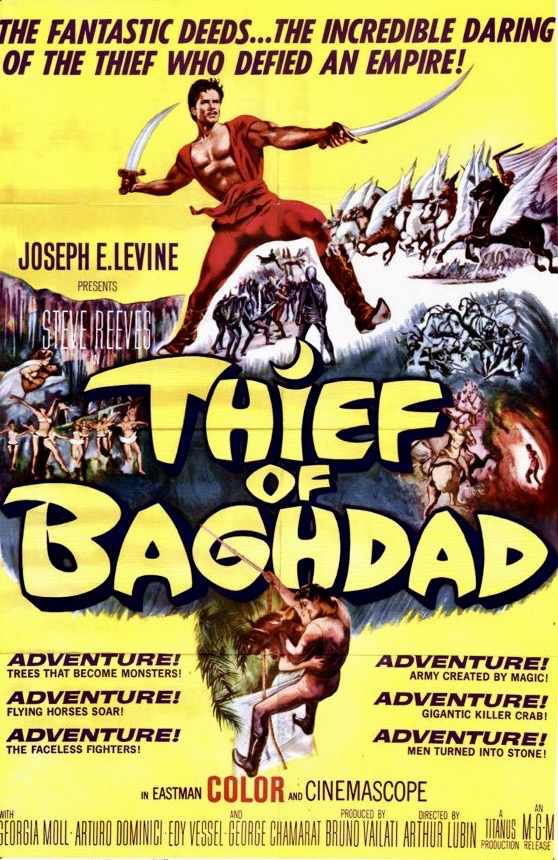
One Thousand and One Nights also known as the Arabian Nights is a collection of stories from the Middle East and India that can be traced back to the 9th century although the author or authors of the tales are anonymous. What is known is that the stories introduced such famous fictional characters as Sinbad, Aladdin, Ali Baba and others, all of whom have inspired numerous film versions of their exploits. One of my favorite Arabian Nights fables is The Thief of Bagdad but the first movie version I encountered was the 1961 Italian fantasy-adventure Il Ladro di Bagdad (released in an English dubbed version as The Thief of Baghdad in the U.S.) starring Steve Reeves. First seen at a kiddie matinee during its original release, it made a strong impression on me as a ten-year-old, even if it is not the best known, most lavish or critically respected of the many film versions.
Continue reading

 Cinema Sojourns