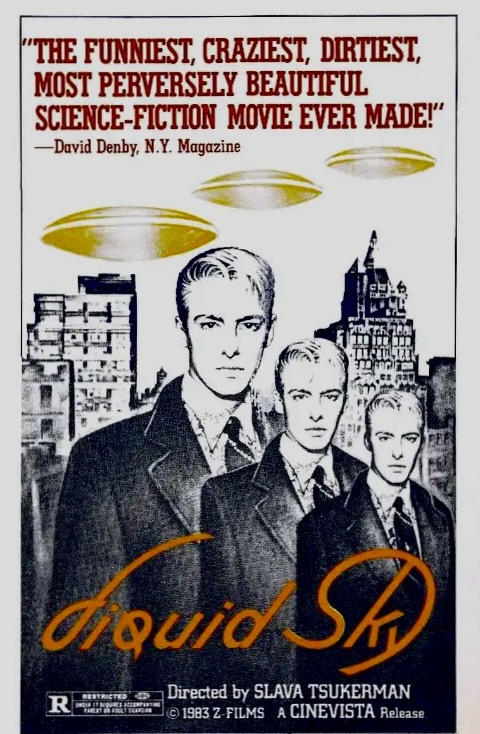
Is it possible for a struggling independent film director to make a science fiction film today for less than a million dollars? It doesn’t seem likely but it could be possible if the director is driven, highly creative and blessed with a team of uniquely gifted collaborators. That was certainly the case for Russian émigré Slava Tsukerman in 1982 when he embarked on his American feature film debut, Liquid Sky. Made for approximately $500,000 and produced during a 28-day shooting schedule, the film became an overnight sensation, winning special awards at film festivals around the globe and attracting adventurous filmgoers to a long run at New York City midnight movie screenings.
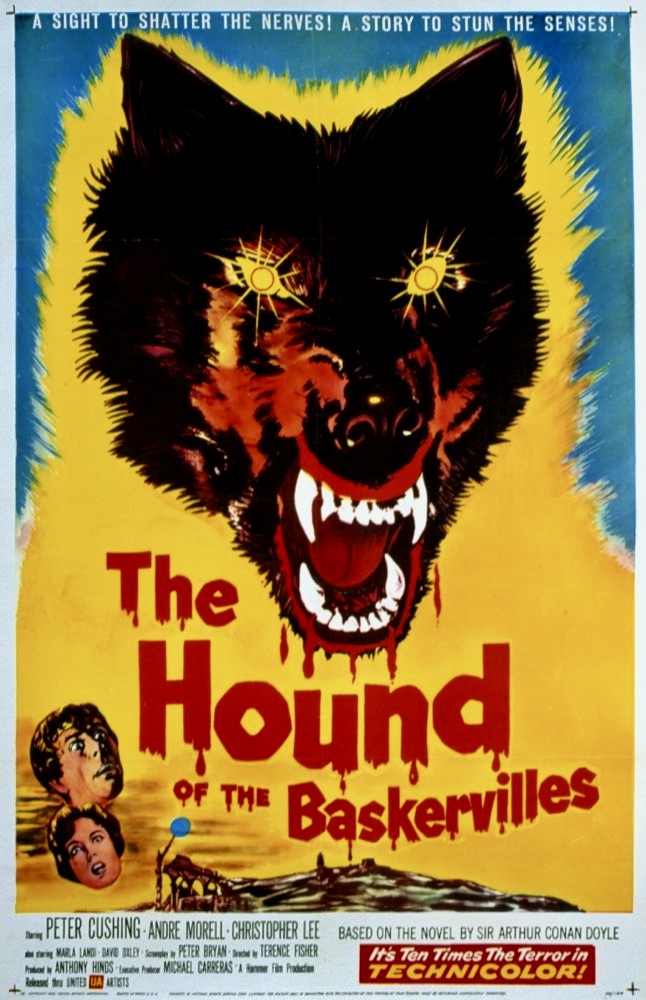
Almost thirteen years after Basil Rathbone had filmed his final screen appearance as Sherlock Holmes, Hammer Studios decided to resurrect Sir Arthur Conan Doyle’s internationally famous detective in a Technicolor remake of The Hound of the Baskervilles (1959) which had been previously filmed with Rathbone in 1939. The eerie tale, which opens in a flashback sequence to an earlier time, depicts the origins of the Baskerville curse: the decadent Sir Hugo Baskerville brutally murders a servant girl who flees a group orgy at his mansion. Immediately following her death, however, Baskerville hears a strange braying on the moors before encountering an immense spectral hound which avenges the girl’s death. We then flash forward to the present, where Sherlock Holmes and his partner, Dr. Watson, are investigating the mysterious recent death of Sir Charles Baskerville.
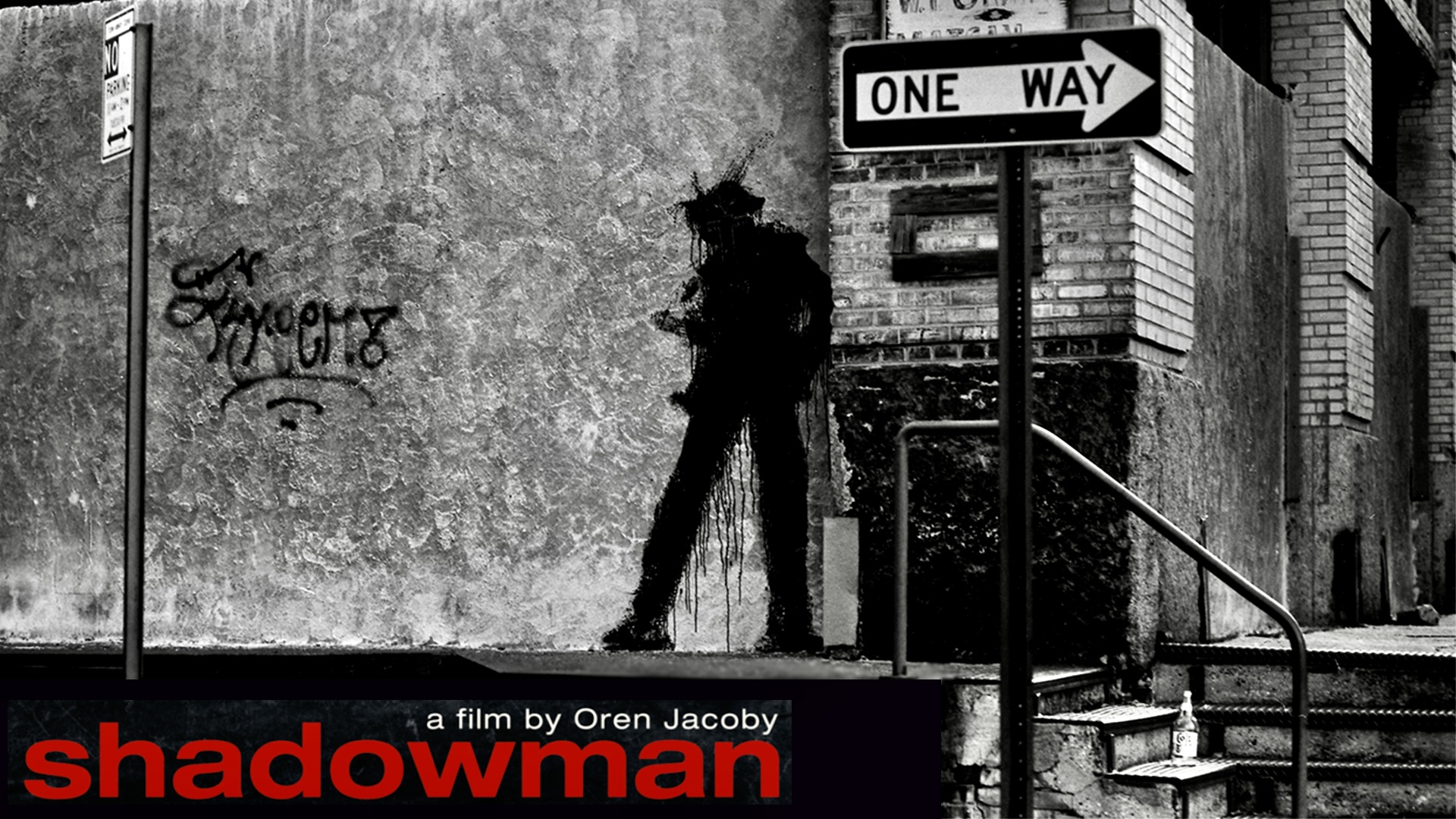
When did grafitti drawings and spray paint signage graduate from being considered vandalism to a recognized art movement? Pop culture historians pinpoint the late 1960s as the time that subway art and other movements began appearing in major cities with Philadelphia and then New York City paving the way. Some believe that grafitti taggers Cornbread aka Darryl McCray and Top Cat 126 from Philadelphia were among the first to elevate spray paint signage out of its defacement stigma. And by the late seventies/early eighties grafitti art had become much more elaborate and pervasive, thanks to the pioneering efforts of cult figures like Jean-Michel Basquiat and Keith Haring, who eventually made their brand of street art wildly popular and collectible. What most people don’t know is that a Canadian artist named Richard Hambleton created a public art series between 1976 to 1978 in major cities across America and Canada that were inspired by real life crime scenes. These homicide victim street portraits actually prefigured the spray paint artists movement in New York City and Shadowman (2017), a documentary by Oren Jacoby, delves into the elusive figure of Hambleton, who was famous before contemporaries Basquiat and Harring, but is the least known of the three today.
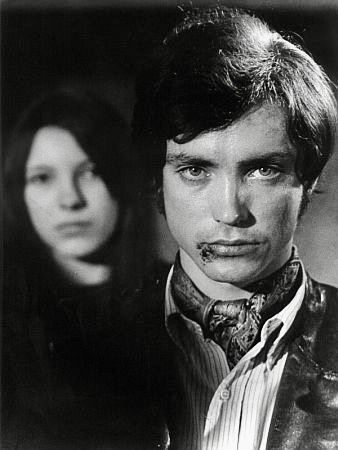
Udo Kier plays a rising gang leader in the bleak 1968 crime expose SHAMELESS (German title: Schamlos).
Long before Udo Kier became the go-to eclectic supporting actor who stole his scenes in films such as Gus Van Sant’s My Own Private Idaho (1991), the sci-fi fantasy Johnny Mnemonic (1995), Wim Wenders’ The End of Violence (1997) and numerous films by Lars von Trier, the German actor was already firmly established as a cult film icon from the 1970s. In addition to playing the lead in two Andy Warhol productions, Flesh for Frankenstein (1973) and Blood for Dracula (1974), he starred in the sadistic period piece The Mark of the Devil (1970), Just Jaeckin’s S&M erotica The Story of O (1975), Dario Argento’s Suspiria (1977) and R.W. Fassbinder’s The Third Generation (1979). Kier, who was born in 1944, is still going strong today at age 78 with more than 250 film and TV series in his filmography and a rare leading role in Swan Song (2021), in which he plays a retired hairdresser who agrees to perform one last makeover on a deceased client. But if you want to see him at the beginning of his career, look no further than his debut feature film Shameless (German title, Schamlos, 1968), in which he plays a ruthless young gangster who tries to muscle in on his rival’s business operations in Vienna, Austria.
Udo Kier has a rare starring role in the bittersweet comedy-drama SWAN SONG (2021).
Edie Sedgwick in one of the famous Andy Warhol Screen Tests
For most people the films of Andy Warhol were more fun to read about then to actually watch. In the case of films such as the 485-minute Empire (1964) or Sleep (1963), at 321 minutes, it’s hard to imagine someone watching these in their entirety in one sitting. I don’t even think Warhol expected viewers to watch these in real time but to wander in and out of the screenings like you would at a video installation. But even at revivals of the most popular and infamous Warhol titles such as The Chelsea Girls (1966) and Lonesome Cowboys (1968), you can bet on numerous walkouts during the screenings, not from outrage but boredom or disinterest. At the other end of the scale, however, are the short, silent black and white films he made when he was first experimenting with the medium and his Screen Test series shows a brilliance of concept and execution that could easily turn naysayers into converts.
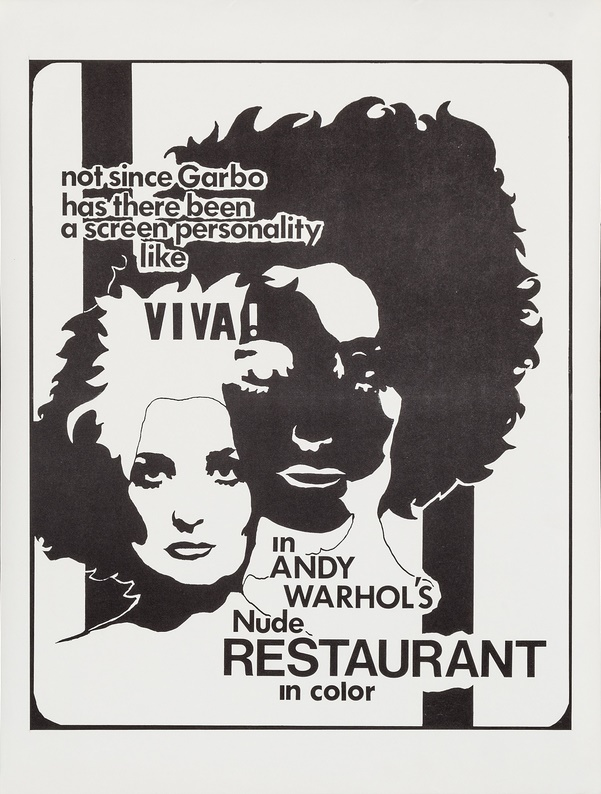
The idea of a nude restaurant where the clientele and wait staff are composed of various members of Andy Warhol’s Factory crowd such as Taylor Mead and Viva wearing little more than skimpy black briefs may not sound like the most appetizing destination for dining. Yet, as a film, The Nude Restaurant (1967) is a lively, frequently hilarious and occasionally despairing communiqué from the underground for those who have always avoided or dismissed the experimental cinema of Andy Warhol as something boring and interminable based on seeing snippets of 1963’s Sleep (a 321 minute static camera study of John Giorno asleep in bed) or 1964’s Empire (a 485 minute single shot portrait of the Empire State Building from dusk until approximately 3 am) or just reading about them. Continue reading →
Los Angeles has served as the backdrop for countless Hollywood movies but in Jacques Demy’s Model Shop (1969), the French director’s first and only American film (if you don’t count the 1984 made-for-TV movie Louisiana), the city becomes the real protagonist. With its sprawling urban landscape, oil derricks, desolate beaches and constant traffic, it provides a vivid canvas for a contemporary love story about romantic longing, missed connections and unrealized dreams. Film writer Clare Stewart referred to the film in the film journal Senses of Cinema as “a road movie that doesn’t go anywhere” but that’s not a putdown. It’s an apt description of what Demy was trying to create here – a drifting, dreamy mood piece. Continue reading →



 Cinema Sojourns