
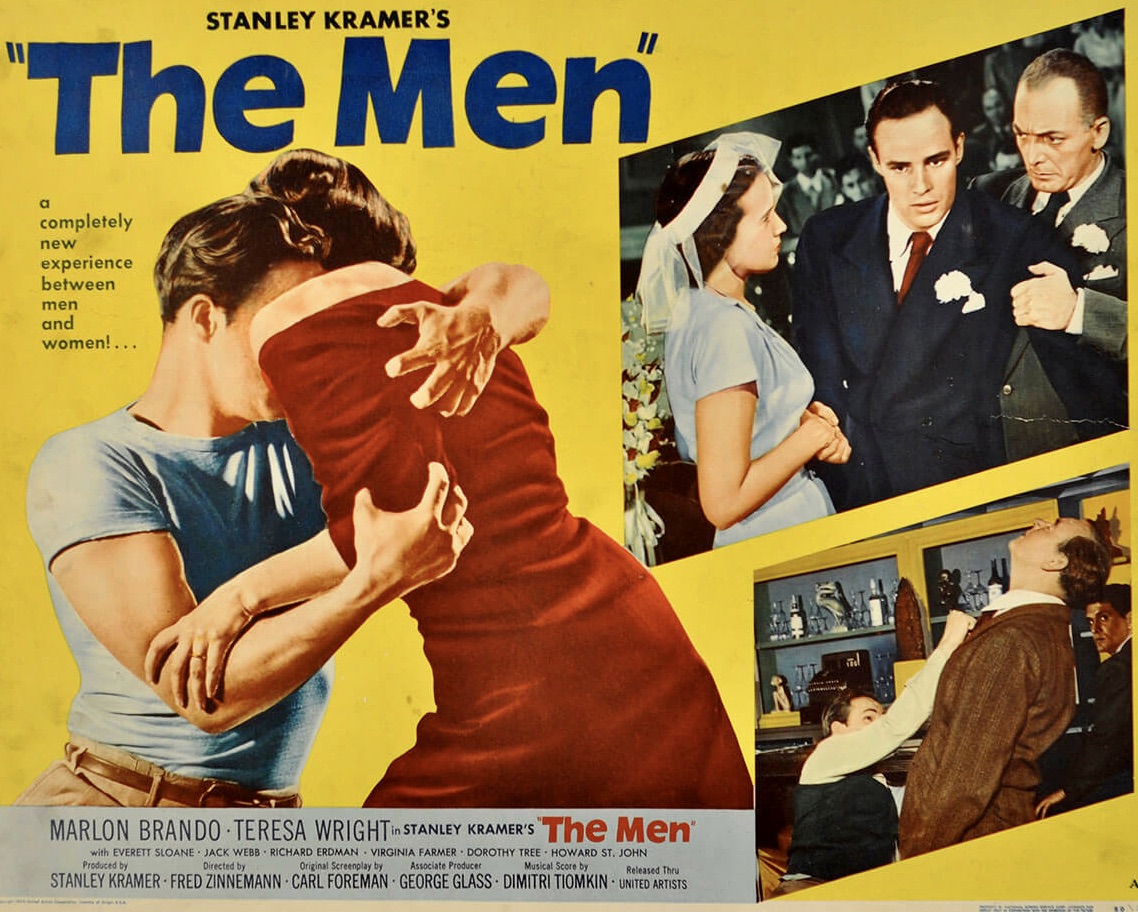
Shattered Bodies, Shattered Souls

When director Fred Zinnemann left MGM Studios after his contract expired with Act of Violence in 1949, he embarked on a new career as an independent filmmaker. After trying to find a suitable movie project for almost a year, his search ended when two young filmmakers, Stanley Kramer and Carl Foreman, pitched him a story about paralyzed war veterans entitled The Men (1950). It was obvious that no major studio would tackle such an uncommercial subject but Zinnemann saw great possibilities in Carl Foreman’s screenplay and agreed to direct.

Continue reading
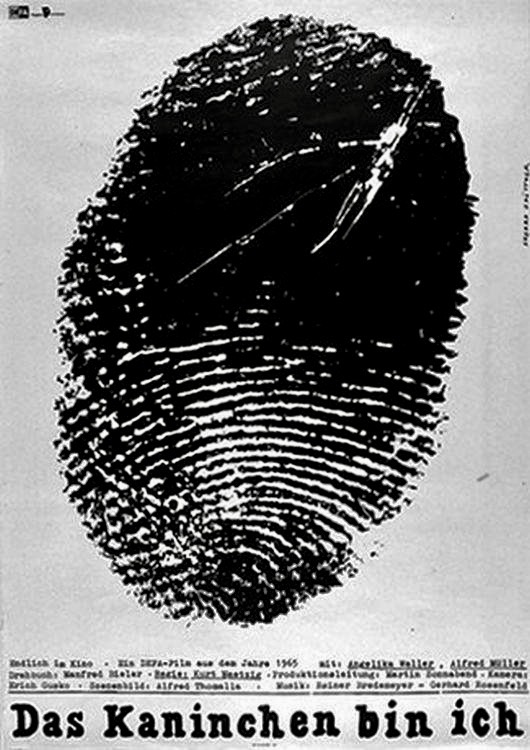
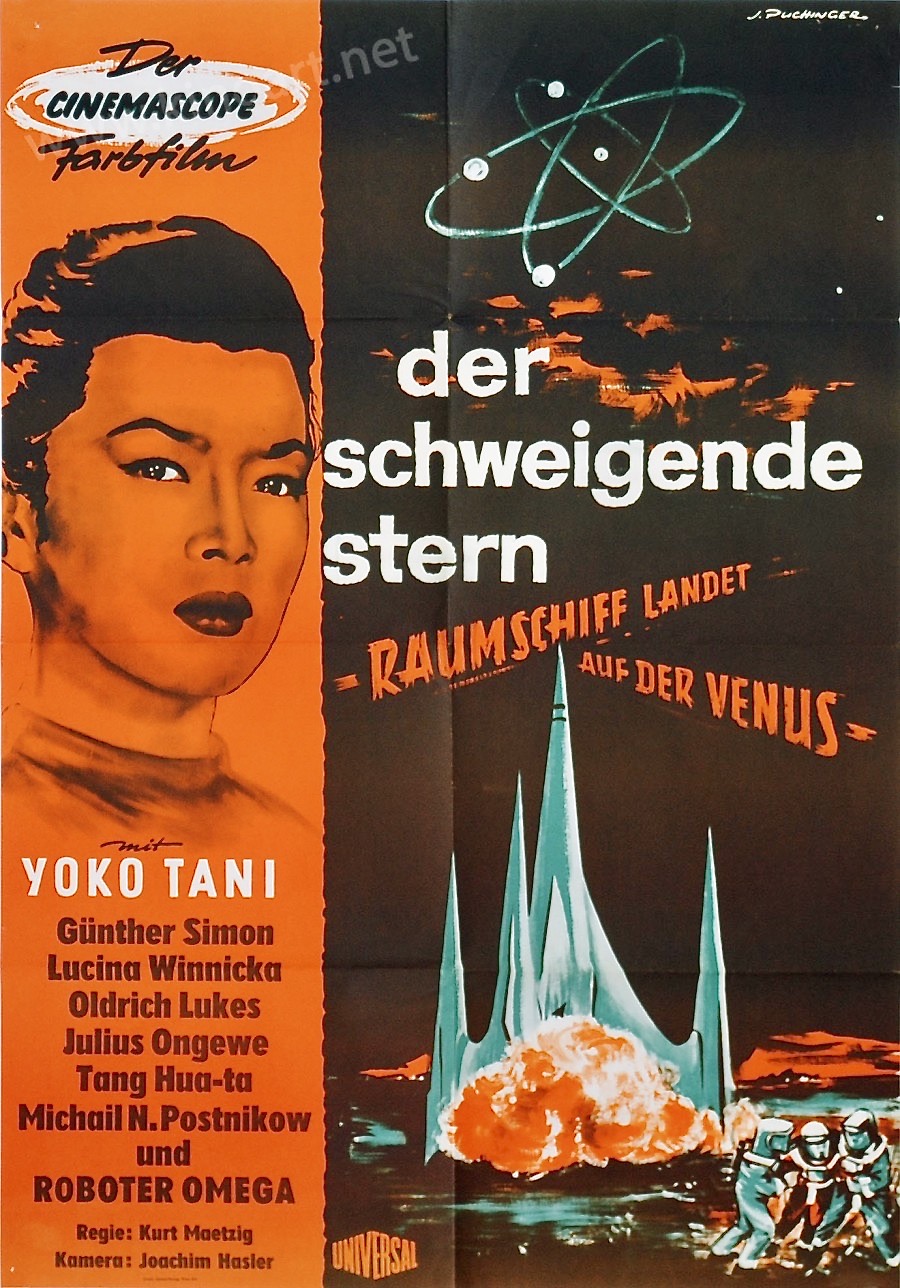
East German Film Rarities

While most hardcore film buffs are well versed in the movies of Fritz Lang, Robert Siodmak, F.W. Murnau and their latter compatriots Werner Herzog, R.W. Fassbinder, Wim Wenders and Volker Schlondorff, directors such as Kurt Maetzig, Joachim Kunert and Gerhard Klein are completely unknown or unfamiliar to Western audiences for an obvious reason. They worked for DEFA (Deutsche Film Aktiengesellschaft), the nationalized film industry of East Germany, and as a result, very few of their movies were distributed outside of socialist countries during the Cold War Era when DEFA was in its prime. A rare exception was Kurt Maetzig’s Der Schweigende Stern aka The Silent Star, a science fiction adventure which was released in the U.S. in an edited, English dubbed version as First Spaceship on Venus in 1962. Much more complex and thematically intriguing is Maetzig’s Das Kaninchen Bin (English title: The Rabbit is Me, 1965) along with Joachim Kunert’s Das Zweite Gleis (English title: The Second Track, 1962) and Gerhard Klein’s Die Fall Gleiwitz (English title: The Gleiwitz Case, 1961).

Continue reading