Geisha Purgatory

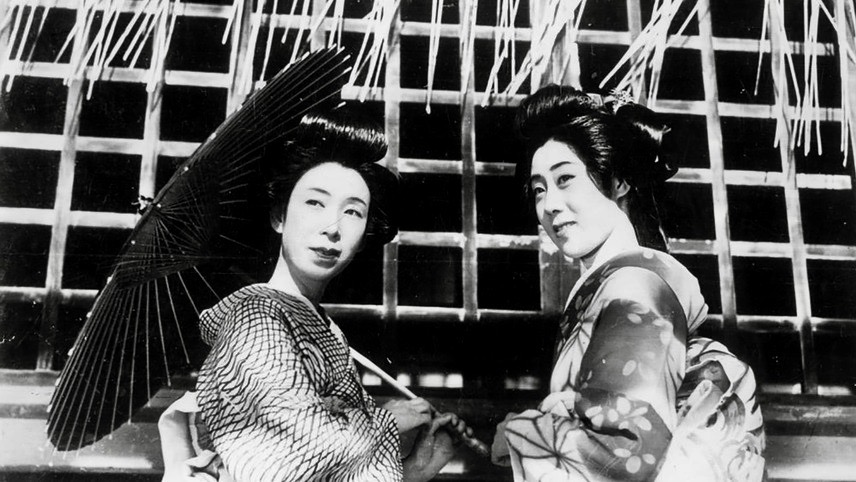
Umekichi (Yoko Umemura, left) and Omocha (Isuzu Yamada) are two sisters enmeshed in the geisha life in Kyoto but couldn’t be more different from each other in Kenji Mizoguchi’s SISTERS OF THE GION (1936).

When it comes to equality between the sexes, do you think life has improved for women over the past 100 years? According to a June 2023 poll by CNBC, the best countries for women in terms of equality and work opportunities are (in this order) Iceland, Norway, Finland, New Zealand and Sweden. The UK is further down in the 15th position and the U.S. is surprisingly ranked at the 46th slot out of 146 countries. Of course, the places where women are treated like second class citizens or worse is no surprise. A poll on the Global Citizen website in 2021 shows the ten worst places for gender equality led by Afghanistan and followed by Syria, Yemen, Pakistan, Iraq, the South Sudan and other African countries. And what about Japan? Despite its reputation as a sophisticated culture and a major world power, the country is still a patriarchal society where women continue to serve the men who hold the power. Japanese director Kenji Mizoguchi has often examined and critiqued the kind of society that forces women to give up any independence and make constant sacrifices for their men which is why the director is often considered a proto-feminist in cinema circles. Yet, in Mizoguchi’s long career of almost 100 features and short films, the demeaning patriarchy of Japan has often been a running theme in his work and it created considerable controversy in his country early in his career, emerging most strongly in two of his finest movies, Naniwa Hika (English title: Osaka Elegy, 1936), which was banned by censors in 1940 for displaying “decadent tendencies,” and Gion no Shimai (English title: Sisters of the Gion, 1936), which is even angrier and more despairing than the later.
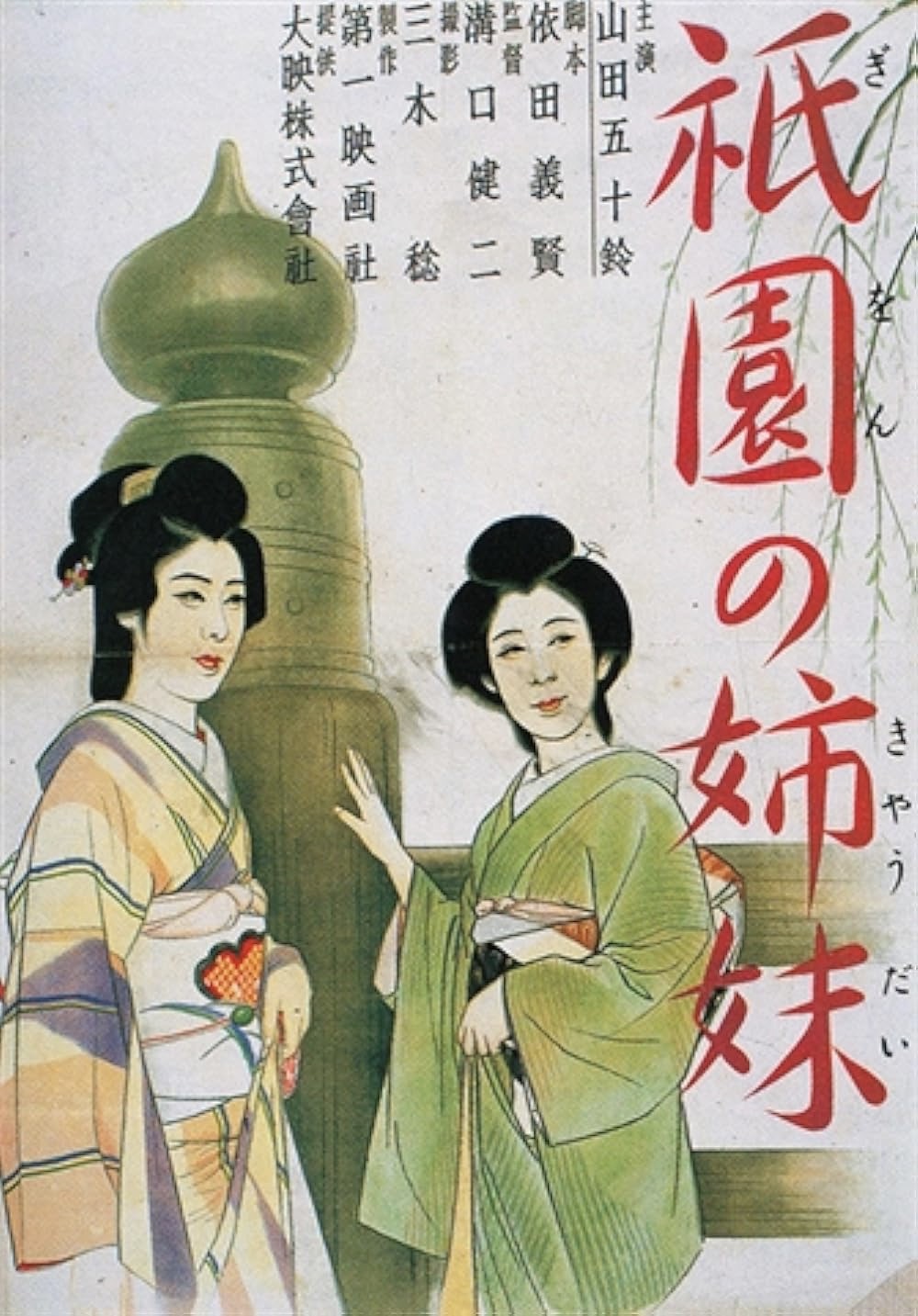
The Japanese fllm poster of SISTERS OF THE GION (1936).
Continue reading

Autobiography of a Sleepwalker

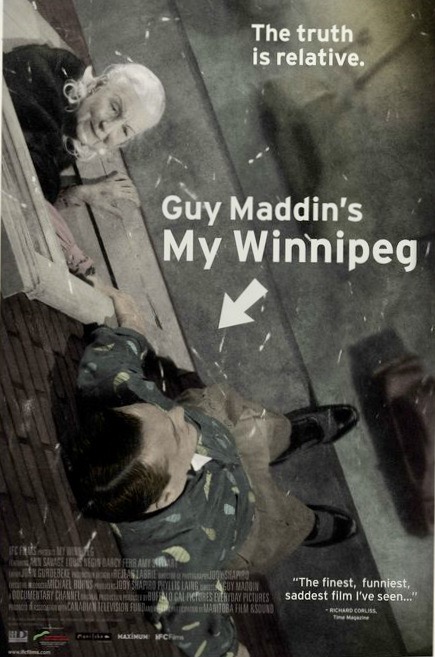
How does a filmmaker begin to craft an autobiographical film of his or her own life? Many renowned directors have tackled it but usually by using a fictionalized version of themselves under a different name though many of the incidents depicted are true. Francois Truffaut did it with The 400 Blows (1959) as did George Lucas with American Graffitti (1973) and Sam Fuller in The Big Red One (1980). Even more recently Steven Spielberg re-imagined his childhood and teenage years in The Fabelmans (2022). But no one has ever made a more personal and dreamlike meditation on their roots than what Guy Maddin accomplishes with My Winnipeg (2007), which is set in the city where the Canadian director was born and resided for much of his life. Narrated by Maddin in a voice that sounds half asleep, half awake, our somnambulistic guide creates his own mythology about himself, his family and his home town that is utterly unique. Plus, his narrator approach is totally fitting for a city that allegedly has more sleepwalkers among its residents than any other major city.

Continue reading

Roll the Credits

An example of Stephen Frankfurt’s iconic title treatment for the 1962 film TO KILL A MOCKINGBIRD.

In their increasing eagerness to capture a wider viewing audience for their annual awards ceremony, you would think the Academy of Motion Picture Arts & Sciences would create a few more categories that could generate some genuine interest with the average moviegoer. How about Best Title Credits? It’s an art form in its own right. Graphic designer Saul Bass certainly proved that years ago with his innovative opens for the films of Otto Preminger (Carmen Jones, The Man With the Golden Arm, Saint Joan, Bonjour Tristesse, Anatomy of a Murder, Advise and Consent, Exodus, The Cardinal and several more) and Alfred Hitchcock (Vertigo, North by Northwest, Psycho). Other title designers you might recognize are Stephen Frankfurt (To Kill a Mockingbird, Rosemary’s Baby), Pablo Ferro (Dr. Strangelove, Being There) and Maurice Binder (Dr. No, Charade). Even before them, opening title credits were a key component of the film, often setting the tone and even encapsulating the movie’s theme or storyline into a compact visual nugget.

Continue reading

The Ballad of Hank McCain

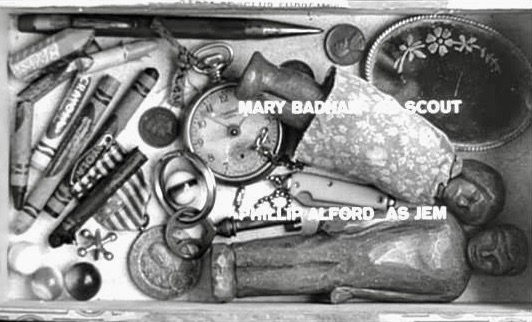
John Cassavetes stars in the title role of MACHINE GUN MCCAIN (1969) aka Gli Intoccabili, an Italian crime drama directed by Giuliano Montaldo.

Lean, mean and paranoid, convict Hank McCain (John Cassavetes) is sprung from prison by West Coast mobster Charlie Adamo (Peter Falk) to rob a Las Vegas casino that is owned by an East Coast Mafia boss in the same syndicate. Adamo’s underhanded attempt to muscle in on his fellow gangster’s territory ignites a gangland war between factions with McCain caught in the middle and running for his life after he successfully pulls off a $2 million dollar heist. Along the way, McCain is double-crossed by his own son, hooks up with Irene (Britt Ekland), a bar hostess, is briefly reunited with his former mistress Rosemary (Gena Rowlands) and goes down fighting in a genuine noir finale. Although it didn’t get any respect from the critics or even much notice from film reviewers at the time, Machine Gun McCain (Italian title: Gli Intoccabili, 1968) is a remarkably taut, fast-paced B-movie crime thriller that is as feral and cagey as its title hero. Cassavetes imbues his role with a pent-up intensity that threatens to explode at any moment and often does. It’s one of his best performances and demonstrates why he was more in-demand as an actor in Hollywood instead of a director.

Continue reading

The Vows Not Taken

The Polish film poster for THE CONTRACT aka Kontrakt (1980)

I remember the first time I heard about Polish director Krzysztof Zanussi. Friends of mine in Seattle were attendees at the annual Seattle International Film Festival and saw one of his films there in the early 1980s and raved about it. They became fans after that and tried to see everything he did that received distribution in their city. Unfortunately, outside of film festivals, few of his movies enjoyed wide (or any) distribution in the U.S. with the exception of a few art house dates in major cities like New York and Chicago. The first and only Zanussi film I saw was The Catamount Killing, which was released in 1974, but I only caught up with it on VHS in the mid-eighties. It is that rare anomaly in his career – a low-budget crime drama filmed in Burlington, Vermont with an English-speaking cast – and was not a success or even characteristic of his work with the possible exception of one of its themes – guilt and how it can destroy relationships. Only recently I have discovered some streaming sources for Zanussi’s work and my first foray into his past filmography is the 1980 made-for-Polish television satire Kontrakt (English title: The Contract), which was filmed in and around Warsaw and features an international cast of Polish, English and French actors including Leslie Caron in a key role.

Continue reading

Three Nuts in Search of a Dolt

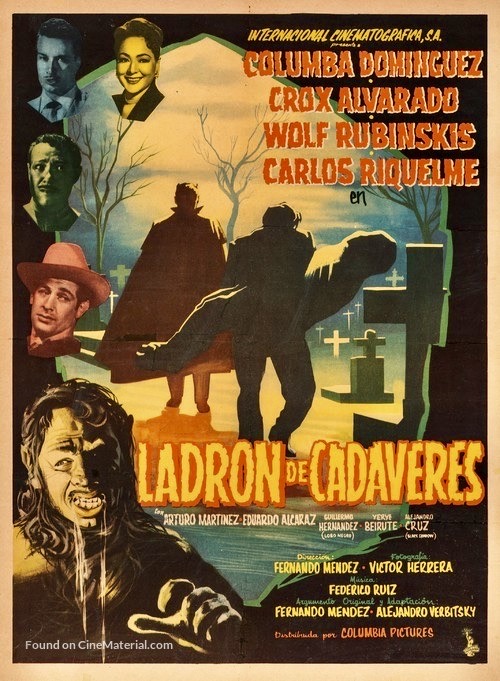
What makes a mad scientist mad? Is it the realization that his skill set is not sufficient to achieve the medical breakthroughs he envisions or the fact that the medical community is too unenlightened to understand his genius? In the case of Don Panchito aka The Professor (Carlos Riquelme) it’s a little bit of both. His goal is to build a master race of super beings with the help of his two assistants but so far the experiments aren’t working. The Professor has been kidnapping world class athletes and wrestlers and transplanting monkey brains into their bodies (yes, that again) but so far none have survived. Maybe the problem is that he needs a stronger body so his quest continues in Ladron de Cadaveres (English title: The Body Snatcher, 1957), the first Mexican horror/fantasy genre film to combine mad scientists, brain transplants and wrestlers in an audience pleasing formula that would soon inspire a series of movies pitting the popular wrestler El Santo against a variety of supernatural creatures.

Continue reading

Fate, Coincidence and Missed Opportunities

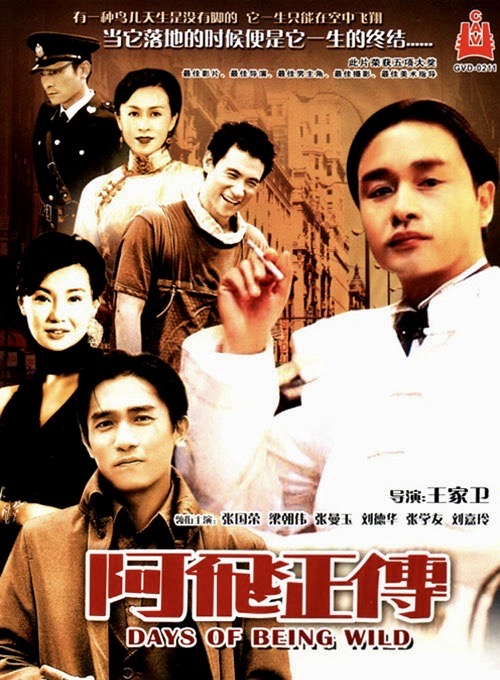
Most cinephiles remember the first time they saw a film by Hong Kong director Wong Kar-Wai. For me it was Ah Fei Jing Juen (English title: Days of Being Wild, 1990), which I rented on VHS from Blast-Off Video in Atlanta, Georgia. The owner, Sam Patton, encouraged me to watch it and it was a revelation, not like his usual recommendations which were more likely to be softcore exploitation films like Doris Wishman’s Deadly Weapons (1974) starring Chesty Morgan and her 73 inch bust or a bizarre obscurity like The Manipulator aka B.J. Lang Presents (1971) with Mickey Rooney at his most demented. What I saw was nothing like what I had seen coming out of the Hong Kong film industry at that time – mostly martial arts action films and kinetic crime thrillers such as John Woo’s The Killer (1989). No, Days of Being Wild is a lush, sensual cinematic poem, a visually innovative tale of unrequited longing, one-sided relationships and melancholy reflections on life as it was in Hong Kong in 1960, the year the movie takes place. 

Continue reading