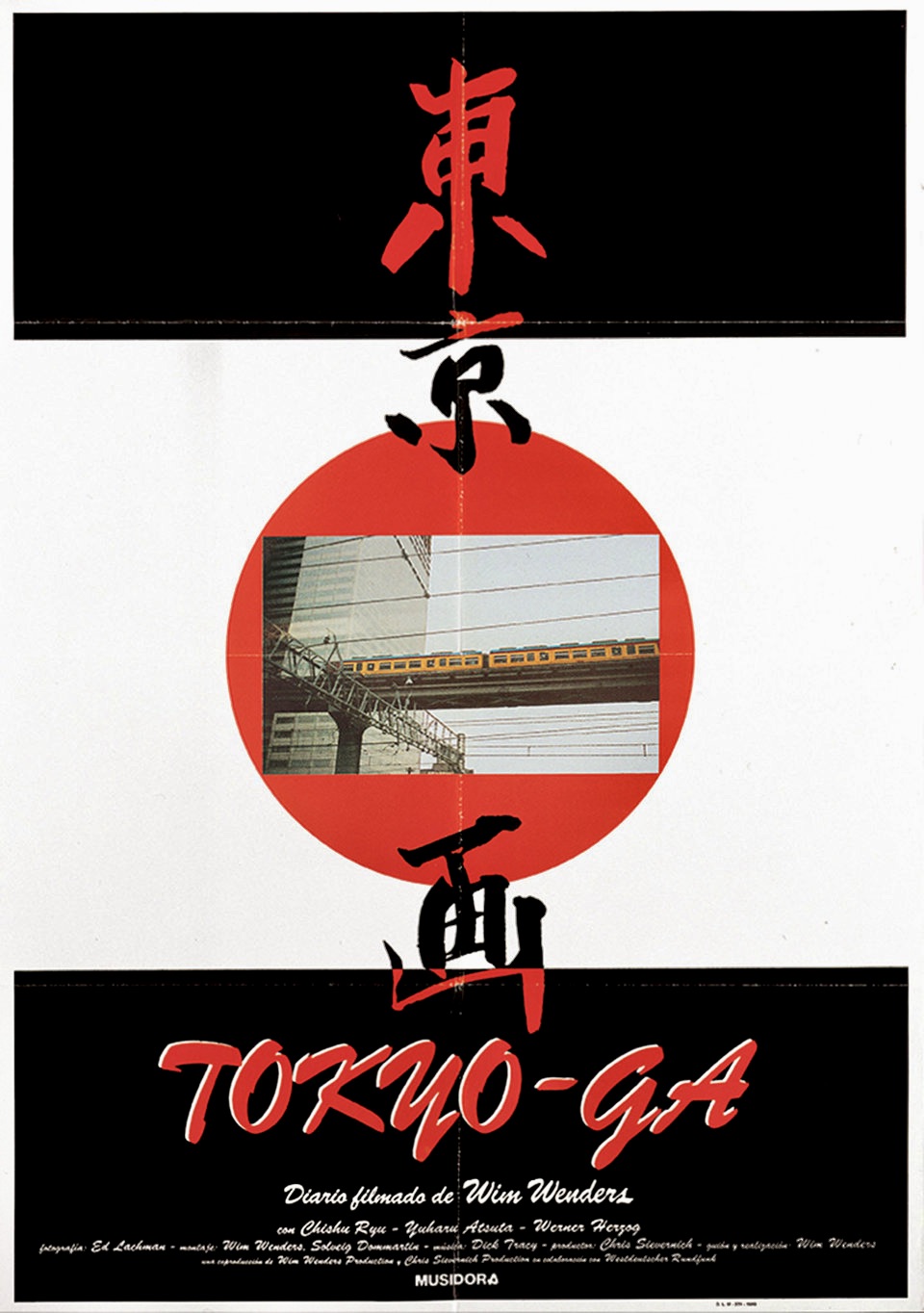
By the time Wim Wenders won the Palme d’Or at Cannes for Paris, Texas in 1984, he was well established as an internationally renowned director. He made his first big splash on the world stage in the early 1970s along with other New German Cinema directors (Werner Herzog, R.W. Fassbinder, etc.) with films such as The Goalie’s Anxiety at the Penalty Kick (1972) and Alice in the Cities (1974). Wenders had also dabbled with non-fiction-like formats in early experimental shorts, music videos and the Cannes-focused TV documentary of various film directors in Chambre 666 (1982). Yet, it was Tokyo-Ga 1985), the feature length portrait he made directly after Paris, Texas, that really triggered Wenders’s interest in not just non-fiction filmmaking but in Japan cinema and culture, especially the works of Yasujiro Ozu.
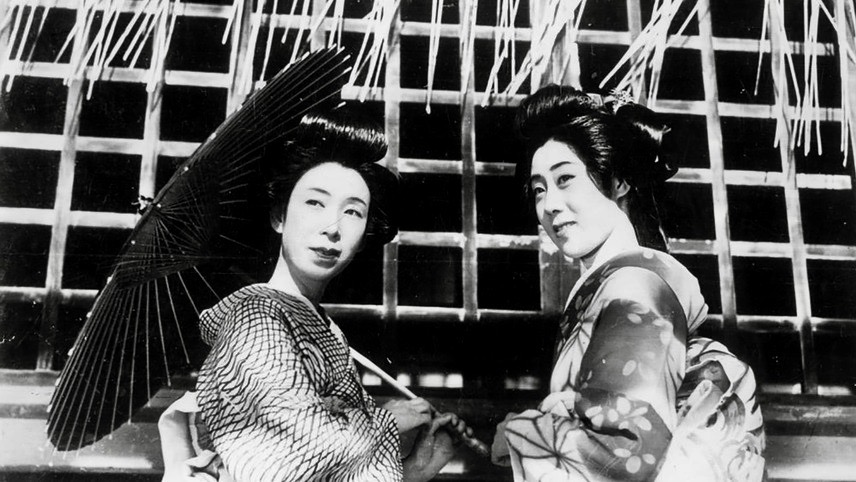
Umekichi (Yoko Umemura, left) and Omocha (Isuzu Yamada) are two sisters enmeshed in the geisha life in Kyoto but couldn’t be more different from each other in Kenji Mizoguchi’s SISTERS OF THE GION (1936).
When it comes to equality between the sexes, do you think life has improved for women over the past 100 years? According to a June 2023 poll by CNBC, the best countries for women in terms of equality and work opportunities are (in this order) Iceland, Norway, Finland, New Zealand and Sweden. The UK is further down in the 15th position and the U.S. is surprisingly ranked at the 46th slot out of 146 countries. Of course, the places where women are treated like second class citizens or worse is no surprise. A poll on the Global Citizen website in 2021 shows the ten worst places for gender equality led by Afghanistan and followed by Syria, Yemen, Pakistan, Iraq, the South Sudan and other African countries. And what about Japan? Despite its reputation as a sophisticated culture and a major world power, the country is still a patriarchal society where women continue to serve the men who hold the power. Japanese director Kenji Mizoguchi has often examined and critiqued the kind of society that forces women to give up any independence and make constant sacrifices for their men which is why the director is often considered a proto-feminist in cinema circles. Yet, in Mizoguchi’s long career of almost 100 features and short films, the demeaning patriarchy of Japan has often been a running theme in his work and it created considerable controversy in his country early in his career, emerging most strongly in two of his finest movies, Naniwa Hika (English title: Osaka Elegy, 1936), which was banned by censors in 1940 for displaying “decadent tendencies,” and Gion no Shimai (English title: Sisters of the Gion, 1936), which is even angrier and more despairing than the later.
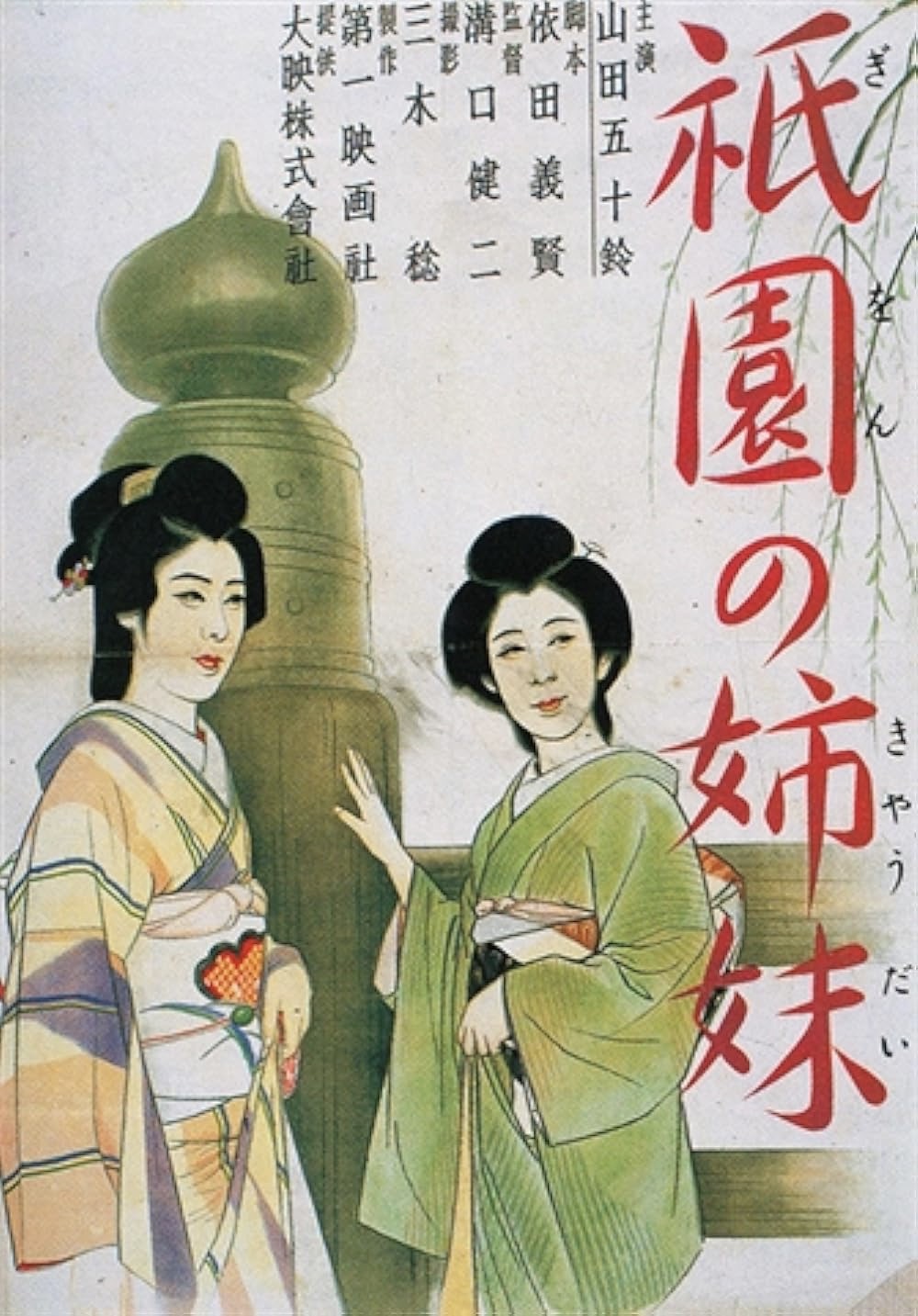
The Japanese fllm poster of SISTERS OF THE GION (1936).
By day Tokiko (Kinuyo Tanaka) works as a typist in a business firm but after dark she frequents the favorite haunts of gangsters with her yakuza boyfriend in DRAGNET GIRL (1933), directed by Yasujiro Ozu.
Tokiko works as a typist in a business office where Okazki, the owner’s son, is the office manager. He is smitten with his employee and often flirts with her behind closed doors in his private office. Tokiko manages to keep him at bay even though he showers her with gifts and offers her an engagement ring. What Okazki doesn’t know is that Tokiko leads a completely different life after work when she sheds her office worker identity and transforms into a chic underworld player with a gangster boyfriend, Joji. Tokiko not only supports Joji with her day job but also serves as his partner in crime in various money-making schemes. From this brief description you probably wouldn’t suspect that the Japanese crime drama, Hijosen no Onna (English title: Dragnet Girl, 1933), was directed by the celebrated Yasujiro Ozu, but it is an early and surprising entry in his filmography before he became famous for his portraits of Japanese family life in such post-WW2 movies as Late Spring (1949), Early Summer (1951) and his 1953 masterpiece, Tokyo Story.
A scene from Hsiao-Hsien Hou’s THE BOYS FROM FENGKUEI (1983).
For many young people, the time period immediately after their high school graduation is a crucial phase in which their lives could take many different paths depending on the decisions they make. This is especially true for those who don’t go to college and either go to work, are drafted into the military or hang out with friends before adult responsibilities consume their lives. Falling into the latter category is 1983’s The Boys of Fengkuei (The original Taiwanese title Feng gui lai de ren roughly translates as All the Youthful Days), an evocative coming-of-age drama from internationally renowned director Hsiao-Hsien Hou.



 Cinema Sojourns