
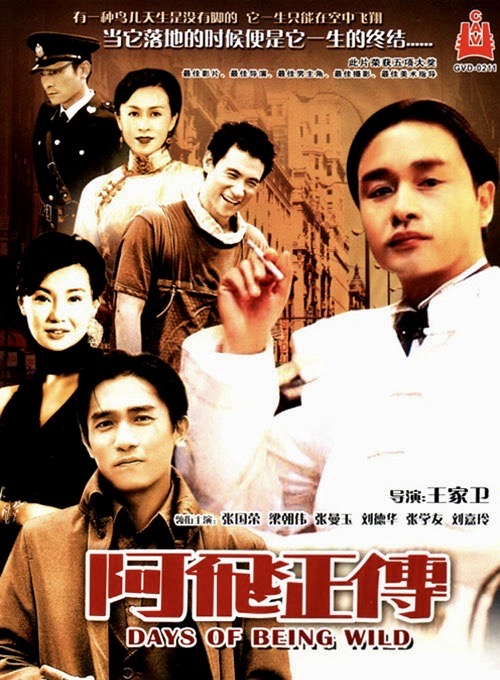
Most cinephiles remember the first time they saw a film by Hong Kong director Wong Kar-Wai. For me it was Ah Fei Jing Juen (English title: Days of Being Wild, 1990), which I rented on VHS from Blast-Off Video in Atlanta, Georgia. The owner, Sam Patton, encouraged me to watch it and it was a revelation, not like his usual recommendations which were more likely to be softcore exploitation films like Doris Wishman’s Deadly Weapons (1974) starring Chesty Morgan and her 73 inch bust or a bizarre obscurity like The Manipulator aka B.J. Lang Presents (1971) with Mickey Rooney at his most demented. What I saw was nothing like what I had seen coming out of the Hong Kong film industry at that time – mostly martial arts action films and kinetic crime thrillers such as John Woo’s The Killer (1989). No, Days of Being Wild is a lush, sensual cinematic poem, a visually innovative tale of unrequited longing, one-sided relationships and melancholy reflections on life as it was in Hong Kong in 1960, the year the movie takes place.
Continue reading
 Cinema Sojourns