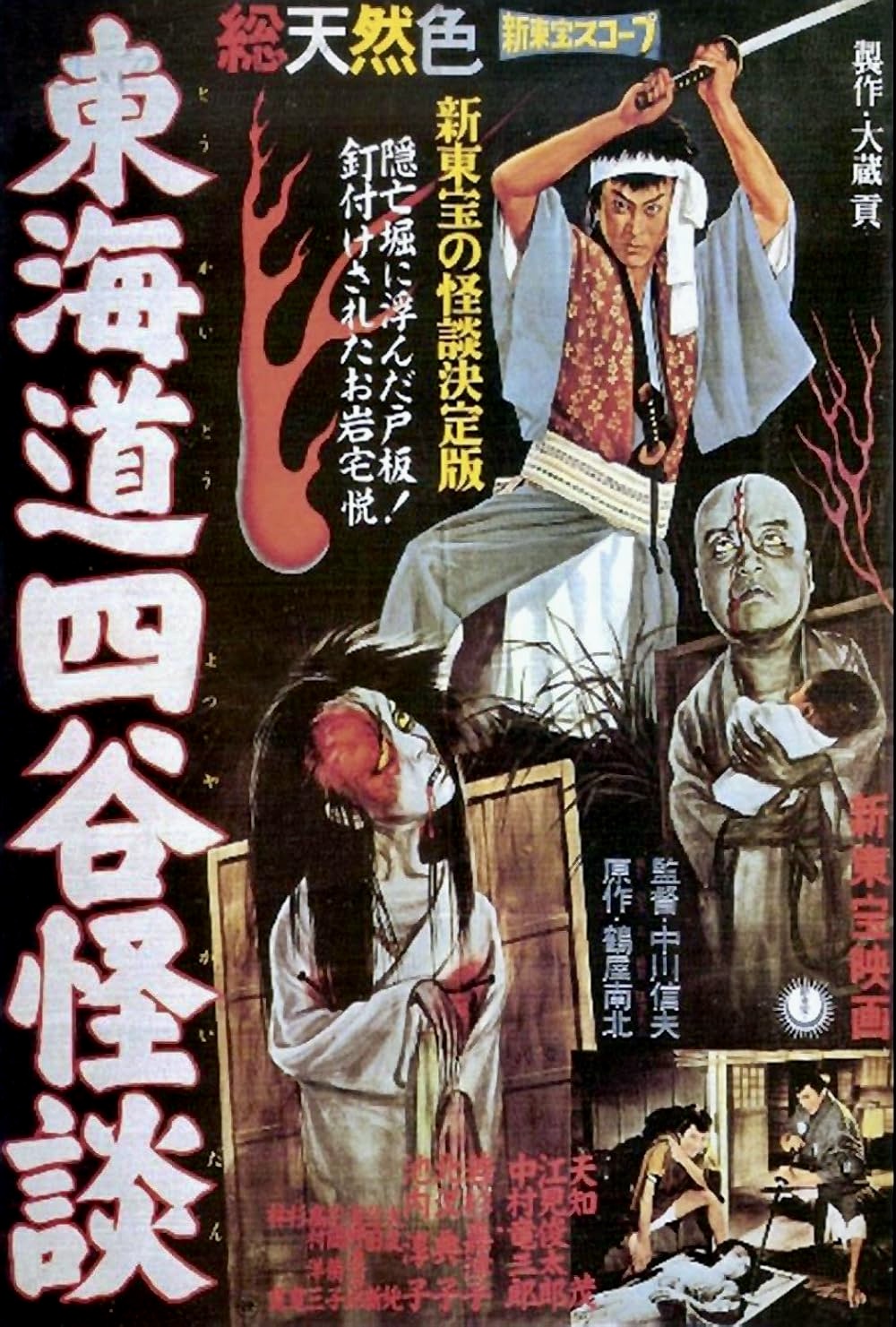
The Japanese film poster for THE GHOST OF YOTSUYA (1959), directed by Nobuo Nakagawa.
Based on a kabuki play written in 1825 by Nanboku Tsuruya, The Ghost of Yotsuya (Japanese Title: Tokaido Yotsuya Kaidan) is one of the most popular and famous of all Japanese ghost stories. It has been filmed countless times over the years but Nobuo Nakagawa’s 1959 version of The Ghost of Yotsuya might be the definitive version. The story is one of fate, passion, betrayal and revenge – all classic themes of kabuki theatre and Greek tragedy.
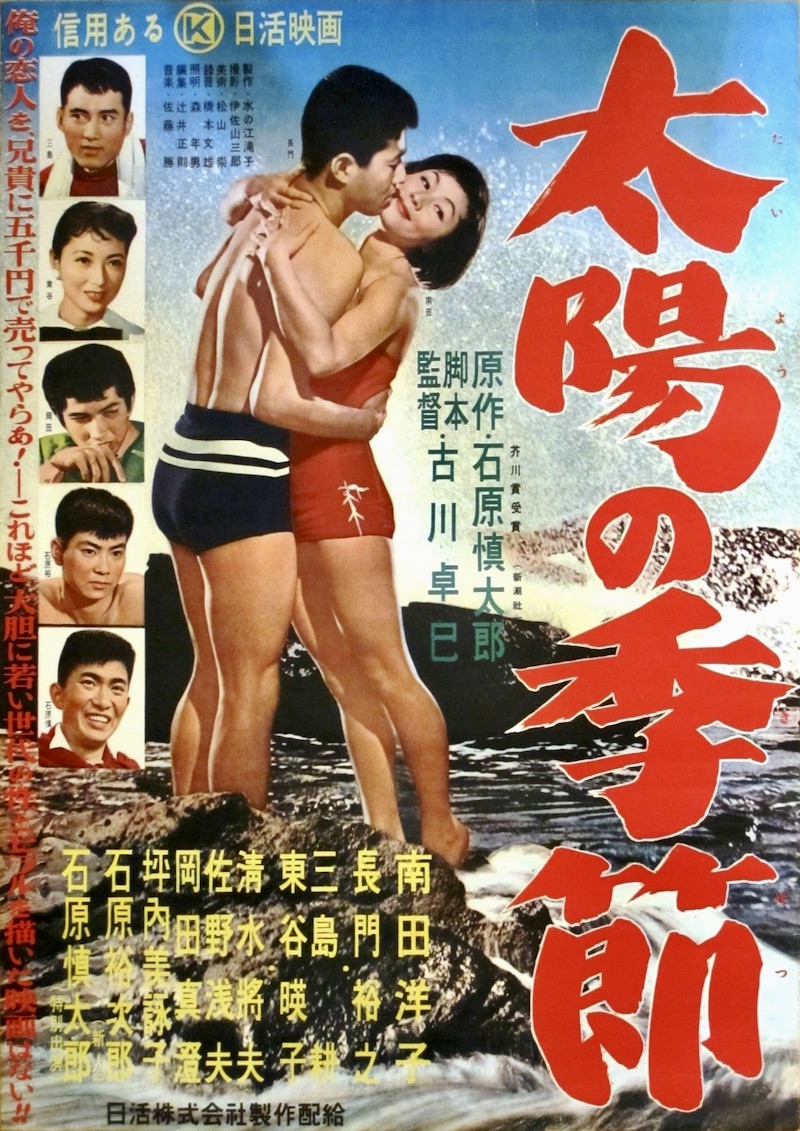
The Japanese film poster for SEASON IN THE SUN (1956) aka Taiyo no Kisetsu.
When Ishihara Shintaro died on February 1, 2022 at age 89, most obituaries focused on his career as a politician in Japan. He first served as a member of the House of Councillors (1968 to 1972) and then as a member of the House of Representatives (1972-1995) before becoming the Governor of Tokyo from 1999 to 2012. A controversial figure in his own country, Shintaro was famous for his ultra-nationalist stance on Japan and extreme right-wing views such as discriminating against Japanese-Koreans, the disabled, women, LGBT and other social minorities. He is now considered an early proponent of “hate speech” and often denied historical accounts of atrocities committed by the Japanese against the Chinese in the infamous Nanjing Massacre of 1937, which in Japan is the same as being a Holocaust denier. What is most surprising about Shintaro, however, is his earlier career as an author and highly successful screenwriter for movie studios like Nikkatsu, Daiei and Shochiku. His critically acclaimed first novella, Taiyo no Kisetsu (English title: Season of the Sun), was published in 1955 and he adapted it into a film for director Takumi Furukawa. It became a box office sensation and inspired several successors in a film movement that became known as the “Sun Tribe” (aka Taiyozoku) movies.
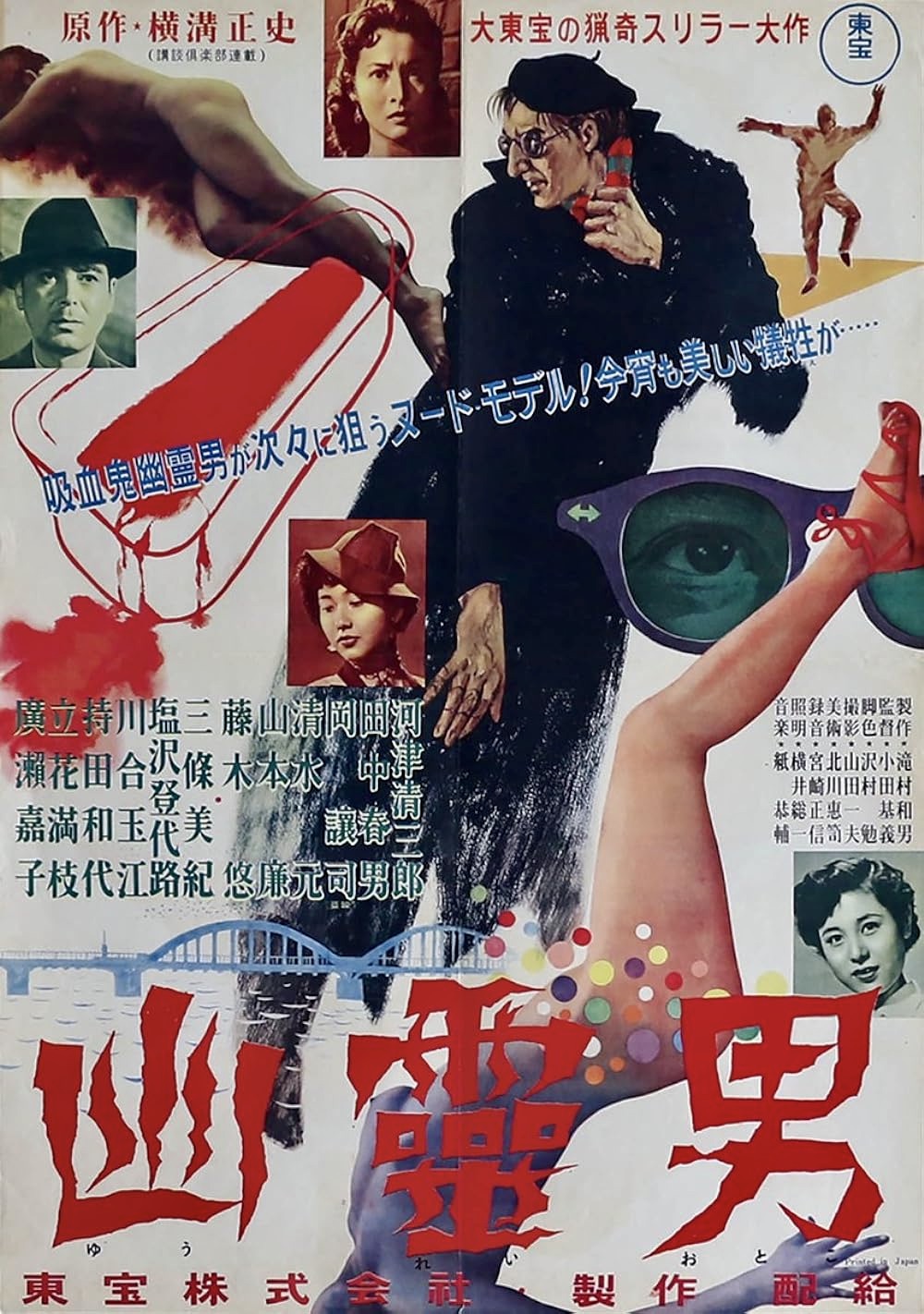
Novelists who specialize in murder mysteries and thrillers with detective heroes are not exclusively British and American but practitioners of a worldwide literary tradition, especially in Japan where Edogawa Ranpo, Soji Shimada and Seishi Yokomizo are considered masters of the form. Yokomizo, for example, was so popular and prolific that he was often called the “Japanese John Dickson Carr,” a writer of American detective fiction who created such famous sleuths as Dr. Gideon Fell and Sir Henry Merrivale in his novels. Yokomizo became popular in the post-WW2 years with a series of “locked room” mystery thrillers that began with The Honjin Murders in 1946 featuring the detective hero Kosuke Kindaichi. Yet it wasn’t until 1954 when the character of Kindaichi was first portrayed on the screen by actor Seizaburo Kawazu in the murder mystery Yurei Otoko (English title: Ghost Man). It was the first of several Kosuke Kindaichi film adaptations but, for its era, it was also extremely racy for its female nudity as well as its disturbing narrative which follows the crimes of a cunning serial killer who preys on models.
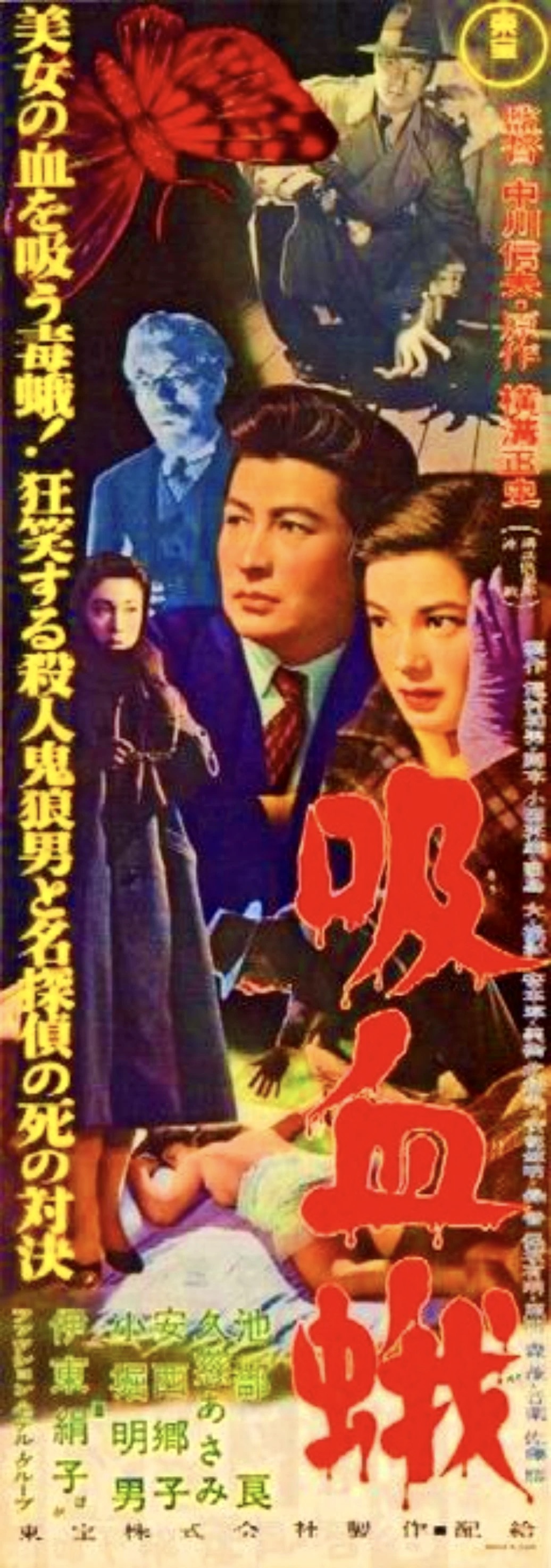
The Japanese film poster for Kyuketsu-ga (English title: THE VAMPIRE MOTH, 1956).
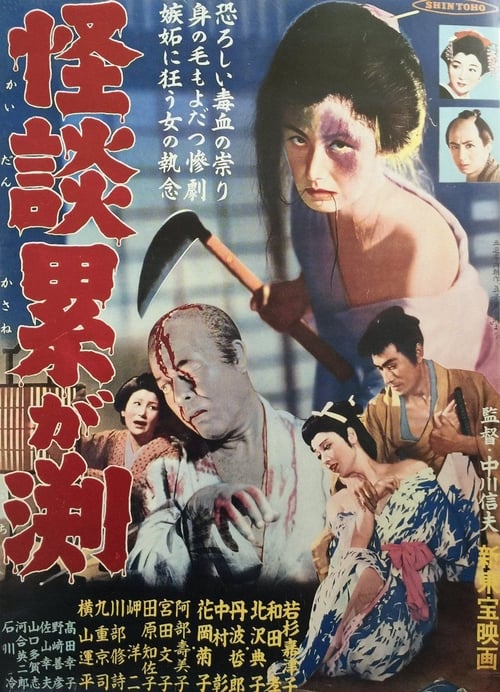
There are a number of classic Japanese horror/fantasy films from the fifties and sixties that genre fans in the U.S. have read about but never seen due to their unavailability on DVD or Blu-ray. In recent years a few of these have appeared in domestic release versions such as Nobuo Nakagawa’s 1960 allegorical masterpiece Jigoku (released by The Criterion Collection), in which a hit-and-run driver literally goes to hell, and the director’s 1968 supernatural tale Snake Woman’s Curse (released by Synapse Films). Many of the most famous examples of Japanese fantasy/horror from this period, however, still remain elusive for American viewers unless you own an all-region DVD/Blu-ray player and are willing to purchase import discs from Japan, often with no English subtitles. It is also true that many of these classic genre efforts were directed by Nakagawa who is famous for supernatural chillers as The Ghosts of Kasane Swamp (1957), Black Cat Mansion (1958), and The Ghost of Yotsuya (1959). But I have to admit that one of the director’s creepiest and least seen films is Kyuketsu-ga (English title: The Vampire Moth, 1956), which combines mystery thriller tropes with grotesque horror elements to achieve a delightfully macabre brew.
The Japanese poster for Kaidan Kasane-ga-fuchi (English title: THE GHOSTS OF KASANE SWAMP aka THE DEPTHS, 1957).
The Japanese film poster for Yatsuhaka-mura aka VILLAGE OF EIGHT GRAVESTONES (1977)
Not all homecomings are happy affairs and, if you want to experience one that makes a good argument against family reunions, consider Yatsuhaka-mura (Japanese title, Village of Eight Gravestones, 1977), which presents the ancestral homestead as a cursed place with a dark history. Tatsuya (played by former pop singer Ken’ichi Hagiwara), the film’s protagonist, was taken away from his mountain village by his mother when he was just a child but when he returns after many years, he feels like the ultimate outsider as he reconnects with family he never really knew. Not only is his village isolated and mired in the past but it sits upon a network of underground caves and tunnels, which hold the key to a family secret.


 Cinema Sojourns