

In 1969 French actor Jean-Louis Trintignant had three films in competition at the Cannes Film Festival, Costa-Garvas’s Z, Giuseppe Patroni Griffi’s Metti, Una Sera a Cena (Love Circle) and Eric Rohmer’s My Night at Maud’s, with the actor garnering critical praise for his performance in all three movies. When asked by an interviewer how it felt to be a potential prize recipient, Trintignant replied, “I’m not an award winner. I don’t have that affect to win Best Actor. You need a mad scene or a drunken scene or something like that. And in the films selected I don’t have any like that. All these roles are rather underwhelming. They’re ambiguous. They are complex but not remarkable. I’m not remarkable.” Typical of Trintignant, his response was self-deprecating but also shrewdly self-aware. The irony is that he did win Best Actor at Cannes for Z that year for playing the steadfast, non-partisan investigator of a highly political case. In fact, he built a career playing characters who were often hard to read, repressed or quietly self-possessed, and he made them endlessly fascinating for the viewer. This is just one of many insights shared by director Lucie Caries in Trintignant by Trintignant, an intimate documentary portrait of the actor that was made for French television in 2021, the year before he died. Even though the documentary is barely an hour in length, it pulls from more than 70 years of archival material, photos, interviews, TV and film clips and comments by fellow actors and directors to help dissect the enigma that is Jean-Louis Trintignant.
Continue reading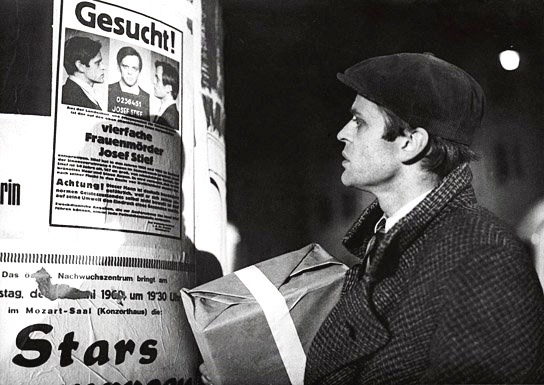
 Cinema Sojourns