The Double Life of Tokiko

By day Tokiko (Kinuyo Tanaka) works as a typist in a business firm but after dark she frequents the favorite haunts of gangsters with her yakuza boyfriend in DRAGNET GIRL (1933), directed by Yasujiro Ozu.

Tokiko works as a typist in a business office where Okazki, the owner’s son, is the office manager. He is smitten with his employee and often flirts with her behind closed doors in his private office. Tokiko manages to keep him at bay even though he showers her with gifts and offers her an engagement ring. What Okazki doesn’t know is that Tokiko leads a completely different life after work when she sheds her office worker identity and transforms into a chic underworld player with a gangster boyfriend, Joji. Tokiko not only supports Joji with her day job but also serves as his partner in crime in various money-making schemes. From this brief description you probably wouldn’t suspect that the Japanese crime drama, Hijosen no Onna (English title: Dragnet Girl, 1933), was directed by the celebrated Yasujiro Ozu, but it is an early and surprising entry in his filmography before he became famous for his portraits of Japanese family life in such post-WW2 movies as Late Spring (1949), Early Summer (1951) and his 1953 masterpiece, Tokyo Story.

Continue reading
Through the Eyes of a Child

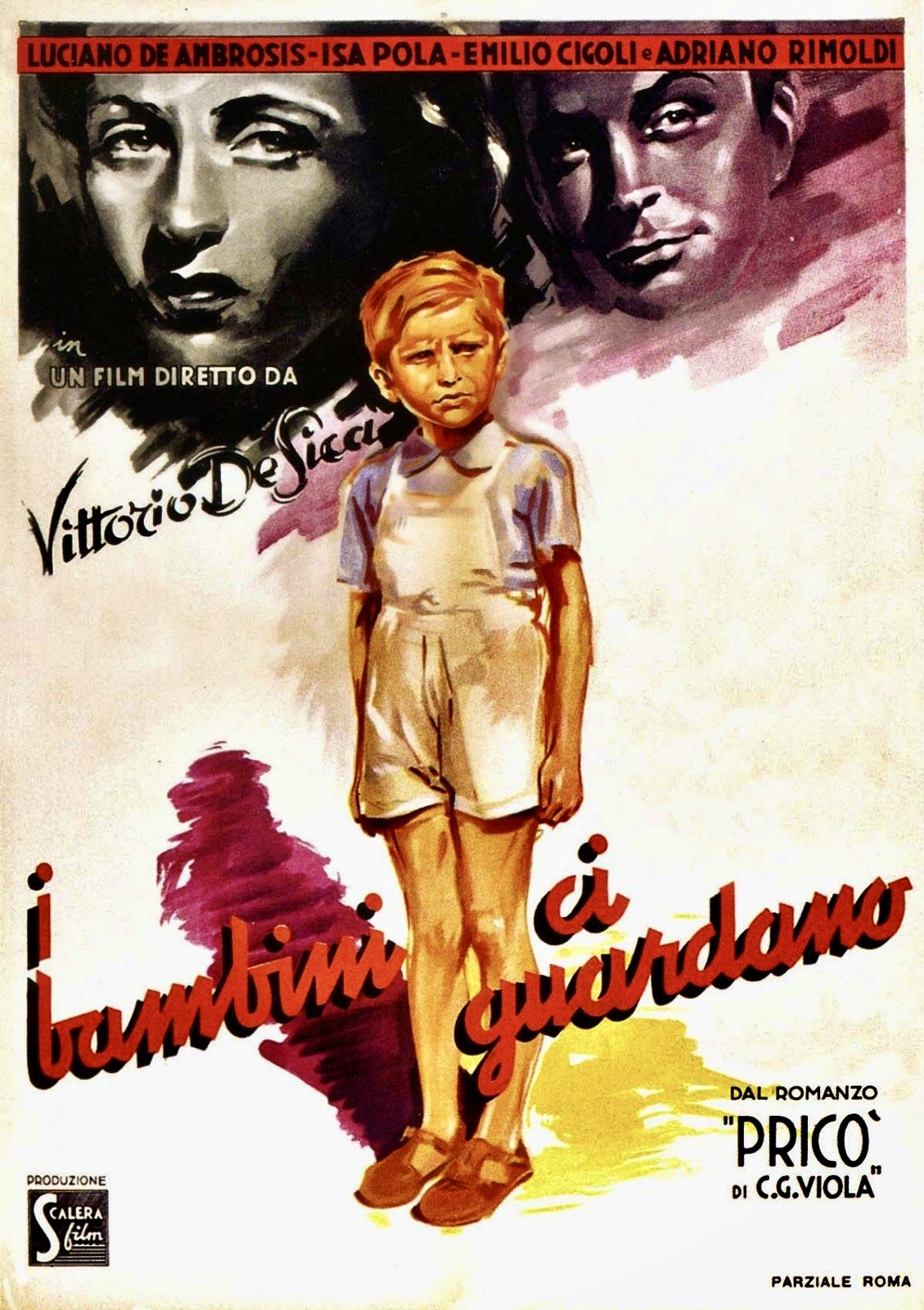
Roberto Rossellini’s Roma, Citta Aperta (Rome, Open City, 1945) is generally acknowledged as the film that ushered in the neorealism movement and set the tone and style for the postwar Italian films that followed. But the roots of neorealism can be traced back to Luchino Visconti’s Ossessione (1943) and Vittorio De Sica’s The Children Are Watching Us (1944, I bambini ci guardano), both of which were filmed in 1942 but encountered distribution problems upon their release in the fall of 1942 when the war finally came to Italy and the bombings began. Ossessione was also the victim of Fascist censorship which reduced the film to less than half of its original running time and for years it was denied distribution in the U.S. due to an infringement of copyright (it was an uncredited adaptation of the James M. Cain novel, The Postman Always Rings Twice). The Children Are Watching Us didn’t fare any better during its limited release and for years it was a difficult film to see in its original form, even in its own country. 


Continue reading