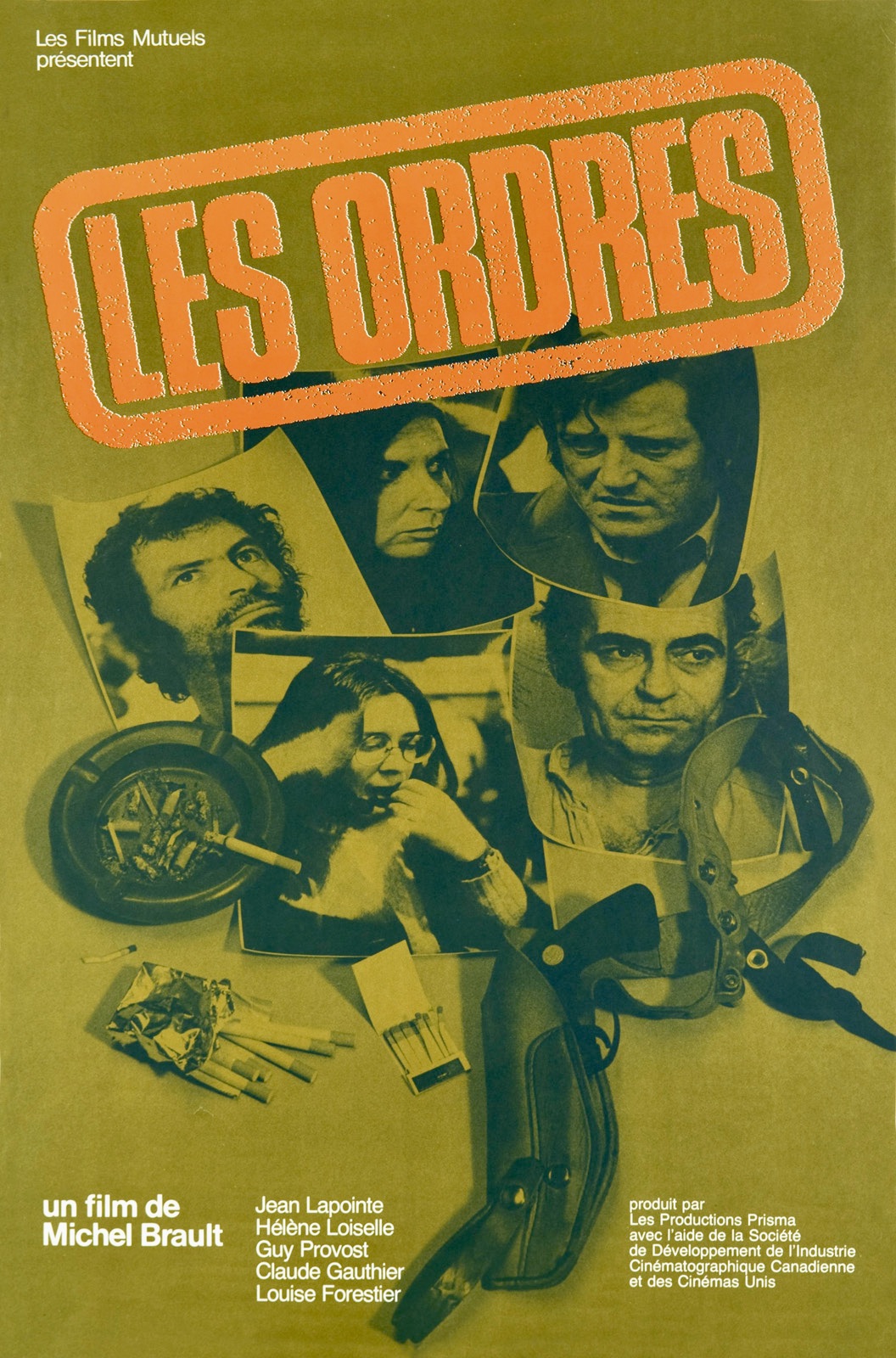
In October of 1970, the Canadian government was thrown into a state of turmoil by the actions of Front de Liberation du Quebec (FLQ), a terrorist group that wanted to achieve independence for Quebec and make it a socialist province. After the FLQ first kidnapped British diplomat James Cross on October 5th and followed it up with the abduction of Quebec Cabinet Minister Pierre Laporte five days later, Pierre Trudeau, Canada’s Prime Minister, called in the army and invoked the War Measures Act, which gave the police complete authority to arrest and interrogate anyone deemed suspicious, regardless of whether there was any evidence or not. Over 400 people were rounded up and subjected to numerous human rights abuses before being released, some after more than 21 days in jail. Les Ordres (1974), a cinema verite dramatization of this incident by Canadian director/cinematographer Michel Brault, follows the travails of five suspects, based on the actual transcripts of their incarceration.
Continue readingTag Archives: Robert Drew
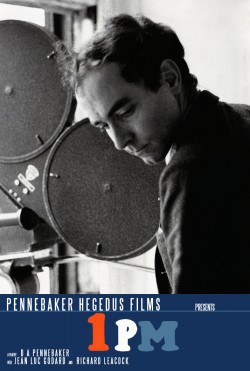
The Unforeseen Journey from Jean-Luc Godard’s 1 AM to D.A. Pennebaker’s 1 PM
With more than 100 feature films, shorts, video and TV work to his credit, Jean-Luc Godard is surely the most audacious, groundbreaking and prolific filmmaker from his generation. Even longtime admirers and film historians have probably not seen all of his work and some of it like the political cinema he made with Jean-Pierre Gorin under the collaborative name Groupe Dziga Vertov is tough going for even the most ardent Godard completist. Weekend (1967) is generally acknowledged as the last film Godard made before heading in a more experimental, decidedly non-commercial direction which roughly stretched from 1969 until 1980 when he reemerged from the wilderness with the unexpected art house success, Sauve qui peut (Every Man for Himself). But most of the work he made during that eleven year period prior to 1980 championed social and political change through ideological scenarios and leftist diatribes that were overly cerebral and static compared to earlier career milestones like Breathless (1960), Contempt (1963) and Pierrot le Fou (1965).

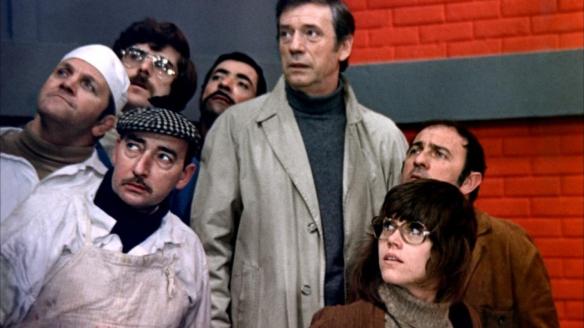
Yves Montand (center in raincoat) and Jane Fonda (lower right) star in Jean-Luc Godard’s Tout Va Bien (1972).
Of the films he made during the Groupe Dziga Vertov period, only Tout Va Bien (1972), which starred Jane Fonda and Yves Montand, attracted mainstream critical attention but most of the reviews at the time were indifferent or hostile to this Marxist, Bertolt Brecht-inflluenced polemic about a workers’ strike at a sausage factory. Much more interesting to me was the film he attempted to make in 1969, tentatively titled 1 AM (or One American Movie). A collaboration with cinema-verite pioneers D. A. Pennabaker and Richard Leacock, the project was abandoned after Godard lost interest during the editing phase but Pennebaker ended up completing his own version of the existing footage which he titled 1 PM (or One Parallel Movie). This is a brief history of the film’s journey from concept to screen. Continue reading