
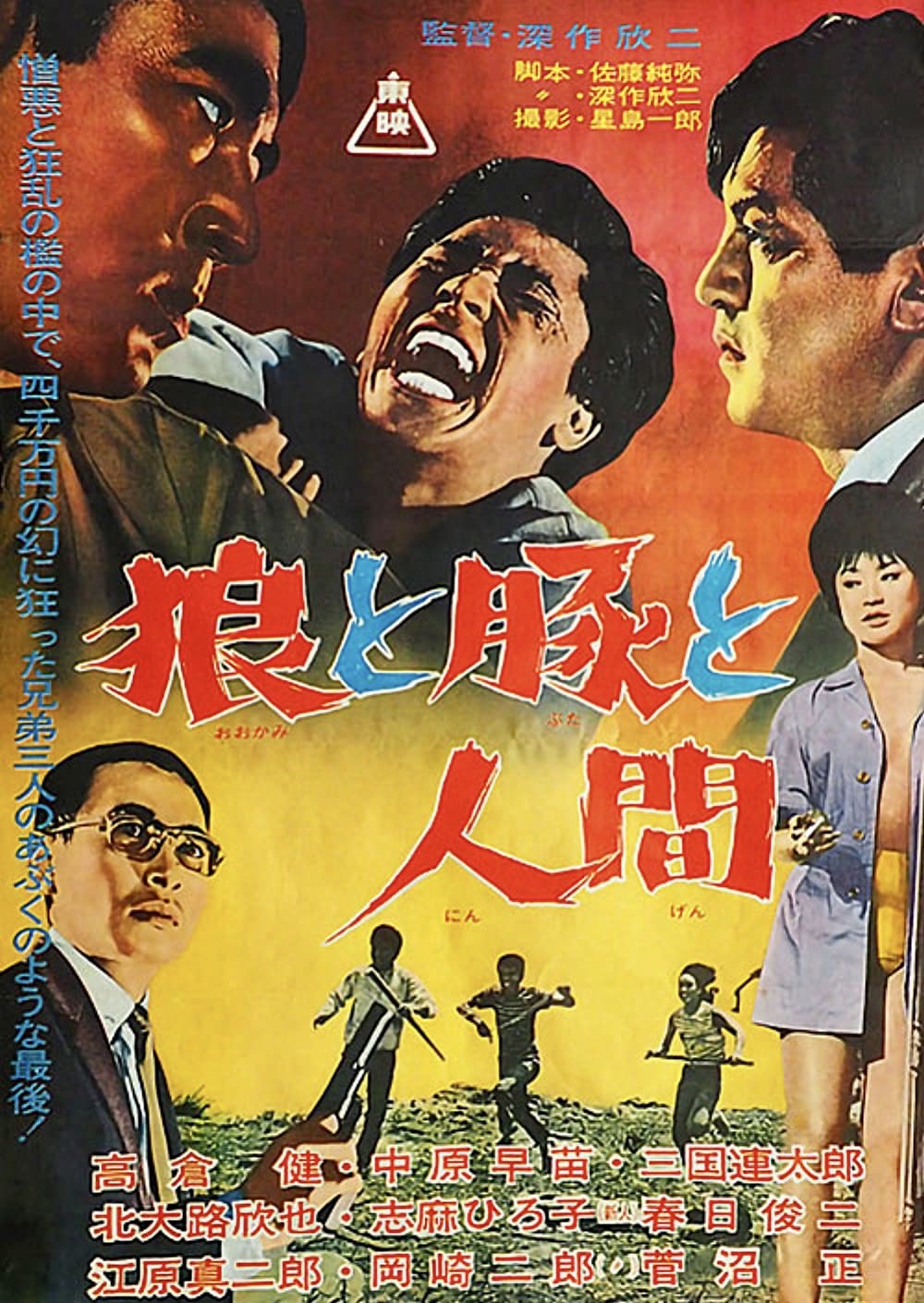
Among the many post-WW2 Japanese filmmakers who emerged in the 1960s and hit their stride in the seventies, Kinji Fukasaku was one of the most prominent and critically acclaimed directors in his own country but didn’t start to acquire a growing fan base in the U.S. until after 2000 when some of his masterworks began to appear on DVD such as the yakuza epic Battles Without Honor and Humanity aka The Yakuza Papers (1973), which launched a five-film franchise, and Battle Royale (2000), a controversial futuristic fable about institutionalized violence against problem teenagers. Over the years, Fukasaku has dabbled in numerous film genres from historical drama (Under the Flag of the Rising Sun, 1972) to sci-fi (Message from Space, 1978) and comedy (Fall Guy, 1982), but he is best known from his crime dramas, especially those which popularized the jitsuroku eiga genre. His documentary-like dramatizations based on real crimes often depicted yakuza figures as ruthless men operating without “honor and humanity” (in the title words of his breakthrough film). Even prior to his trend-setting crime thrillers of the mid-seventies, Fukasaku was turning out edgy, innovative work and Okami to Buta to Ningen (English title: Wolves, Pigs and Men) from 1964 is an explosive, nihilistic tale which qualifies as a rough-hewn, early masterpiece.
Continue reading Cinema Sojourns