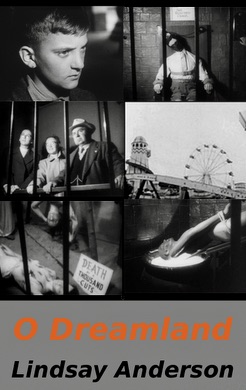
The Free Cinema Shorts of Lindsay Anderson

The 1960s might be seen as the decade that ushered in a significant number of game changing film movements such as the Czech New Wave, Cinema Verite and New German Cinema but the 1950s shouldn’t be overlooked for inspiring the birth of the Nouvelle Vague in France and the self-reflective ‘kitchen sink’ realism trend in England. One of the most influential but short lived film developments during this period was the Free Cinema movement, which flourished between 1956 and 1959 in the U.K.. It rejected the conservativism and class bound traditions of commercial filmmaking as well as the didactic approach to documentaries made famous by Scottish director John Griegson (Song of Ceylon [1934], Night Mail [1936]]. Instead, Free Cinema was dedicated to making personal films that expressed the opinion and artistic vision of their directors despite limited budgets and semi-amateur conditions (most of the movies were shot with a 16mm Bolex camera). Karel Reisz, Alain Tanner, Claude Goretta, Tony Richardson and Lindsay Anderson were among the leaders of the Free Cinema group but Anderson, in particular, created some of the movement’s most significant work, including Wakefield Express (1952), O Dreamland (1953), Thursday’s Children (1955) and Every Day Except Christmas (1957). Continue reading
Udo Kier’s First Feature Film

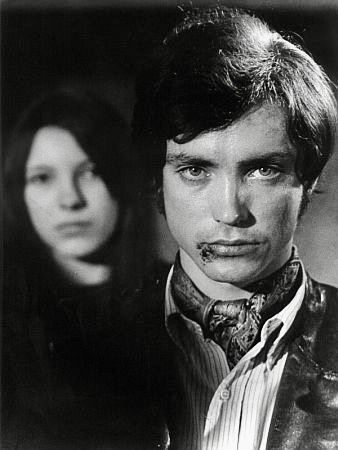
Udo Kier plays a rising gang leader in the bleak 1968 crime expose SHAMELESS (German title: Schamlos).

Long before Udo Kier became the go-to eclectic supporting actor who stole his scenes in films such as Gus Van Sant’s My Own Private Idaho (1991), the sci-fi fantasy Johnny Mnemonic (1995), Wim Wenders’ The End of Violence (1997) and numerous films by Lars von Trier, the German actor was already firmly established as a cult film icon from the 1970s. In addition to playing the lead in two Andy Warhol productions, Flesh for Frankenstein (1973) and Blood for Dracula (1974), he starred in the sadistic period piece The Mark of the Devil (1970), Just Jaeckin’s S&M erotica The Story of O (1975), Dario Argento’s Suspiria (1977) and R.W. Fassbinder’s The Third Generation (1979). Kier, who was born in 1944, is still going strong today at age 78 with more than 250 film and TV series in his filmography and a rare leading role in Swan Song (2021), in which he plays a retired hairdresser who agrees to perform one last makeover on a deceased client. But if you want to see him at the beginning of his career, look no further than his debut feature film Shameless (German title, Schamlos, 1968), in which he plays a ruthless young gangster who tries to muscle in on his rival’s business operations in Vienna, Austria.

Udo Kier has a rare starring role in the bittersweet comedy-drama SWAN SONG (2021).
Continue reading