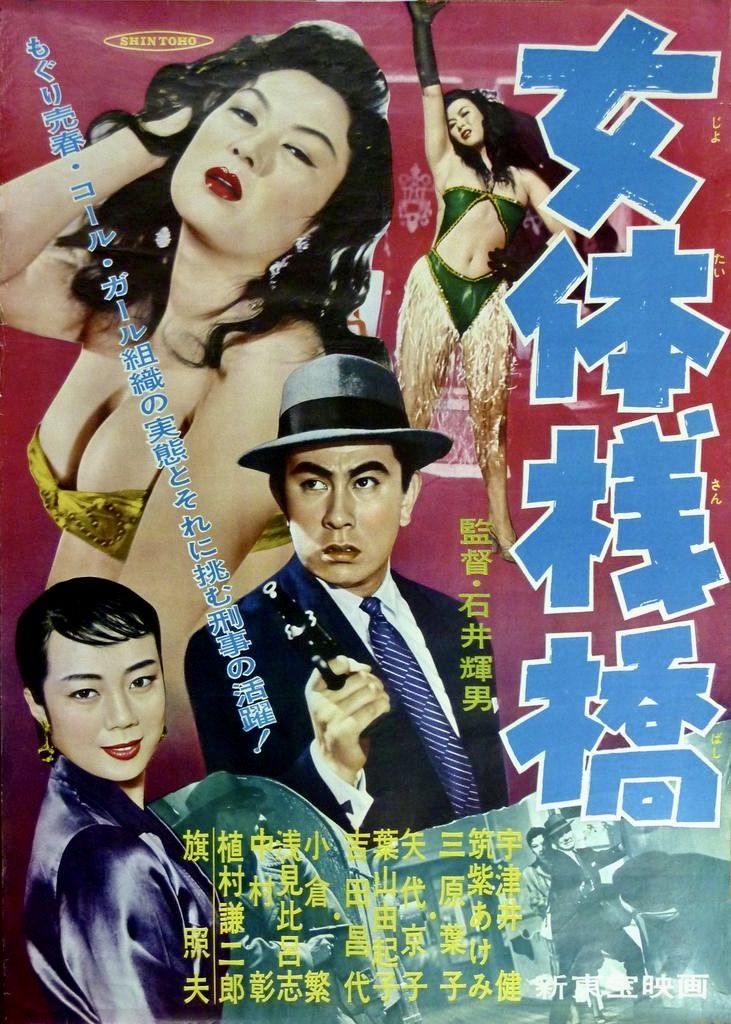
In January 1950 U.S. Senator Estes Kefauver launched an investigation into organized crime across America that exposed rampant corruption, racketeering and illegal practices being committed within public institutions across the country. Since these hearings were broadcast on television and the radio, the American public soon learned about various crime syndicates that were operating in specific cities and states. Movie studios in Hollywood also took note and began turning out numerous crime expose movies filmed in a semi-documentary fashion and often featuring an opening narration that used a real law official to warn against the situation being depicted. Among the more representative of these crime expose thrillers were Kansas City Confidential (1952), The Captive City (1952), Down Three Dark Streets (1954), The Phenix City Story (1955) and The Brothers Rico (1957). Without a doubt, this new trend in crime movies influenced filmmakers around the globe with countries as diverse as Germany, the U.K. and Japan creating their own variations on the formula. Nyotai Sanbashi (1958), which roughly translates as Pier of a Woman’s Body or Flesh Pier, is a particularly tantalizing down-and-dirty B-movie from Japanese director Teruo Ishii that mimics the expose approach of The Phenix City Story in its tale of mob-controlled businesses, sex trafficking and other criminal activities in Tokyo.
Continue readingTag Archives: Meiko Kaji
The Girl with the Fishing Spear

In 1984 ATG (Art Theater Guild), one of the most experimental and artistic of Japan’s film distribution companies, and Directors Company, released Ningyo Densetsu, directed by Toshiharu Ikeda. ATG had already established itself as a cutting-edge visionary with such releases as Toshio Matsumoto’s Funeral Parade of Roses (1969), Shuji Terayama’s Pastoral: Hide and Seek (1974) and Seijun Suzuki’s Zigeunerweisen (1980). Ningyo Densetsu was something altogether different – a commercially viable fusion of murder mystery, white collar crime and revenge thriller which looked more mainstream than most of ATG’s previous releases. Also known as Mermaid Legend, the movie is also much more extreme than some of the most infamous exploitation films of its era yet it is distinguished by its artistry in all areas of production. But make no mistake, this is not family-friendly fare or recommended for fans of The Little Mermaid.
Continue readingPandemonium in the Dark
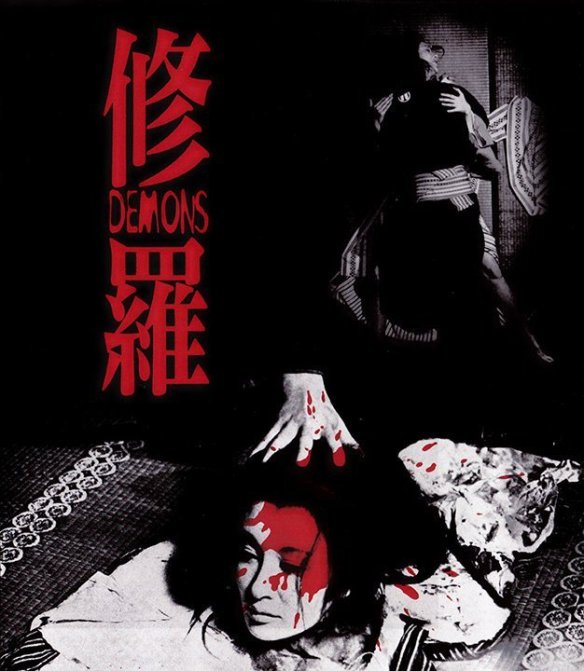
In Japanese cinema, the samurai film can be many things. It can be a ghost story (Ugetsu, 1953), a rousing adventure (The Hidden Fortress, 1958), a tragic romance (Gate of Hell, 1953), a sweeping historical epic (Tales of the Taira Clan, 1955), a Shakespeare adaptation (Throne of Blood, 1957) or even a revenge saga (Chushingura, 1962). The latter is my favorite sub-genre in the category and the best samurai revenge films are usually driven by the avenger’s sense of honor being defamed and/or moral outrage at personal injustice. This is certainly the motivation behind the heroine of Lady Snowblood (1973), played by Meiko Kaji, and its sequel, Lady Snowblood 2: Love Song of Vengeance (1974). It is also the central premise of Masaki Kobayashi’s Harakiri (aka Seppuku, 1962), which is more doom-laden and brooding than the kinetic action of the Lady Snowblood films but nevertheless explodes in a bloody, sword-wielding finale. But if you want to go deeper, darker and crueler, it is hard to top Toshio Matsumoto’s Demons (aka Shura aka Pandemonium, 1971) for pure malice. Continue reading